AI Is Now ‘Super Intelligence’ in the U.S. Government. What Does SI Actually Mean?

Author
Ravi Prajapati
The U.S. government is adopting “Super Intelligence” (SI) in place of AI. Learn what SI means, what changed, and how it differs from AI, AGI and ASI.
AI Is Now ‘Super Intelligence’ in the U.S. Government. What Does SI Actually Mean?
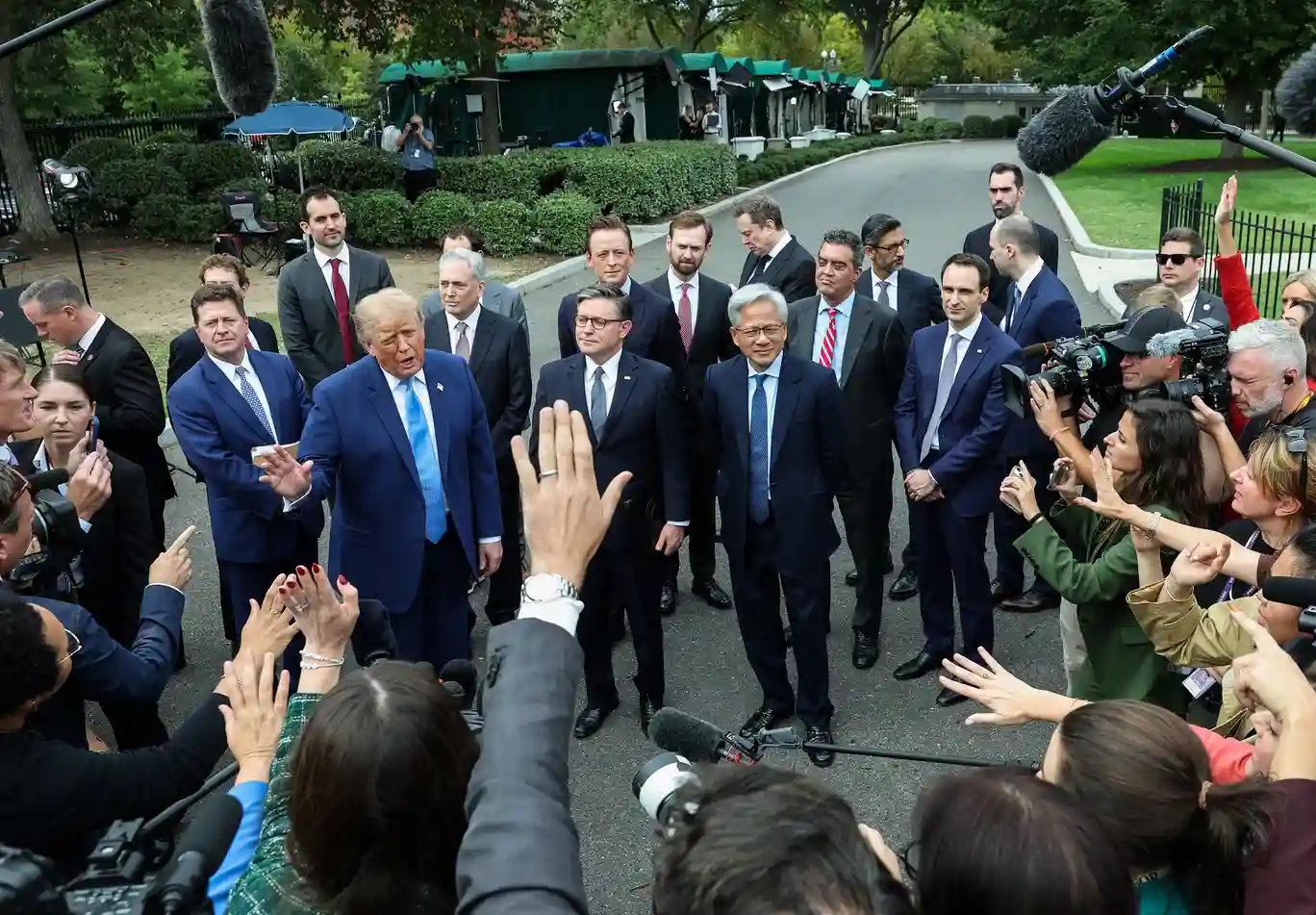
The U.S. government has introduced a surprising change to one of technology’s most familiar terms. On September 29, 2026, President Donald Trump signed an executive order directing executive departments and agencies to use “Super Intelligence” (SI) instead of “Artificial Intelligence” (AI) in many official communications.
The announcement immediately raises a bigger question: does “SI” mean that today’s AI systems are now considered superintelligent?
Not quite.
The change is primarily about government terminology, at least for now. The executive order still ties SI to the United States’ existing legal definition of artificial intelligence, while also starting a process that could eventually establish a separate federal definition for Super Intelligence.
Here is what changed, what SI actually means, and why the distinction between AI, SI, AGI and ASI matters.
Overview
On September 29, 2026, the White House issued the executive order “Inaugurating the Era of Super Intelligence.” It directs executive departments and agencies, to the maximum extent permitted by law, to replace the terms “Artificial Intelligence” and “AI” with “Super Intelligence” and “SI” in official correspondence, public communications, websites, reports, policy documents and other non-statutory documents.
The White House executive order makes several important points:
Federal executive agencies are being directed to adopt Super Intelligence (SI) terminology.
Existing regulations, contracts, grants, presidential actions and historical documents do not need to be rewritten simply to replace AI terminology.
For now, SI refers to technologies covered by the existing statutory definition of artificial intelligence.
The President’s science and technology adviser has 60 days to propose legislative language for a federal definition of Super Intelligence.
The terminology applies to the executive branch and does not automatically rename AI across private industry, academia or the rest of the world.
The important distinction is therefore simple: the terminology changed immediately, but the underlying technology and its current statutory definition did not suddenly change with it.
Why Is the U.S. Government Replacing AI With SI?
The administration’s argument is that the term “Artificial Intelligence” no longer adequately represents what increasingly capable intelligent systems can do.
In the executive order, the White House describes modern systems as increasingly capable of extending human abilities in areas such as science and medicine. The administration argues that “Super Intelligence” better reflects the technology’s potential to amplify human intelligence rather than simply imitate it.
The accompanying White House fact sheet frames the change as part of a broader effort to position the United States at the center of the next stage of intelligent technology development.
This makes the terminology shift partly technical, partly political and partly about how the technology is framed.
“Artificial Intelligence” emphasizes that the intelligence is machine-created. “Super Intelligence” puts the emphasis on what those systems may enable humans and organizations to accomplish.
That difference in framing is significant, but it does not mean the government has declared that current AI models have achieved artificial superintelligence.
So, What Does “Super Intelligence” Actually Mean?
This is where the executive order becomes particularly interesting.
For the immediate purposes of the order, Super Intelligence is based on the existing U.S. legal definition of Artificial Intelligence.
The order points to the definition contained in 15 U.S.C. § 9401, which defines artificial intelligence around machine-based systems capable of making predictions, recommendations or decisions that influence real or virtual environments based on human-defined objectives.
In practical terms, the executive order currently creates something close to this:
Artificial Intelligence (AI) → Super Intelligence (SI)
rather than:
Artificial Intelligence → AGI → Artificial Superintelligence
That distinction matters because “superintelligence” already has a much stronger meaning within AI research and technology discussions.
SI Does Not Automatically Mean ASI
The technology industry has traditionally used Artificial Superintelligence (ASI) to describe a hypothetical level of machine intelligence that significantly exceeds human capabilities across a broad range of intellectual tasks.
That is very different from simply renaming existing AI technologies.
Current systems such as ChatGPT, Claude, Gemini and Grok did not suddenly become artificial superintelligence on September 29. Their technical capabilities did not change because the terminology used by the U.S. executive branch changed.
This means readers should be careful when encountering headlines claiming that the United States has declared that AI has “become superintelligent.”
A more accurate interpretation is that the U.S. executive branch has adopted “Super Intelligence” as new terminology for technology currently covered by its existing AI definition.
AI vs SI vs AGI vs ASI: What’s the Difference?
The terminology is likely to become confusing, especially because SI sounds extremely similar to the already established concept of artificial superintelligence.
Term | What It Generally Means |
|---|---|
AI | Artificial Intelligence. The broad, established term for machine-based systems performing tasks associated with intelligence. |
SI | Super Intelligence. The terminology now being adopted by the U.S. executive branch for technologies currently covered by the federal AI definition. |
AGI | Artificial General Intelligence. A debated and still hypothetical concept involving broadly capable machine intelligence across many domains. |
ASI | Artificial Superintelligence. A hypothetical form of machine intelligence that substantially exceeds human cognitive abilities across broad domains. |
The biggest potential source of confusion is SI vs ASI.
When a future U.S. government document refers to an “SI system,” it may be referring to technology that would previously have simply been called an AI system. When an AI researcher discusses “superintelligence,” they may instead be talking about systems far beyond the capabilities of today’s models.
Context will therefore matter much more.
Is Artificial Intelligence No Longer Called AI?
No. At least not globally.
The executive order applies specifically to terminology used within the U.S. executive branch, and even there it operates within legal limits.
It does not require OpenAI, Anthropic, Google, Meta, Microsoft or other technology companies to stop using “AI.” It does not require universities and researchers to adopt SI. It does not change terminology internationally, and it does not instantly replace every reference to artificial intelligence already contained in U.S. law.
AI is also deeply embedded in existing language. We have AI agents, AI models, AI startups, AI engineers, AI infrastructure, generative AI, AI safety and thousands of other established terms.
Changing official government language is relatively straightforward. Changing the vocabulary used by billions of people, businesses, researchers and developers is much harder.
For the foreseeable future, AI and SI are likely to coexist.
The More Important Change Could Come Within 60 Days
The terminology change is only one part of the executive order.
The order also instructs the Assistant to the President for Science and Technology to submit proposed legislative language within 60 days that would establish a federal definition of “Super Intelligence” and “SI.”
According to the executive order, that proposal can consider whether the definition should modify, expand upon or supersede the existing statutory definition of artificial intelligence.
That makes the next stage considerably more important.
If SI ultimately receives a definition substantially different from the current AI definition, the United States could move beyond a terminology change and begin creating a new legal framework around Super Intelligence.
There are several questions worth watching:
Will SI remain legally equivalent to AI?
Will the definition expand to include more advanced autonomous systems?
Will Congress eventually adopt the terminology?
Will existing federal AI legislation be amended?
Will federal agencies begin using SI in procurement and regulation?
Will private companies working with the government adopt the terminology themselves?
Until that definition emerges, treating SI as simply “AI but more powerful” would be premature.
Should AI Companies and Publishers Start Using “SI”?
There is no strong reason for technology companies or publishers to immediately replace AI with SI across their websites.
From a communication perspective, AI remains the term people understand. From an SEO perspective, it is also the established search language around the technology.
People currently search for terms such as “AI tools,” “AI agents,” “AI models,” “AI developers,” “generative AI” and “artificial intelligence.” A government terminology decision does not immediately change that behavior.
For publishers, a better approach is to introduce SI alongside AI when the context requires it. For example:
“Artificial Intelligence (AI), now referred to as Super Intelligence (SI) in many U.S. executive-branch communications…”
This preserves the terminology readers already understand while explaining the emerging government language.
It may also create a new search topic of its own. Queries around “What is Super Intelligence?”, “AI vs SI”, “SI vs AGI”, “SI vs ASI”, “Why did the U.S. rename AI?” and “Is AI now called SI?” could become increasingly relevant if government adoption continues.
Why This Is More Than a Simple Rename
The most interesting part of this announcement may not be whether people start saying “SI.”
It is what the terminology tells us about how governments want society to think about increasingly capable intelligent systems.
Artificial Intelligence describes the origin of the intelligence: it is artificial.
Super Intelligence emphasizes its perceived capability and potential.
Those are very different ways of framing the same technological movement.
The U.S. administration is effectively arguing that modern intelligent systems should increasingly be viewed as technologies that can expand human capabilities rather than simply imitate human intelligence.
Whether the technology industry, researchers and the public adopt that framing is another question.
Governments can change terminology through policy. They cannot guarantee that language will become culturally accepted.
What Happens Next?
For now, the most accurate way to understand the change is this:
The U.S. executive branch is moving from “Artificial Intelligence (AI)” to “Super Intelligence (SI)” as its preferred terminology. It has not declared that current AI systems have achieved artificial superintelligence.
SI currently inherits the existing federal statutory definition of AI, but the White House has started a 60-day process that could lead to a new federal definition.
That next definition is the part worth watching.
If SI remains legally equivalent to AI, this may ultimately be remembered primarily as a significant terminology and positioning change.
If the definition expands substantially, however, September 29, 2026 could mark the beginning of a new category in U.S. technology policy.
Either way, AI is not disappearing overnight.
For now, we are entering a period where AI and SI may describe much of the same technology, depending on who is talking about it.
Comments (0)
No comments yet. Be the first to share your thoughts!