Airtribe × Make AI Agent Workshop in Ahmedabad: Builders Turn Ideas Into Live AI Agents

Author
Ravi Prajapati
.webp)
Inside the Airtribe × Make AI Agent Workshop at 7Span Ahmedabad, where builders learned Make.com, built live AI agents, and competed in a hackathon.
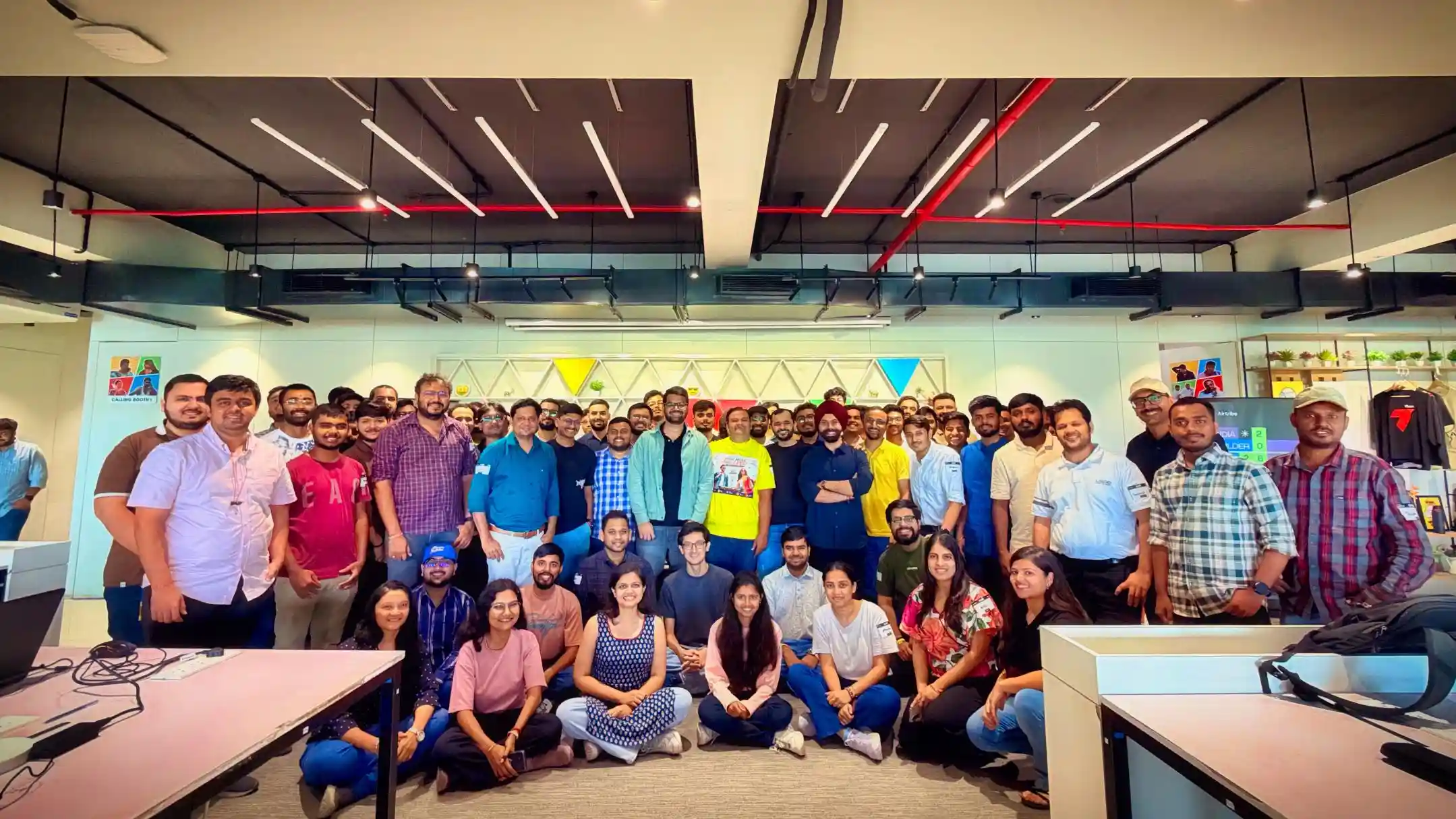
What does a fafda-jalebi business in Ahmedabad have to do with AI agents?
More than you might expect.
Inside 7Span, Ahmedabad, a room full of product managers, developers, founders, and curious builders watched as a familiar local business idea was turned into a working AI agent.
A few hours later, those same participants were no longer just watching.
They were building their own.
That was the idea behind “Let’s Create Our First AI Agent Together – Airtribe × Make, Ahmedabad Edition,” a hands-on workshop powered by Make and organized by Airtribe for India’s builder community.
No long day of slides.
No “AI will change everything” predictions.
The goal was much simpler:
Pick a real problem. Build an agent. See if it works.
And by the end of the day, Amazon reviews were being turned into strategic business insights, GitHub commits were becoming employee progress reports, and teams were discovering just how quickly an AI agent idea could move from a conversation to a working prototype.
The Day Started With a Builder’s Story
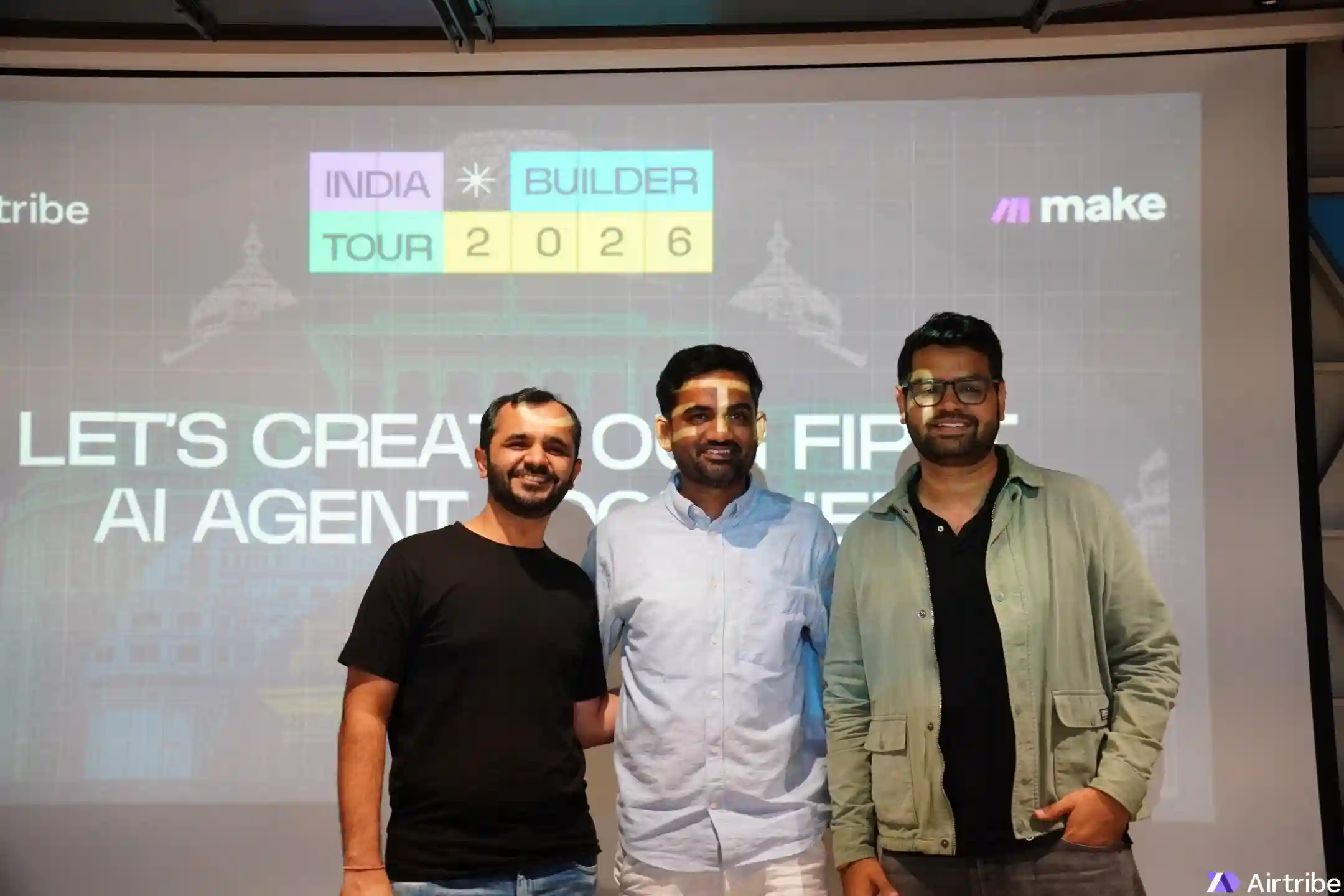
Dhaval Trivedi in left and Shubham Chanchawat in right
Before anyone opened Make and started connecting workflows, Dhaval Trivedi, Co-Founder of Airtribe, opened the event by introducing Airtribe and the thinking behind the community.
His own journey made the conversation about builders particularly fitting.
Trivedi started his career as one of the early software engineers at HackerRank.
He later joined RentoMojo early in its journey, helping build its subscription infrastructure from scratch before eventually becoming VP of Engineering. He then worked as a Senior Engineering Manager at Unacademy.
After years of building technology and engineering teams, he took a different kind of building challenge.
Education.
In 2021, Trivedi co-founded Airtribe, a professional learning platform built around cohort-based and community-driven learning.
That background helped set the tone for what followed.
This was not supposed to be a room where people simply listened to experts talk about AI.
People were here to build.
Building a Community of AI-Fluent Product Builders
Next came Shubham Chanchawat from Airtribe’s Founding Team.
At Airtribe, the ambition is to build a community of AI-fluent product builders, and Chanchawat works across several pieces required to make that happen.
His role spans learning experience, community and partnerships, and career services.
That means thinking about everything from how programs are delivered and how learners remain engaged to how communities create meaningful professional connections and how learners ultimately translate those skills into career opportunities.
You could see that philosophy reflected in the room at 7Span.
People had different backgrounds.
Some understood automation.
Some came from product.
Some were developers.
Others were simply curious about AI agents and wanted to understand how to build their first one.
Soon, all of them would be working on the same challenge.
Then Sunmeet Sethi Asked the More Important Question
.webp)
When Sunmeet Sethi took over the mentoring session, the conversation could easily have jumped directly into Make.
Instead, it started with product thinking.
Sethi brings around a decade of product management experience across e-commerce and fintech, having worked with Mint, Angel One, Urban Company, and Publicis Sapient.
He is also a visiting faculty member at Master’s Union, Mesa School, Altera Institute, and Scaler School, and has been recognized as a Forbes B-School Leader, InsideIIM India’s Most Employable Graduate, and Unstop B-School Competitive Leader.
But the most useful part of the session was not a title or framework.
It was the underlying question:
What problem are you actually trying to solve?
Because it is easy to say, “Let’s build an AI agent.”
It is much harder to answer:
Why should this agent exist?
That became one of the recurring ideas of the day.
An agent can connect applications.
It can process information.
It can generate content.
It can trigger actions.
But none of those capabilities matter much if the workflow does not solve a useful problem.
Then came the live demonstration.
And this is where things became very Ahmedabad.
The Fafda-Jalebi AI Agent Building Demo
Forget the usual fictional multinational enterprise use case.
For the live build, Sethi brought AI agents closer to home with a scenario around a fafda-jalebi nashta business owner and team.
Suddenly, the conversation about agents became easier to visualize.
Using Make, he demonstrated how a business idea could be broken down into workflows and how AI could sit inside those workflows to understand information and help automate actions.
Participants watched the agent take shape live.
That was an important moment.
AI agents often sound complex when explained through terms such as orchestration, tool calling, autonomous workflows, and integrations.
But watching one being assembled around a familiar business problem changes the perspective.
The question becomes less:
“Do I understand agentic architecture?”
And more:
“Which annoying part of my business could I automate?”
That is a much easier place to start.
Soon, participants would have to answer that question themselves.
Pizza First. Hackathon Next.
After the live session and conversations around the room, it was time for lunch.
Domino’s pizza arrived.
Builders refuelled.
And then the comfortable part of the day ended.
Because after lunch, the hackathon began.
Participants formed teams of three.
The challenge was to take what they had learned and build a live AI agent using Make.
There was an immediate difference between watching the demonstration and facing an empty workflow yourself.
Now every team had decisions to make.
What problem should we solve?
What data do we need?
Which tools should we connect?
What exactly should the AI do?
And what happens after the AI produces an answer?
Ideas started turning into workflows.
Workflows started turning into prototypes.
And two projects eventually stood out.
The Winning Idea Started With Amazon Reviews
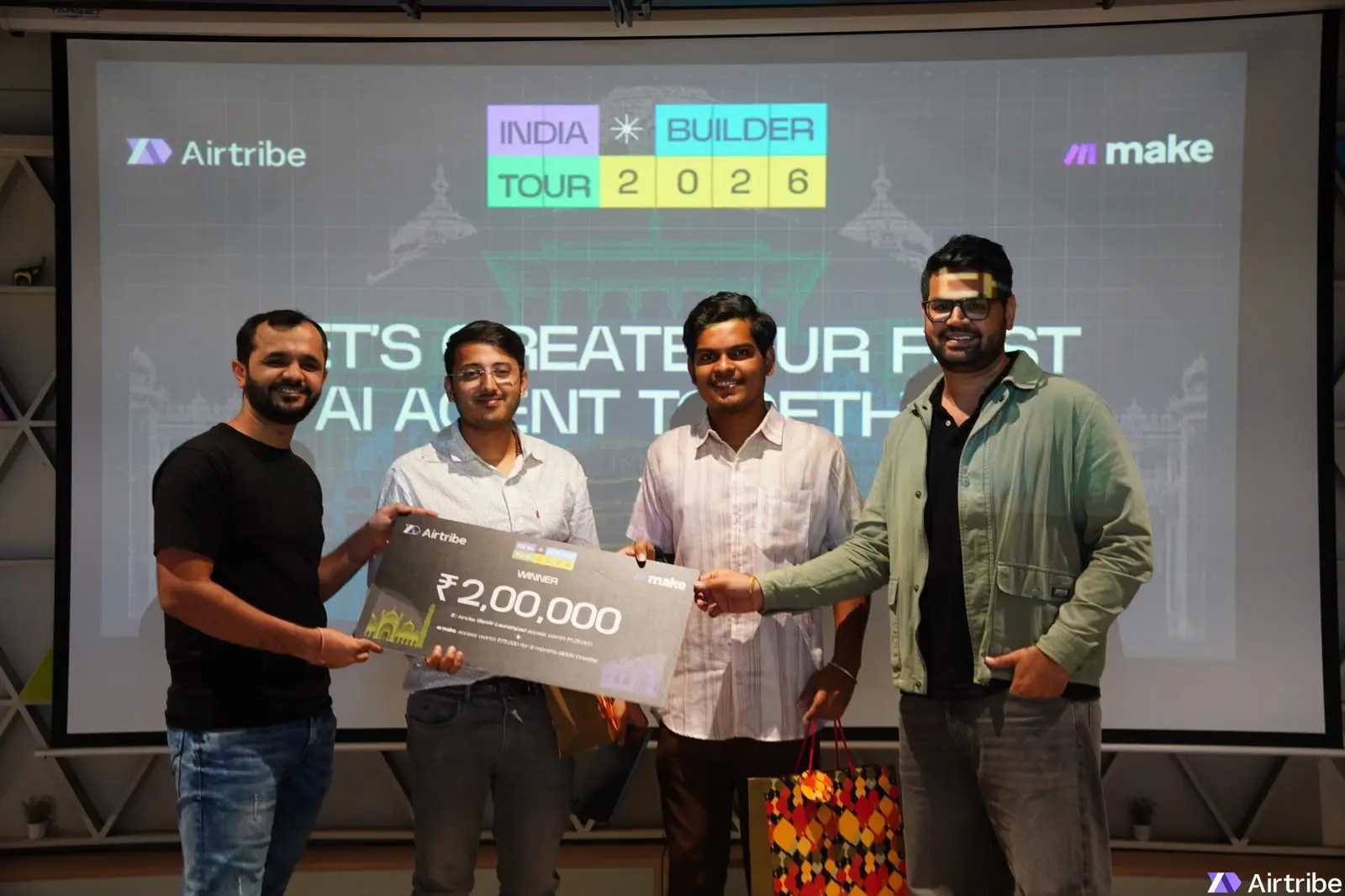
Imagine you run a consumer brand selling on Amazon.
Hundreds of reviews arrive.
One customer complains about packaging.
Another mentions product quality.
Someone else loves the product but hates the delivery experience.
Another review contains an important product insight hidden inside three paragraphs of feedback.
Most brands can read those reviews.
The real challenge is figuring out:
What does this actually mean for the business?
That was the problem Aryan Tripathi and his team decided to attack.
They built a Strategic Advisory AI Agent.
The idea went beyond sentiment analysis or simply summarizing Amazon reviews.
Their agent was designed to read a consumer brand’s reviews, understand what each review actually meant from a business perspective, and then identify the team that should receive the insight.
Think of the workflow like this:
Customer Review → AI Interpretation → Business Insight → Right Team Head → Action
A complaint about product quality should not disappear inside a generic customer-feedback report.
It should reach the people responsible for the product.
A recurring packaging complaint should reach the team capable of fixing packaging.
Customer feedback becomes far more valuable when it reaches the right person with the right context.
That distinction helped the Strategic Advisory AI Agent emerge as the hackathon winner.
And it demonstrated something bigger.
Perhaps the future of customer reviews is not another dashboard showing positive and negative sentiment.
Perhaps it is an AI system quietly asking:
“Who inside this company needs to know this?”
The Runner-Up Team Asked: Why Are We Still Writing Daily Updates?
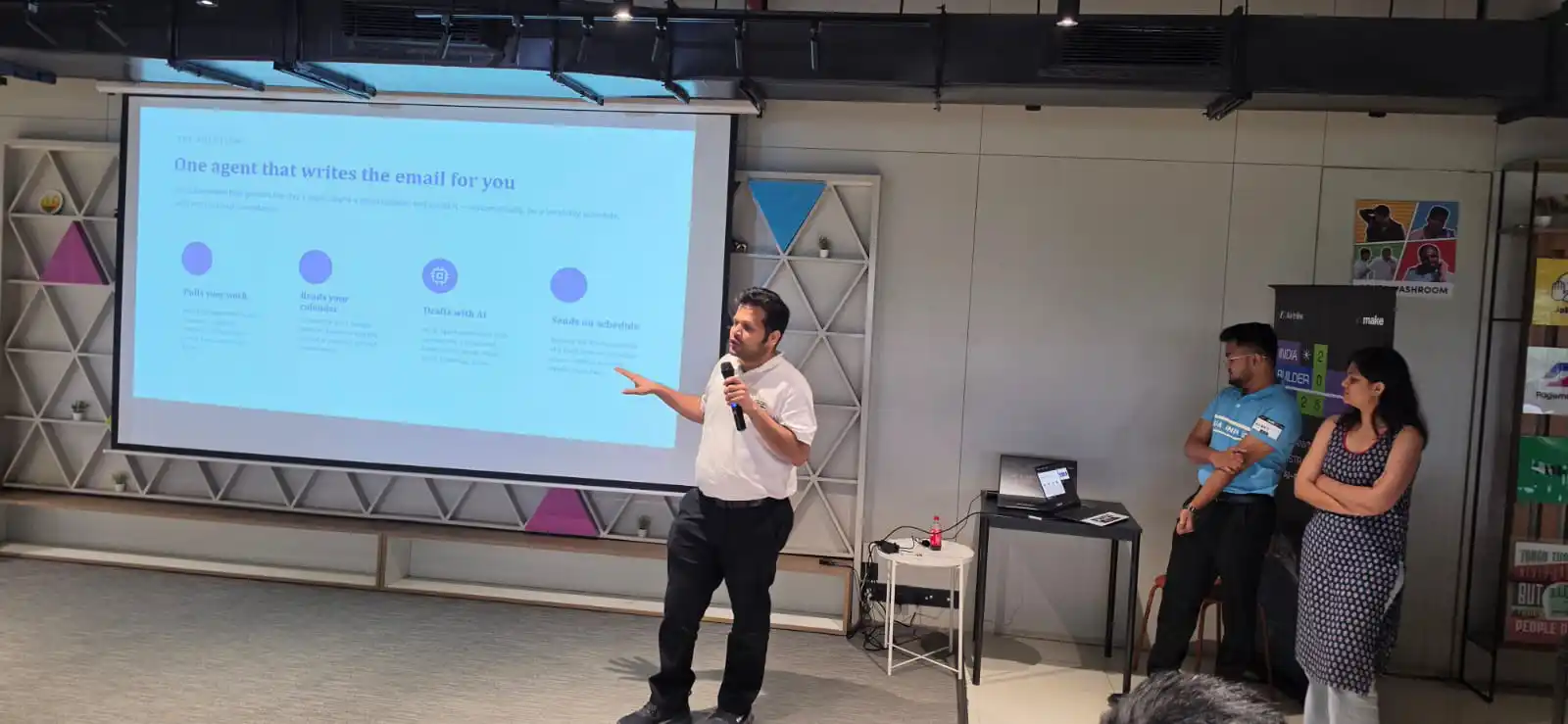
The second standout project began with a workplace ritual many people know well.
It is the end of the day.
You have attended meetings.
You have worked on tasks.
Developers have pushed code.
Work has happened across different tools.
And then someone asks:
“Can everyone send their daily update?”
So employees reconstruct their day manually.
The runner-up team of Nirva Padaliya, Nirav Shah, and Sandeep Garg wondered whether an AI agent could do most of that work instead.
For their hackathon prototype, they connected Google Calendar and GitHub.
Calendar provided information about meetings and scheduled events.
GitHub provided information about project code commits.
That activity was passed into the AI agent built in Make.
The agent could then interpret the information, draft a structured daily progress update, and send the final email through Gmail to the specified recipient.
In simple terms:
Calendar + GitHub → Make AI Agent → Daily Work Summary → Gmail
No manually reconstructing the entire day.
The team also saw a path to make the agent much broader.
Slack or Microsoft Teams could potentially provide context from workplace conversations.
Project management platforms could contribute task activity.
Other tools could be connected depending on where a company’s work actually happens.
The hackathon version used Calendar and GitHub, but the underlying question was more interesting:
If our work already leaves digital footprints everywhere, why are we manually rewriting those footprints into status reports?
That question earned the team the runner-up position.
Different Ideas. Same Lesson.
At first glance, the two projects had almost nothing in common.
One dealt with Amazon customer reviews.
The other dealt with employee progress reports.
One was customer-facing intelligence.
The other focused on internal productivity.
But underneath, both teams had followed the same principle Sunmeet Sethi had introduced earlier.
They did not start with:
“Where can we put AI?”
They started with:
“What is unnecessarily difficult right now?”
For one team, customer feedback was not reaching the right business function efficiently.
For another, employees were manually creating information that could potentially be reconstructed from systems they already used.
The AI agent came second.
The problem came first.
That may sound obvious, but as businesses rush to experiment with AI agents, it is an easy principle to forget.
AI Agents Are Becoming Easier to Build. Useful Agents Are Still Hard.
One of the most interesting takeaways from the day was how much the barrier to building has changed.
Not long ago, creating something that connected several business applications, processed their data using AI, made decisions, and triggered actions would likely have required a development team and considerable engineering effort.
Platforms such as Make are compressing that process.
A product manager can experiment.
A founder can prototype.
A no-code builder can connect systems.
A developer can test an idea before committing to a larger architecture.
But easier building creates another challenge.
When almost anyone can build an AI workflow, choosing what is worth building becomes more important.
The technical barrier may be falling.
The product-thinking barrier remains.
And that was perhaps one of the most useful lessons from the workshop.
More Than a Workshop at 7Span
The day at 7Span was also a reminder that some of the best learning at technology events happens outside the formal session.
People compared workflows.
Teams discussed ideas.
Participants helped each other when things did not work.
Builders saw how other builders approached the same technology differently.
And during the hackathon, learning became collaborative rather than instructional.
That fits naturally with what Airtribe is trying to build: a community where product professionals do not simply learn about AI but become increasingly comfortable building with it.
The People Keeping Everything Moving
While participants were busy experimenting inside Make, an event like this also requires people making sure everything else works.
Shibu Singh from Airtribe hosted the event and helped manage the experience throughout the day, with Abhinaba supporting the organization and coordination.
From the opening session to the workshop, networking, lunch, hackathon, presentations, and final results, their work helped keep the day moving.
And that matters in a hands-on event.
Because when the logistics disappear into the background, builders can focus on the thing they came for:
building.
Everyone Came to Learn About AI Agents. Then They Built One.
At the beginning of the day, the question was:
How do you build an AI agent?
By the end, that question felt almost outdated.
A fafda-jalebi business had become a live AI agent demonstration.
Amazon reviews had become strategic intelligence routed toward business teams.
Google Calendar meetings and GitHub commits had become an automated daily progress report.
None of these required a futuristic scenario.
They started with ordinary problems.
And perhaps that is where the AI agent opportunity becomes most interesting.
Not in building agents simply because everyone is talking about agents.
But in looking at the repetitive, fragmented, frustrating workflows already happening around us and asking:
“Why are we still doing this manually?”
For the builders who spent the day at 7Span, the Airtribe × Make Ahmedabad Edition offered more than an introduction to AI agents.
It gave them the chance to go from curious → learning → experimenting → building in a matter of hours.
They walked into the room to learn how an AI agent works.
They walked out having built one.
And the next one probably starts with a problem they have not thought to automate yet.
Comments (0)
No comments yet. Be the first to share your thoughts!