Emergent Becomes AI Coding Unicorn With $130M Round

Author
Ravi Prajapati
.webp)
Indian AI startup Emergent raised $130M at a $1.5B valuation, becoming a unicorn within a year. Here's what the funding means for AI coding tools.
Indian AI coding startup Emergent has raised a $130 million Series C round at roughly a $1.5 billion valuation, turning it into a unicorn just over a year after launch. The company builds AI tools that let non-technical users create production-ready software using natural language.
A little more than a year after opening its platform to the public, an Indian AI coding startup has joined the unicorn club.
Emergent has closed a $130 million Series C funding round, pushing its valuation to approximately $1.5 billion, according to TechCrunch. The speed of that climb, from a company founded in 2024 to a billion-dollar valuation in roughly twelve months, places it among the fastest-scaling startups in the current AI cycle.
The round adds to a broader pattern this year: investors are pouring capital into companies that promise to automate parts of software engineering itself, not just assist human coders. Emergent's rise offers a clear window into why that category has become one of the most closely watched corners of the AI market.
What Happened?
Emergent announced its Series C funding round, raising $130 million in new capital, TechCrunch first reported. The round lifts the company's valuation to around $1.5 billion, a sharp increase from where it stood just months earlier.
The jump means Emergent has crossed the unicorn threshold, a valuation of $1 billion or more, faster than most software companies typically do, doing so within roughly a year of its public launch, per the same report.
Alongside the funding, Emergent disclosed key growth figures: more than 200,000 paying customers and an annualized revenue run rate of around $120 million, numbers the company says helped justify the new valuation to investors.
About Emergent
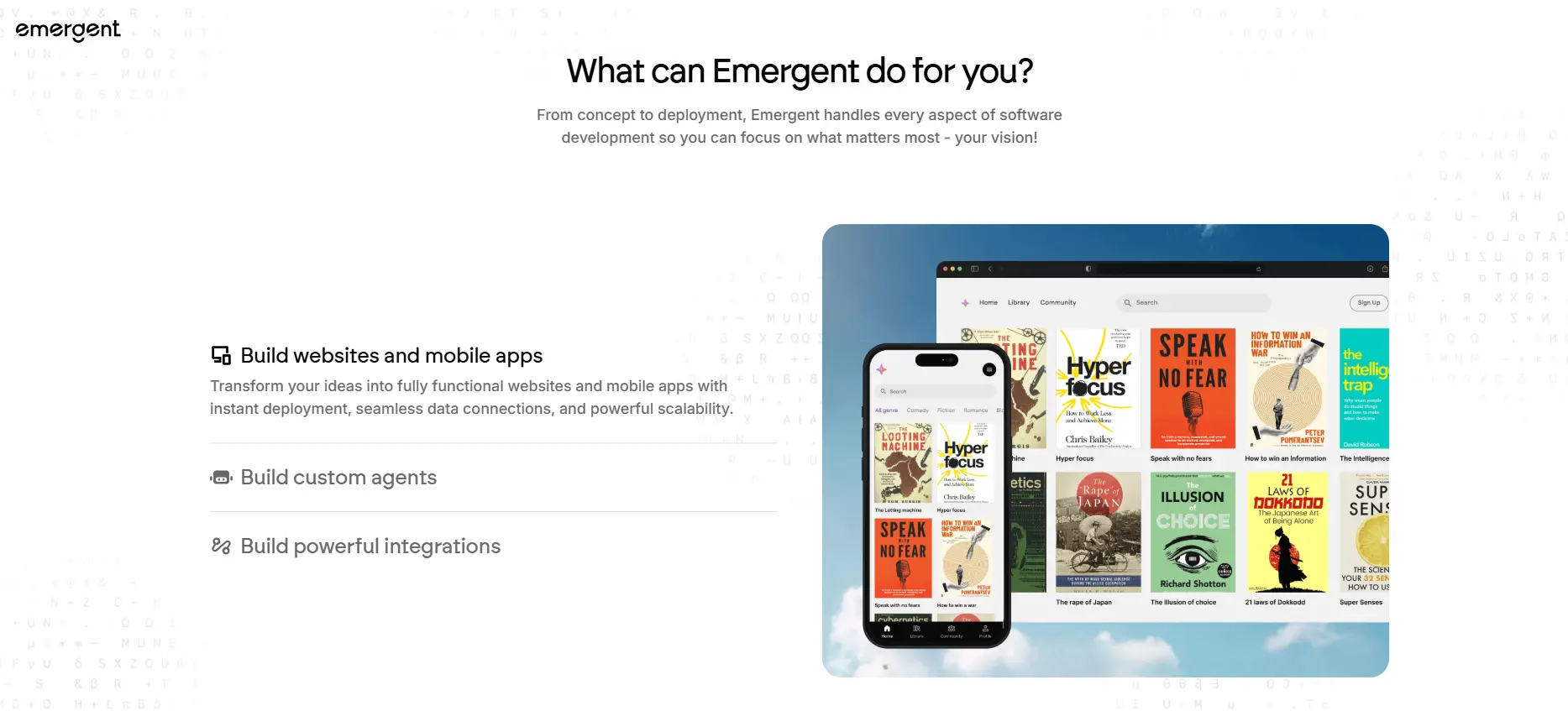
Company overview Emergent is an Indian AI startup that builds tools for creating software applications using natural language instructions rather than traditional programming. The company positions itself within the broader "AI software engineering" category, aiming to go beyond code suggestions toward full application development.
Founders Emergent was founded by twin brothers, Mukund and Madhav Jha, according to a profile published by Tech Funding News. Mukund previously served as chief technology officer and co-founder of Dunzo, an Indian quick-commerce company. Madhav holds a doctorate in theoretical computer science from Penn State University and had worked on Amazon's SageMaker research team before starting Emergent.
Product The platform allows users to describe an application in plain language and have AI agents generate, test, and deploy the resulting software. Emergent has emphasized that its focus extends beyond prototypes to production-grade systems, including tools like CRMs, inventory trackers, and internal business software.
Growth journey Emergent launched publicly in 2025 and has since raised multiple funding rounds in quick succession, moving from an early-stage raise to a Series B and now a Series C within roughly a year, a pace that SiliconANGLE says reflects both strong early traction and intense investor appetite for AI coding platforms.
Funding Details
The $130 million Series C round was led by private equity firm Creaegis, with additional participation from new and existing investors, TechCrunch and SiliconANGLE reported. Backers from earlier rounds, including Khosla Ventures, SoftBank's Vision Fund 2, Lightspeed, and Y Combinator, returned to participate in this round as well.
The new valuation of roughly $1.5 billion represents a significant increase over the company's prior funding round earlier in the year, underscoring how quickly investor confidence in the company has grown. According to SiliconANGLE, Emergent's total funding raised to date now stands well above $200 million across its various rounds.
Why Investors Are Betting on AI Coding Startups
Software development has long been treated as one of the most defensible, expertise-gated parts of the technology industry. That assumption is being tested.
Investors are betting that AI models capable of writing, testing, and maintaining code can meaningfully expand who is able to build software, from professional engineering teams to small business owners with no technical background at all.
For venture investors, this represents a potentially enormous addressable market: not just the existing pool of professional developers, but the far larger population of entrepreneurs, operators, and small businesses that have never had direct access to custom software.
Emergent's reported customer and revenue figures, as disclosed to TechCrunch, appear to reflect this thesis in practice, with a large paying customer base built up in a relatively short period of time.
Key Features of Emergent
Natural language app creation Users describe what they want to build in plain language, and the platform's AI agents handle the translation into functioning software, removing much of the need for manual coding.
AI software engineering Rather than functioning purely as a code-completion assistant, Emergent's system is designed to take on more of the engineering workflow itself, including structuring an application and managing its components.
Production-ready code generation The company has emphasized that its output is intended for real business use, not just demos or prototypes, distinguishing it from simpler AI website builders.
Team collaboration Emergent's tools are built to support teams working together on the same application, rather than being limited to individual, single-user projects.
Enterprise capabilities As the platform has matured, Emergent has added features aimed at business customers who need more robust deployment, monitoring, and long-term maintenance support for applications built on the platform.
Why This Matters for Developers and Businesses
For professional developers, the rise of platforms like Emergent adds to an ongoing shift in how software gets built, with AI systems taking on a larger share of implementation work that once required specialized engineering teams.
For small businesses and entrepreneurs, the pitch is more direct: custom software that would once have required hiring developers or engaging expensive agencies may now be within reach at a fraction of the cost.
That said, this shift raises real questions about code quality, security, and long-term maintainability when software is generated largely by AI systems rather than reviewed line-by-line by trained engineers. Businesses adopting these tools will need to weigh speed and cost savings against the ongoing need for oversight, especially as applications become more complex and more central to daily operations.
Industry Analysis
The rise of AI software engineers The idea of an AI system functioning as something closer to a full engineering team, rather than a coding assistant, has moved from a research concept to a competitive category in a short span of time. Emergent's stated ambition to build a platform capable of acting like an entire development team reflects this broader industry direction.
Competition in AI coding Emergent is entering a market that already includes well-funded players building similar or adjacent capabilities, including Lovable, Replit, and Cursor, all of which have raised significant funding of their own, according to Tech Funding News. Competition spans companies focused on professional developer tooling as well as those targeting non-technical users, and the category has attracted some of the largest AI-focused venture rounds of the past two years.
Impact on developers As these tools mature, the role of human developers may shift further toward reviewing, guiding, and correcting AI-generated systems rather than writing every line of code themselves, a change that is already underway across parts of the software industry.
Enterprise adoption Businesses adopting AI coding platforms will likely move cautiously at first, particularly for systems handling sensitive data or core operations, given ongoing questions about reliability and security in AI-generated code.
Future of software development The broader trajectory suggests software creation is becoming more accessible to non-specialists, even as questions remain about how far full automation can go before human oversight becomes a hard requirement rather than an option.
Key Takeaways
Emergent raised $130 million in a Series C round at a roughly $1.5 billion valuation, as first reported by TechCrunch.
The company reached unicorn status just over a year after its public launch.
It reports more than 200,000 paying customers and an annualized revenue run rate near $120 million.
Emergent was founded by twin brothers Mukund and Madhav Jha, with backgrounds at Dunzo and Amazon SageMaker respectively, per Tech Funding News.
The funding reflects growing investor interest in AI platforms aimed at non-technical users, not just professional developers.
FAQs
What is Emergent? Emergent is an Indian AI startup that builds tools allowing users to create production-ready software applications using natural language instead of traditional coding.
Why did Emergent become a unicorn so quickly? The company's valuation rose sharply within about a year of its public launch, driven by rapid customer growth and increasing revenue, culminating in its recent Series C round.
How much funding did Emergent raise? Emergent raised $130 million in its latest Series C round, at a valuation of approximately $1.5 billion, according to TechCrunch.
What does Emergent build? Emergent's platform generates full-stack applications, including tools like CRMs and internal business systems, based on natural language descriptions from users.
Who are Emergent's competitors? Emergent competes with other AI coding and app-generation platforms, including tools built for professional developers as well as those aimed at non-technical users.
Is AI replacing software developers? AI tools are automating more parts of the software development process, but human oversight remains important, particularly for reviewing code quality, security, and long-term maintenance.
What is AI-powered software engineering? It refers to AI systems that go beyond suggesting code snippets, instead handling larger portions of the development process, including building, testing, and deploying applications.
Can businesses use Emergent today? Yes, Emergent is publicly available and reports a substantial paying customer base already using the platform to build and run business software.
Conclusion
Emergent's rapid ascent to unicorn status captures a broader moment in the AI industry, where the boundary between "coding assistant" and "software engineer" is becoming increasingly blurred. Its focus on non-technical founders and small businesses sets it apart from developer-first tools, and its funding trajectory suggests investors see real demand for that approach.
Whether Emergent can sustain this growth, particularly as competitors chase the same market, will depend on how well its platform handles the harder parts of software maintenance: security, reliability, and long-term support, as its user base and the complexity of what they build continue to grow.
Comments (0)
No comments yet. Be the first to share your thoughts!