25 GPT-6 Astra Use Cases That Are Actually Useful

Author
Ravi Prajapati
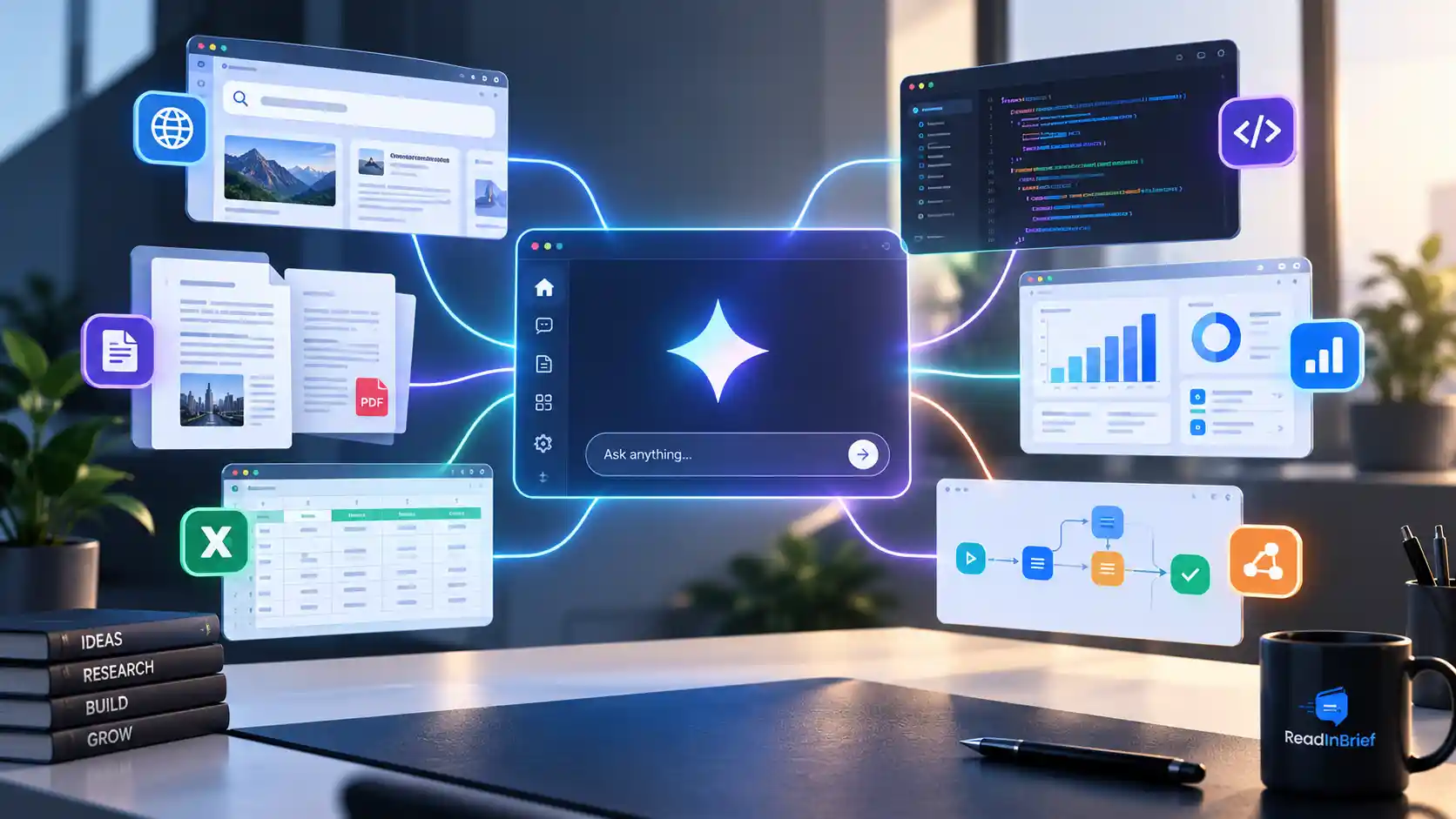
Explore 25 practical GPT-6 Astra use cases for work, research, coding, data, automation and computer tasks, with examples of when Astra makes sense
Most discussions around a new AI model quickly turn into benchmark scores.
The more useful question is simpler:
What work can it actually help you get done?
That question matters even more with GPT-6 Astra because OpenAI is positioning it less like a traditional chatbot and more like a model for difficult end-to-end work.
According to OpenAI, Astra is state-of-the-art across computer use, browsing, software engineering, cybersecurity, science and professional work. Its API model page recommends it for complex reasoning, coding, computer use, research and document creation.
That opens up more interesting possibilities than asking it to rewrite an email or generate ten ideas.
This guide looks at 25 GPT-6 Astra use cases that could actually save time, reduce manual work or improve the quality of difficult tasks.
Just as importantly, we will also look at situations where Astra may be unnecessary.
What Are the Most Useful GPT-6 Astra Use Cases?
The strongest GPT-6 Astra use cases involve complex work that requires several steps, large amounts of context, research, reasoning, coding or interaction with software. Examples include analyzing large document collections, debugging codebases, conducting evidence-based research, creating business reports, testing websites and automating repetitive computer workflows.
The key is not to use Astra for everything.
Use it where capability matters more than simplicity or cost.
Why GPT-6 Astra Changes the Types of Tasks AI Can Handle
Previous AI workflows often looked like this:
Human gathers information → human gives prompt → AI generates output → human does the rest.
More capable models allow some workflows to become:
Human defines outcome → AI gathers information → analyzes it → performs intermediate work → checks results → creates deliverable → human reviews.
OpenAI specifically describes Astra as being built for difficult end-to-end tasks. The model supports web search, file search, computer use and function tools through the API.
That difference matters.
Astra's best use cases are generally not tasks where you need a prettier paragraph.
They are tasks where multiple steps normally sit between your question and the finished result.
GPT-6 Astra Use Cases at a Glance
Use Case | Best For | Why Astra Helps |
|---|---|---|
Deep research | Researchers, strategists | Browsing + synthesis |
Codebase analysis | Developers | Large context + reasoning |
Business reports | Analysts | Research + document creation |
Website QA | Product teams | Computer/browser use |
Dataset analysis | Operations, finance | Reasoning + structured analysis |
Competitive research | Founders, marketers | Browsing + comparison |
Workflow automation | Operations | Multi-step execution |
Legacy code migration | Engineering teams | Large repositories + planning |
Research synthesis | Academics | Large document sets |
Executive briefs | Leadership | Compression + reasoning |
1. Conducting Deep Research Across Multiple Sources
One of Astra's clearest use cases is research that normally requires dozens of browser tabs.
Instead of asking:
Tell me about the AI agent market.
you could give Astra a research objective:
Investigate the current AI agent market for enterprise customer support. Prioritize primary sources, recent product launches, customer evidence and publicly available pricing. Identify established competitors, emerging products, common customer pain points and underserved opportunities. Distinguish verified facts from your interpretation and cite evidence beside important conclusions.
Astra can combine browsing, reasoning and synthesis instead of simply generating an answer from its training data.
OpenAI explicitly identifies browsing and research among Astra's intended strengths.
Actually useful for:
market research
technology research
competitive intelligence
vendor evaluation
policy analysis
due diligence preparation
research-heavy content
Where humans still matter
You should review the underlying sources before making a high-impact decision.
2. Reading and Comparing Huge Document Collections
GPT-6 Astra's API supports a context window of 1,050,000 tokens.
That makes large-document workflows much more interesting.
Imagine uploading:
20 competitor reports
50 customer interviews
product documentation
research papers
meeting transcripts
internal strategy documents
and asking:
Identify repeated customer problems that appear across at least three independent sources. Show the supporting evidence for each theme, indicate contradictory evidence and rank problems by frequency and business impact.
The value is not simply summarization.
It is finding relationships across documents that would be difficult to notice manually.
3. Turning Research Into an Executive Brief
Research is only useful if someone can make a decision from it.
Astra can potentially perform both stages:
gather information
turn it into decision-ready material
For example:
Research whether our company should enter the UK AI compliance software market. Then create a two-page executive brief containing the opportunity, customer problem, current competitors, regulatory drivers, risks, evidence quality and recommendation.
That is much more useful than generating a generic market report.
The deliverable is tied to an actual decision.
4. Analyzing an Entire Software Repository
Developers frequently inherit projects where nobody fully understands the architecture anymore.
Astra's large context window and software-engineering focus make repository analysis a natural use case. OpenAI positions the model specifically for difficult coding and software-engineering work.
You could ask it to:
Analyze this repository and map the application architecture. Identify major modules, entry points, dependencies, authentication flow, database access, API boundaries, background jobs and test structure. Trace a representative user request through the system and identify parts of the architecture where your understanding remains uncertain.
That can help with:
onboarding
architectural reviews
technical due diligence
modernization planning
debugging unfamiliar systems
5. Debugging Bugs That Span Multiple Components
Many bugs are not isolated to one function.
They might involve:
Frontend → API → queue → database → third-party service.
This is where deeper reasoning becomes useful.
Give Astra:
reproduction steps
logs
stack traces
relevant code
deployment history
configuration
expected behavior
Then ask it to generate and test hypotheses.
A good workflow would be:
Generate several plausible root-cause hypotheses. Rank them by likelihood. Use the available code and logs to eliminate hypotheses before proposing changes. Once the root cause is identified, recommend the smallest safe fix and a regression test.
The important distinction is that you're asking it to investigate, not guess.
6. Migrating Legacy Applications
Migration projects involve far more than translating code.
You have to understand:
dependencies
architecture
behavior
data
integrations
deployment
backward compatibility
testing
Astra could help analyze an older application and create a staged migration plan.
Example:
Analyze this CodeIgniter application and prepare a migration plan to Laravel. Identify reusable business logic, framework-specific dependencies, database implications, third-party integrations, authentication risks and areas requiring manual redesign. Propose migration phases that allow incremental rollout and rollback.
This could be particularly valuable for modernization projects involving large codebases.
7. Reviewing Pull Requests Beyond Surface-Level Style Checks
Traditional automated code review often produces noisy feedback.
A more valuable review asks:
Could this change actually break something?
Astra could inspect the change along with surrounding code and tests.
Ask it to focus on:
regressions
hidden edge cases
concurrency
error handling
security implications
performance
test coverage
Then require it to rank findings by severity.
This can make AI review more useful than a long list of stylistic suggestions.
8. Building and Testing a Feature End to End
One of the more ambitious Astra use cases is handing off an engineering requirement rather than an isolated coding task.
For example:
Implement account export functionality. Inspect the existing repository before making changes. Follow current patterns. Add backend support, UI, authorization checks and tests. Run relevant checks. Inspect failures and fix them. Stop before any destructive database or deployment action.
This moves AI closer to:
requirement → implementation → testing → verification
rather than:
prompt → code snippet
OpenAI describes Astra as designed for difficult end-to-end work and multistep software-engineering workflows.
9. Testing a Website Like a Real User
Computer and browser use are among Astra's headline capabilities.
That opens a practical QA use case.
Instead of manually checking:
signup
login
checkout
forms
navigation
responsiveness
error states
you could define a test objective:
Test the website as a first-time customer. Create an account, browse products, use filters, add an item to the cart and proceed through checkout until payment. Record broken interactions, confusing UI, unexpected errors and accessibility concerns. Do not submit a payment.
This does not replace comprehensive QA.
But it can reduce repetitive exploratory testing.
10. Automating Repetitive Browser Work
Not every business process has an API.
Employees still spend hours:
copying values between systems
entering form data
updating dashboards
downloading reports
checking portals
uploading documents
Computer-use capabilities could make some of these workflows candidates for AI assistance.
For example:
For each approved customer record in this spreadsheet, open the CRM, update the account classification and add the corresponding note. Do not modify any other field. Produce a completion log and flag records where the required information is missing.
The important phrase is:
approved customer record.
Agentic workflows need clear boundaries.
11. Updating CRM Records After Sales Calls
Salespeople often dislike updating CRM systems.
Astra could potentially turn:
call transcript
email thread
account history
into structured updates.
It could extract:
requirements
decision makers
objections
budget signals
next steps
promised follow-ups
Then prepare the CRM changes.
For higher-confidence workflows, you might allow routine fields to update automatically while requiring approval for sensitive changes.
12. Turning Meetings Into Actual Project Work
Meeting summarization is common.
But summarization is not the most useful outcome.
A better workflow is:
meeting → decisions → actions → project updates
Give Astra the transcript and project context.
Ask it to:
identify confirmed decisions
extract assigned actions
identify deadlines
update the project plan
draft follow-up communication
flag unresolved items
The model should never invent an owner or due date that was not actually agreed.
13. Creating Business Reports From Raw Data
Instead of asking Astra to "write a report," combine data and business context.
For example:
Analyze this quarter's sales spreadsheet against the previous four quarters. Identify meaningful changes by geography, segment and product. Investigate anomalies, distinguish recurring trends from one-off movements and create an executive performance report.
A useful output might include:
key metrics
strongest changes
possible explanations
risks
areas requiring investigation
recommendations
OpenAI specifically lists document creation and professional work among Astra's intended applications.
14. Analyzing Large Spreadsheets
Large spreadsheets often contain insights nobody has time to find.
Astra could inspect:
revenue
expenses
customer cohorts
support tickets
inventory
marketing performance
operational metrics
But the prompt should first require data validation.
Example:
Before analyzing the results, inspect the dataset for missing values, duplicate records, inconsistent categories and suspicious outliers. Then identify the five findings most relevant to our goal of reducing customer churn.
Without the first instruction, sophisticated analysis can still produce sophisticated nonsense from bad data.
15. Creating Presentations From Research
A common workflow involves:
research → report → presentation.
Instead of repeating those steps manually, Astra can help compress the workflow.
For example:
Based on the attached research, create a 12-slide presentation for senior leadership. Build the narrative around the decision they need to make rather than around the structure of the report. Each slide should contain one main idea. Recommend the strongest chart or visual for each slide.
That produces something closer to an executive presentation than a document pasted into slides.
16. Competitive Intelligence That Goes Beyond Feature Tables
Competitive research often stops at:
| Competitor | Feature | Price |
That's rarely enough.
Astra can potentially investigate:
who competitors target
how they position
how products differ
customer complaints
pricing changes
recent launches
distribution channels
gaps
The strongest version would combine company sources with independent customer evidence.
Ask:
Find where competitors claim to differ, then investigate whether customers actually perceive those differences.
That question is much more interesting than "compare these five tools."
17. Finding Product Opportunities From Customer Complaints
Instead of brainstorming startup ideas from nothing, start with evidence.
Give Astra:
customer reviews
community discussions
app-store reviews
support conversations
competitor forums
Ask it to identify repeated unsolved problems.
Example:
Cluster complaints by underlying problem rather than exact wording. Identify problems that appear across multiple independent sources. Separate minor frustrations from problems severe enough to trigger switching, manual workarounds or willingness to pay.
This turns AI into a research assistant rather than an idea generator.
18. Fact-Checking Articles Before Publication
Generative AI has made producing content easier.
That makes verification more important.
Astra could extract factual claims from an article and verify:
dates
statistics
company announcements
benchmarks
quotations
product capabilities
scientific claims
Ask it to classify claims as:
Supported / Partially supported / Unsupported / Outdated / Unable to verify
This is especially valuable for technology and AI publications where product information changes quickly.
19. Comparing Research Papers
Reading five papers is manageable.
Reading fifty is not.
Astra's large context window makes it useful for evidence synthesis across substantial document sets.
Instead of requesting 50 summaries, ask:
Compare these papers around one research question. Identify areas of agreement, contradiction, methodological differences and gaps. Explain whether apparent disagreements come from different datasets, definitions or methods.
This produces synthesis rather than summaries.
20. Finding What Research Does Not Yet Know
Another valuable use case is uncertainty mapping.
Ask Astra:
Review the literature on [topic] and identify what remains uncertain. Distinguish between questions with little evidence, questions with conflicting evidence and questions commonly treated as settled despite weak evidence.
This can help:
researchers
journalists
product teams
investors
policy teams
avoid mistaking frequent claims for established facts.
21. Preparing for Important Client Meetings
Astra's browsing and synthesis capabilities can be useful before high-value meetings.
Give it:
client name
your existing relationship
meeting objective
relevant proposal
known problems
Then ask it to research:
recent company developments
leadership priorities
market pressures
relevant technology initiatives
questions worth asking
Astra should clearly separate publicly verified information from inference.
The goal is not to create creepy personal intelligence.
The goal is to arrive better prepared.
22. Analyzing Complex Business Decisions
AI becomes more useful when it challenges your thinking.
Suppose you're choosing between:
hiring internally
outsourcing
buying software
building software
using AI agents
Instead of asking:
Which is best?
give Astra decision criteria.
Example:
Evaluate these options using cost, time to value, control, flexibility, operational risk, reversibility and long-term maintenance. Identify assumptions behind each option. Recommend one, then present the strongest argument against your recommendation.
That last instruction is important.
Good decision support should expose uncertainty.
23. Finding Processes Worth Automating
Companies often start automation discussions with:
Where can we use AI?
A better question is:
Which work should be automated at all?
Give Astra an existing workflow.
Ask it to identify:
repetitive steps
predictable decisions
manual handoffs
copy-paste work
repetitive research
data entry
approval bottlenecks
Then classify each task:
Traditional automation / AI-assisted / AI agent / Human-led
This prevents companies from using an AI agent for a problem a simple script could solve better.
24. Creating SOPs From Messy Tribal Knowledge
A lot of business knowledge exists in:
Slack conversations
emails
meeting recordings
employee notes
scattered documents
Astra could help turn those materials into structured SOPs.
The workflow might be:
ingest existing materials
reconstruct the process
identify contradictions
flag missing information
create the SOP
ask a human to confirm uncertain steps
The important part is step four.
AI should not silently fill missing operational knowledge with guesses.
25. Acting as an End-to-End Project Assistant
This may ultimately be the most interesting Astra use case.
Imagine giving it:
We need to evaluate whether to launch Feature X.
Instead of only producing an opinion, the workflow could involve:
reading existing project documents
researching alternatives
analyzing customer feedback
examining usage data
identifying technical dependencies
creating options
producing a recommendation
preparing a presentation
documenting unresolved questions
That's much closer to delegating a project outcome.
OpenAI's description of Astra repeatedly emphasizes complex end-to-end work rather than isolated prompt-response tasks.
When GPT-6 Astra Is Probably Overkill
A more capable model does not mean it should handle every request.
OpenAI's API currently prices GPT-6 Astra at $10 per million input tokens and $50 per million output tokens, before additional tool-specific costs where applicable.
For developers, OpenAI itself recommends other models when balancing capability and cost, including GPT-5.6 Terra for more cost-sensitive workloads.
You probably don't need Astra to:
rewrite one sentence
classify thousands of simple records
generate straightforward product descriptions
summarize a short email
format basic JSON
answer simple factual questions
perform deterministic calculations
execute tasks easily handled by standard automation
The stronger model makes the most sense when the task is hard enough to justify it.
A Simple Test: Should You Use GPT-6 Astra?
Ask these five questions.
1. Does the task require multiple steps?
If yes, Astra becomes more interesting.
2. Does it involve lots of information?
Its large context capacity may help.
3. Does it require research or browsing?
This is one of Astra's core use cases.
4. Does it require reasoning across code, documents or tools?
Again, a stronger fit.
5. Would a mistake have serious consequences?
If yes, stronger reasoning may help, but human verification becomes even more important.
If the answer to all five is no, a cheaper model or conventional software may be perfectly adequate.
GPT-6 Astra: Human vs AI vs Hybrid
Task | Human | Astra | Hybrid |
|---|---|---|---|
Gather market information | ✓ | ✓ | |
Summarize documents | ✓ | ✓ | |
Make final strategic decision | ✓ | ✓ | |
Explore codebase | ✓ | ✓ | |
Production deployment approval | ✓ | ✓ | |
Analyze datasets | ✓ | ✓ | |
Update repetitive software fields | ✓ | ✓ | |
Approve financial commitments | ✓ | ✓ | |
Draft reports | ✓ | ✓ | |
Validate high-impact conclusions | ✓ | ✓ |
The most valuable pattern will often be hybrid.
Let AI perform the expensive information processing.
Keep human judgment where consequences matter.
What About Cybersecurity?
Cybersecurity deserves special treatment with GPT-6 Astra.
OpenAI says Astra is its first broadly deployed model to reach the Critical cybersecurity capability level under its Preparedness Framework. OpenAI describes this as meaning that, with sufficient tools and access, the model could identify previously unknown security vulnerabilities and develop ways to exploit well-protected systems without continual human guidance.
Because of that capability, OpenAI says it has added stronger safeguards, monitoring and controls.
For legitimate organizations, defensive applications could include authorized code review, vulnerability remediation and security analysis.
But this is also an area where clearly defined authorization and scope matter substantially more than in ordinary productivity workflows.
Does GPT-6 Astra Replace AI Agents?
Not exactly.
A model is the intelligence layer.
An AI agent usually combines a model with things such as:
tools
memory
permissions
workflows
triggers
integrations
application state
business rules
Astra can make agents more capable because the underlying model can reason through more difficult tasks.
But production systems still need orchestration, security, access controls, observability and human approval mechanisms.
Readers interested in agent-based workflows can explore the ReadInBrief AI Agents Directory for examples of tools built around these patterns.
Five Principles for Getting More Value From These Use Cases
Give Astra an outcome, not just a topic
Weak:
Analyze this market.
Better:
Determine whether this market contains an underserved opportunity worth testing.
Give it real context
Files, data and requirements often matter more than elaborate prompt engineering.
Define constraints
Tell Astra what it can and cannot do.
Ask it to verify its work
Research should cite sources.
Code changes should run tests.
Data analysis should inspect quality.
Keep human approval around consequential actions
The more autonomous the workflow becomes, the clearer the boundaries should become.
Frequently Asked Questions
What can GPT-6 Astra be used for?
GPT-6 Astra is designed for complex reasoning, coding, computer use, research and document creation. Practical applications include analyzing large document collections, conducting research, debugging software, testing websites, analyzing datasets, creating reports and carrying out multi-step professional workflows.
What are the best GPT-6 Astra use cases for business?
Useful business applications include market research, competitor analysis, business reports, spreadsheet analysis, meeting follow-up, CRM workflows, process automation, SOP creation, client preparation and decision support. Astra is most valuable when several steps or sources of information are involved.
Is GPT-6 Astra useful for coding?
Yes. OpenAI specifically identifies software engineering and coding as major strengths of GPT-6 Astra. Useful workflows include understanding large codebases, debugging, code review, feature implementation, migration planning, testing and technical documentation.
Can GPT-6 Astra use a browser?
Yes. OpenAI says browsing and computer use are major GPT-6 Astra capabilities. This can support workflows involving research, web interfaces, software tasks and browser-based work, subject to available tools and permissions.
Can GPT-6 Astra analyze large documents?
The GPT-6 Astra API documentation lists a 1,050,000-token context window and maximum output of 128,000 tokens. That makes it suitable for working with substantial document collections, codebases and other large inputs, although relevant and well-structured context still produces better workflows than adding information indiscriminately.
Can GPT-6 Astra automate computer tasks?
GPT-6 Astra supports computer use and is positioned for difficult professional computer workflows. Suitable applications can include browser navigation, repetitive software tasks, QA and data-entry workflows where permissions, boundaries and verification are clearly defined.
Should every business use GPT-6 Astra?
No. Simple, deterministic or high-volume tasks may be cheaper and more reliable with smaller models or conventional software. Astra makes more sense for difficult tasks involving reasoning, research, large context, software engineering or multi-step execution.
Does GPT-6 Astra need human oversight?
Yes, especially for consequential actions. Human approval remains important for production deployments, financial decisions, external communications, legal matters, sensitive information, security and strategic decisions. Higher capability can increase what can be delegated, but it does not eliminate accountability.
Conclusion: Don't Start With “How Can We Use GPT-6 Astra?”
Start with your work.
Look for tasks where people currently spend hours:
searching
reading
comparing
moving information
debugging
checking
documenting
coordinating several tools
Then ask:
Could Astra take responsibility for a larger portion of this outcome?
That is a much better starting point than forcing GPT-6 Astra into every workflow simply because it is new.
For some tasks, a basic AI model is enough.
For others, normal automation is better.
But when a task combines deep reasoning + substantial context + tools + multiple steps + verification, Astra becomes much more interesting.
The real opportunity is not getting a smarter answer.
It is shortening the distance between an objective and finished work.
Comments (0)
No comments yet. Be the first to share your thoughts!