The AI Co-Scientist: How Stanford’s Biomni and Phylo Are Unleashing the Next Era of Biotech

Author
Ravi Prajapati
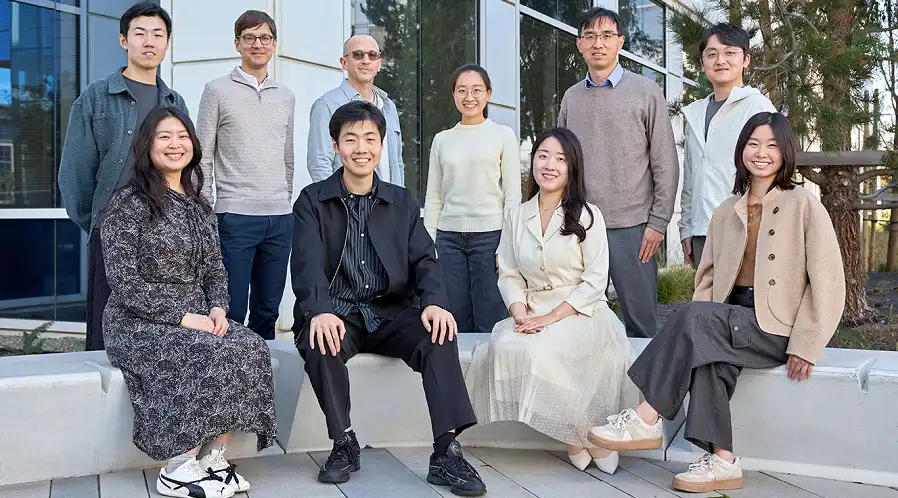
Discover how Stanford PhD Kexin Huang and professor Jure Leskovec built Biomni at the Stanford AI Lab, spun it into Phylo with $13.5M in funding, and created the world’s most widely used AI biomedical co-scientist.
Imagine a brilliant lab partner who has memorized every biomedical research paper ever written. A partner who can effortlessly navigate dozens of databases, seamlessly write Python code across complex software packages, and integrate specialized bioinformatics tools right inside a unified workspace. Now imagine that partner finishing 60 hours of grueling, manual data cleaning, visualization, and hypothesis generation in just 40 minutes.
This isn't a futurist's daydream. It's the everyday reality for thousands of scientists currently using Biomni, a groundbreaking AI-powered biomedical research agent built at Stanford University’s SNAP Lab and now commercialized through its spin-out startup, Phylo.
For the AI People category at ReadInBrief.com, we dive deep into the founder story of Kexin Huang and Yuanhao "Jerry" Qu—the minds transforming "laborious mechanics" into instant medical breakthroughs.
Quick Overview: Biomni & Phylo at a Glance
The Technology: Biomni is a general-purpose biomedical AI agent. Unlike generic chatbots, it uses large language model (LLM) reasoning combined with tool-based execution to read scientific literature, write code, clean datasets, and design physical lab experiments from simple, natural language prompts.
The Core Traction: In its first nine months as an open-source project, more than 15,000 scientists utilized Biomni to automate 100,000 different scientific workflows, making it one of the most widely adopted AI co-scientist systems in biomedicine.
The Venture: Spun out of the Stanford AI Lab into the corporate entity Phylo, the founding team closed a massive $13.5 million Seed round backed by elite venture firms including Andreessen Horowitz (a16z) and Menlo Ventures.
The Bottleneck of Science: The Spark Behind Biomni
In the landscape of modern medicine, we are drowning in data but starving for time. Every year, thousands of biomedical papers, single-cell RNA sequences, and genomic datasets are published. Yet, the pace of actual breakthrough discoveries has paradoxically slowed down.
The hurdle in biomedical science is often not a lack of intelligence or ideas; it is the sheer mechanics of data processing. Before a scientist can test a new cure, they must spend weeks or months doing the grunt work: pulling genomic variants from messy databases, writing custom code to homogenize datasets, and manually plotting graphs.
While completing his PhD at Stanford, Kexin Huang saw this friction firsthand. He realized that if an intelligent agent could absorb the mechanical heavy lifting, human scientists could spend their time doing what they do best: deep biological thinking. Funded in part by a Stanford HAI Hoffman-Yee Research Grant, Huang and computer science professor Jure Leskovec set out to build a true virtual lab partner.
From a Simple Prompt to 60 Hours of Saved Work
What makes Biomni revolutionary is its "agentic architecture." It does not simply spit out text; it acts. When a scientist enters a casual question like, "Analyze the attached Perturb-seq data and generate a meaningful hypothesis," Biomni gets to work.
It breaks down the complex query into logical steps, chooses the exact bioinformatics tools needed, writes the required Python code, executes the code in a sandboxed environment, interprets the mathematical results, and presents a clean, fully cited report.
In one real-world case study highlighted by Stanford HAI, a researcher instructed Biomni to analyze 458 Excel files tracking continuous glucose monitoring, food intake, and physical activity across 30 participants. Biomni rapidly unraveled the patterns and generated novel insights—a grueling task estimated to take a human researcher over 60 hours to complete manually.
The Leap to Venture Capital: Launching Phylo
The academic community's response was electric. As open-source adoption skyrocketed, the founding team realized that to truly scale this technology safely into clinical pipelines and biopharma labs, they needed to bring it to the commercial market.
In September 2025, the technology officially made the leap from university research to the startup world. Kexin Huang stepped into the role of CEO, launching the corporate entity Phylo alongside co-founder Yuanhao "Jerry" Qu.
Backed by a $13.5 million seed round co-led by a16z and Menlo Ventures' Anthology Fund, Phylo is now rapidly expanding its commercial ecosystem. While the core codebase remains open-source to fuel global academic research, Phylo offers Biomni Lab—an enterprise-grade, highly secure cloud platform tailored for biotechnology firms and pharmaceutical giants. Today, the system integrates over 120+ software packages, 70+ databases, and 190+ specialized biological tools natively within a single environment.
What’s Next for the Virtual AI Biologist?
While Biomni already approaches human-level performance in database querying, molecular cloning design, and sequence analysis, the journey ahead is focused on pushing the frontier of agentic reasoning. The team continues to build next-generation open-weight agents and real-world evaluations capable of handling complex, multi-step biological self-correction.
The ultimate goal for Phylo isn't to replace the human element in medicine, but to supercharge it. By giving every scientist an elite AI co-partner, the road to curing rare diseases, designing personalized medicine, and engineering novel therapies just got radically shorter.
Comments (0)
No comments yet. Be the first to share your thoughts!