Suchi Saria Named to TIME100 AI 2026 for AI System Tackling Sepsis

Author
Ravi Prajapati
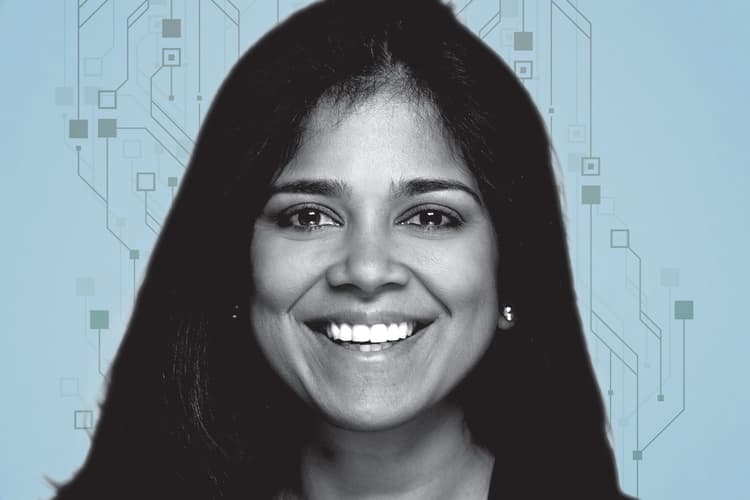
Suchi Saria joins TIME100 AI 2026 after Bayesian Health’s FDA-cleared AI system showed promising results in detecting sepsis earlier in hospitals.
Quick Overview
Who: Suchi Saria, founder and CEO of Bayesian Health and Johns Hopkins computer scientist
Recognition: Named to the TIME100 AI 2026 list
Why: Her work developing AI-powered systems for earlier detection of sepsis
Major milestone: Bayesian Health’s Sepsis Flagging Device received FDA 510(k) clearance on April 30, 2026
Clinical impact: Earlier research associated timely use of the system with an 18.7% relative reduction in in-hospital mortality
Latest deployment data: Cleveland Clinic reported 46% more identified sepsis cases, 10x fewer false alerts and 7x more alerts before antibiotics compared with legacy tools
Suchi Saria Named Among TIME’s 100 Most Influential People in AI for 2026
Suchi Saria, founder and CEO of Bayesian Health and a computer scientist at Johns Hopkins University, has been named to the TIME100 AI 2026, TIME’s annual list recognizing influential people shaping artificial intelligence.
TIME’s profile of Saria, published on August 27, highlights her work applying AI to one of healthcare’s most difficult problems: detecting sepsis early enough for clinicians to intervene.
The recognition comes during a significant year for Saria and Bayesian Health. In April, the company’s Bayesian Health Sepsis Flagging Device received FDA 510(k) clearance, providing regulatory clearance for software designed to aid healthcare providers in the early detection or prediction of sepsis risk in adult patients.
The system is designed to support clinicians rather than replace their medical judgment.
Why Sepsis Detection Matters
Sepsis remains a major healthcare challenge because a patient's condition can deteriorate rapidly and early symptoms can overlap with those of other illnesses.
According to the U.S. Centers for Disease Control and Prevention, at least 1.7 million adults in the United States develop sepsis each year. At least 350,000 adults who develop the condition die during hospitalization or are discharged to hospice.
The CDC also reports that sepsis is involved in about one in three hospital deaths among adults.
That makes early recognition particularly important.
Saria and researchers at Johns Hopkins developed the Targeted Real-Time Early Warning System, commonly known as TREWS, to identify patterns associated with sepsis before the condition might otherwise be recognized.
The technology analyzes information already generated during patient care, including clinical history, vital signs, laboratory results and clinical notes, looking for changes that could indicate increased risk.
The Research Behind the AI System
Unlike many healthcare AI projects that remain at the experimental stage, Saria's work has been evaluated in real clinical environments.
A 2022 study published in Nature Medicine evaluated TREWS across 590,736 patients at five hospitals.
Researchers focused on 6,877 sepsis patients who were flagged by the system before antibiotics were started.
When providers evaluated and confirmed a TREWS alert within three hours, researchers found an 18.7% adjusted relative reduction in in-hospital mortality, along with reductions in organ failure and hospital length of stay compared with patients whose alerts were not confirmed within that window.
The result does not mean the algorithm alone caused an 18.7% mortality reduction. The study was observational, and the reported association involved timely clinician interaction with the alert, an important distinction when evaluating real-world clinical AI.
Cleveland Clinic Reports Strong Early Results
More recent deployment data provides another indication of how the technology could perform in practice.
At Cleveland Clinic Fairview Hospital, Bayesian Health's software was used for more than 3,330 patients during 2024 and the first part of 2025.
According to Cleveland Clinic, pilot data comparing the technology with legacy tools showed:
a 46% increase in identified sepsis cases
a 10-fold decrease in false alerts
a 7-fold increase in cases alerted before antibiotics were administered
Cleveland Clinic subsequently announced an expanded rollout of Bayesian Health's AI platform across its enterprise.
These numbers are particularly relevant because excessive false alerts have long been a practical challenge for clinical decision-support systems. An AI model can perform well technically but still fail in practice if clinicians receive so many alerts that important warnings become difficult to distinguish.
FDA Clearance Marks Another Step for Clinical AI
The regulatory milestone adds another dimension to Saria's TIME100 AI recognition.
FDA records show that the Bayesian Health Sepsis Flagging Device, identified as K250680, received 510(k) clearance on April 30, 2026.
The cleared indication covers its use by healthcare providers, alongside clinical assessments and laboratory information, to aid in the early detection or prediction of sepsis developing within 24 hours in adult patients.
The system can be used from emergency-department presentation or hospital admission through a patient's stay in an acute-care setting.
In August 2026, the Centers for Medicare & Medicaid Services also finalized a new technology add-on payment for FY2027 involving the Bayesian Health device. CMS reported an average technology cost of $95.14 per eligible case and set a maximum add-on payment of $61.84.
That development could be important for adoption because moving clinical AI from research into routine care depends not only on model performance, but also on regulation, hospital workflows, economics and reimbursement.
A Personal Motivation Behind the Technology
For Saria, the work also has a personal connection.
In 2017, she lost her nephew to sepsis, an experience that helped shape her focus on improving early detection of the condition.
Saria has spent more than a decade researching how data from electronic health records can be transformed into useful clinical signals.
Her work illustrates a broader shift in healthcare AI: from models that demonstrate impressive benchmark performance toward systems expected to function reliably inside real clinical workflows.
Saria co-authored a 2026 Nature Medicine article on clinical AI readiness arguing for stronger real-world evaluation of medical AI rather than relying primarily on benchmark results. The authors called for an evaluation-focused approach capable of building trust as AI systems move into clinical practice.
What Happens Next?
The TIME100 AI recognition arrives after years of research, clinical deployment and, now, regulatory clearance. But it also puts greater attention on what happens as Bayesian Health expands.
TIME noted that the next challenge is demonstrating whether the results reported so far can hold across hospitals with different patient populations, workflows and electronic health record environments.
That is a critical test for healthcare AI generally.
A model that works inside a research institution or controlled pilot is useful. A system that can maintain performance, avoid excessive false alarms, integrate into clinician workflows and improve patient outcomes across diverse healthcare systems is considerably more consequential.
Saria's inclusion in the TIME100 AI 2026 therefore reflects more than recognition of an AI researcher. It highlights a growing phase of the AI industry in which the most important question is increasingly not simply what a model can predict, but whether it can improve decisions in the real world.
Comments (0)
No comments yet. Be the first to share your thoughts!