UN Launches First Global Forum to Shape AI Rules for Every Nation
Author
Ravi Prajapati
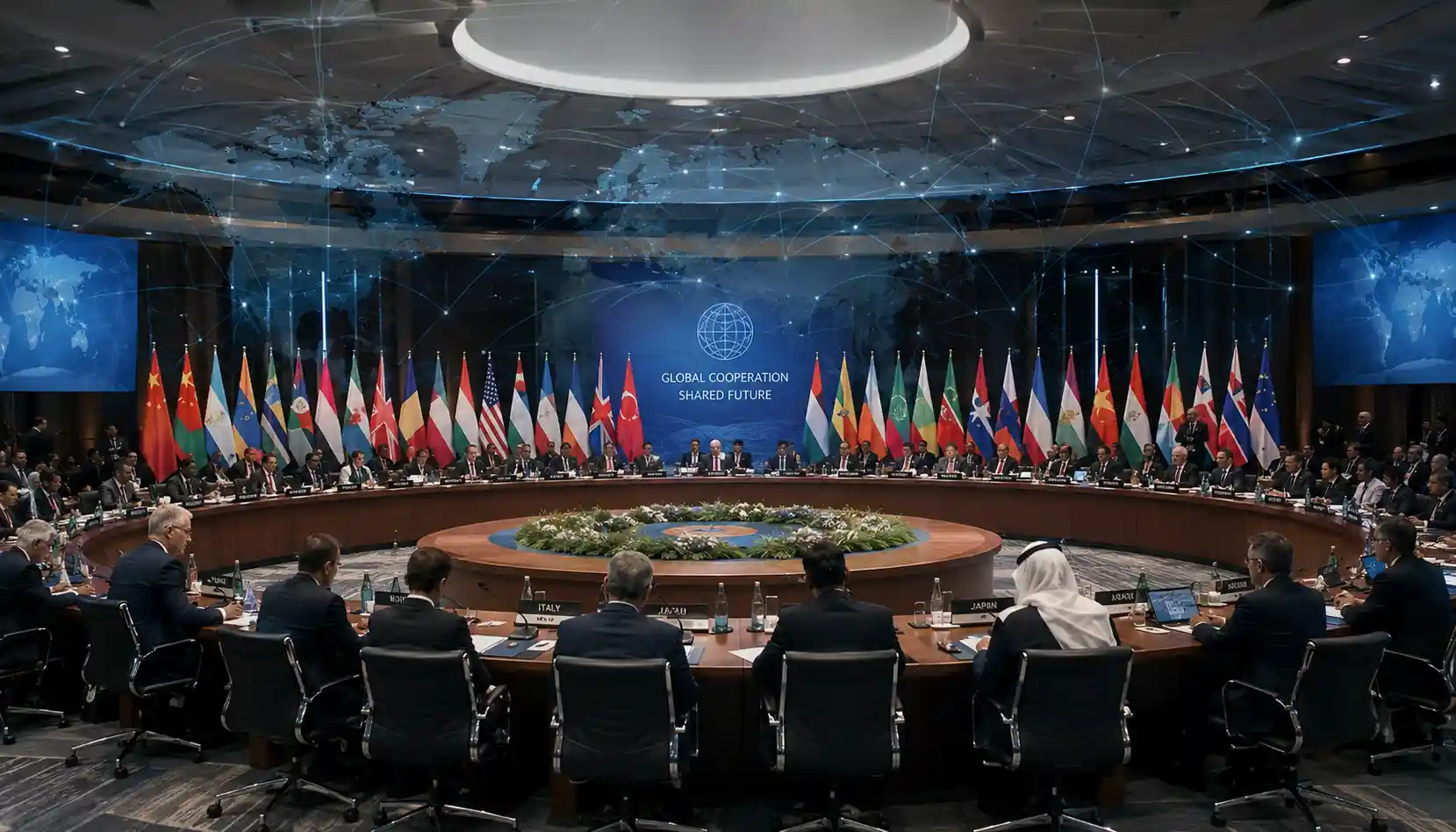
The UN kicked off its first Global Dialogue on AI Governance in Geneva on July 6, bringing together 194 nations to build fairer, safer AI rules for all humanity.
The United Nations opened its inaugural Global Dialogue on AI Governance in Geneva on July 6, 2026, marking the first time every UN member state has been formally invited to help shape international rules for artificial intelligence. The two-day event brings together governments, technology companies, researchers, and civil society groups to address AI safety, accountability, and the widening gap between nations that build AI and those most affected by it. More than 1,500 written submissions from organizations worldwide shaped the agenda ahead of the forum.
Every Country Gets a Seat at the AI Table
For years, decisions about how artificial intelligence should be built, deployed, and governed have been made largely by a handful of technologically advanced nations and major tech companies. On July 6, 2026, that dynamic shifted.
The United Nations opened the Global Dialogue on Artificial Intelligence Governance in Geneva, Switzerland, launching the first intergovernmental platform under a UN General Assembly mandate where all 194 member states can participate in shaping AI policy on equal footing. No observers. No second-tier access. Every government gets a seat.
UN Secretary-General António Guterres framed the stakes plainly at the opening session: "AI is advancing at runaway speed. The question is whether we will govern it together, or let it govern us. For the first time, the AI Dialogue gives every country a seat at the table. We must now turn global participation into global action to make AI safer, fairer, more accessible, and more ethical."
Why Geneva, Why Now
The timing of the dialogue is deliberate. AI regulation has accelerated sharply in recent years, with major frameworks emerging in the European Union, the United States, China, and the United Kingdom. But these frameworks have largely reflected the interests and capacities of wealthy, AI-producing nations. Countries in the Global South, which often lack the technical infrastructure to shape these conversations, have nonetheless been deeply exposed to AI's economic and social effects.
The AI Dialogue, established by UN General Assembly resolution A/RES/79/325, was designed to correct that imbalance. Developing countries and less-represented regional blocs participate with full standing, able to influence outcomes rather than simply observe them.
Egriselda López, Permanent Representative of El Salvador to the UN and Co-Chair of the Dialogue, noted that the credibility of the process has been built through openness: "Our collective success will be defined by every voice, perspective, experience, and contribution that is shaping the path forward for AI."
Estonia's Permanent Representative and fellow Co-Chair, Rein Tammsaar, called on the UN to use its convening power to transform AI into a global public good, describing the Geneva event as a potential turning point: "The first Global Dialogue on AI Governance in Geneva should spark AI's San Francisco moment."
Six Months of Global Input
The forum did not arrive without groundwork. Since January 2026, the UN organized structured consultations across thematic, regional, and virtual formats. Governments, civil society organizations, private sector representatives, academics, and technical experts all contributed.
The result was more than 1,500 written submissions from organizations and individuals spanning every regional group. The analysis of those submissions revealed some notable patterns. Governments consistently placed capacity-building at the top of their priority list. Most other stakeholder groups ranked safety first. Transparency, accountability, human oversight, and the social and cultural implications of AI all ranked highly across groups.
There was also one clear shared expectation: people want this process to continue. More than 500 submissions specifically called for the dialogue to extend beyond July 2026.
A Scientific Foundation for Policy
One week before the Geneva forum opened, the Independent International Scientific Panel on Artificial Intelligence released its preliminary report. The panel, co-chaired by AI pioneer Yoshua Bengio of Canada and journalist and Nobel Peace Prize laureate Maria Ressa of the Philippines, was composed of 40 independent scientists and experts selected from more than 2,600 candidates through an open review process.
The panel's report gives governments attending the dialogue a shared, evidence-based foundation to work from. Its warning is notable: current safeguards are not keeping pace with how quickly AI capabilities are expanding.
The panel's findings sit at the center of what the AI Dialogue is trying to solve. Without a common understanding of where AI is heading and what risks it carries, it is difficult for nations to coordinate effective governance.
What Is Being Discussed
The two-day programme covers four broad themes:
Opportunities and implications of AI across society, economy, and culture.
Bridging the AI divide, ensuring that lower-income nations are not locked out of AI's benefits or left without tools to manage its risks.
International cooperation on governance frameworks, technical standards, and shared principles.
Human oversight, ensuring that automated systems remain subject to meaningful human control, consistent with international law.
Annalena Baerbock, President of the UN General Assembly, broadened the frame beyond technology policy: "This Global Dialogue is not merely about regulating a technology. It is about defining a shared vision in which technological progress goes hand in hand with human dignity, equity, and sustainable development. If governed responsibly and collectively, AI has the potential to accelerate progress across nearly every Sustainable Development Goal."
She pointed specifically to healthcare, education, scientific research, disaster preparedness, and agriculture as areas where well-governed AI could be genuinely transformative.
The Institutions Behind the Forum
The AI Dialogue forms part of a broader Digital Week in Geneva, held alongside the AI for Good Global Summit and the WSIS Forum. The joint secretariat coordinating the dialogue includes the International Telecommunication Union (ITU), UNESCO, the Office for Digital and Emerging Technologies (ODET), and the Executive Office of the Secretary-General.
UNESCO Director-General Khaled El-Enany stressed the cultural dimension of the challenge: "Humanity's rich and diverse cultural and linguistic heritage is our greatest source of creativity, identity, and resilience. We must ensure artificial intelligence strengthens, rather than erodes, this diversity."
ITU Secretary-General Doreen Bogdan-Martin connected the forum directly to the 2.2 billion people still without meaningful internet access: "For AI to benefit all people, technology and international cooperation must move forward together. The Global Dialogue on AI Governance has sharpened the world's focus on building an AI future that includes everyone."
Amandeep Singh Gill, the UN's Special Envoy for Digital and Emerging Technologies, called July 6 a turning point: "The Global Digital Compact gave the multilateral system two things it never had before: an independent scientific panel to assess AI's impacts and opportunities, and a global dialogue where every government has a seat at the table. Today, for the first time, both come together."
Why This Matters
The AI Dialogue is, at its core, an attempt to prevent AI governance from becoming another arena where powerful nations write the rules and everyone else adjusts. The practical challenges are significant. AI development is moving faster than any treaty or regulatory framework has historically been able to keep up with. National interests among major powers diverge sharply. And the technical complexity of AI makes meaningful participation difficult for countries with limited digital infrastructure.
But the process itself represents something new. For the first time, a UN-mandated platform is giving every government formal standing in an AI governance conversation. Whether that standing translates into meaningful influence on outcomes will depend on how the dialogue evolves over the coming months.
What is clear from Geneva is that the conversation has started, and that far more nations are now part of it than before.
Feature Image Suggestion
A wide-angle photograph of a large international conference hall with national flags visible and delegates seated at the table, representing multilateral participation. A subtle overlay showing globe coordinates or a faint network grid could reinforce the "global governance" theme.
Source: UNESCO
Comments (0)
No comments yet. Be the first to share your thoughts!