Utkarsh Saxena Named to TIME100 AI 2026 for Bringing AI to Indian Courts

Author
Ravi Prajapati
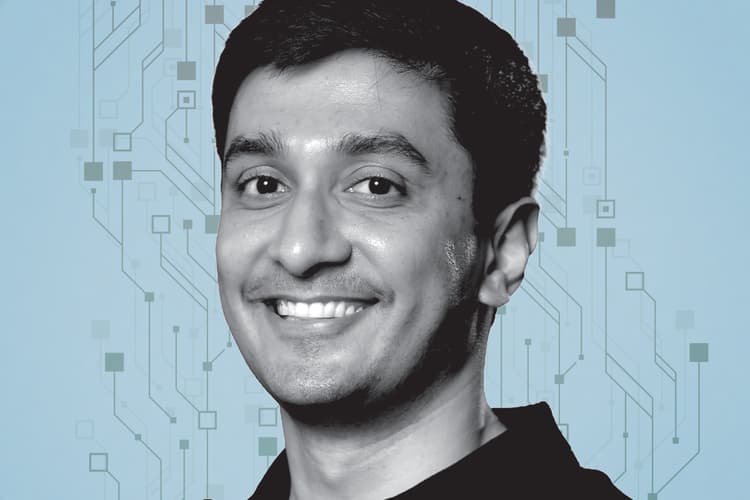
Utkarsh Saxena joins TIME100 AI 2026 as Adalat AI brings courtroom transcription and judicial AI tools to 6,000+ judges across 11 Indian states.
Quick Overview
Who: Utkarsh Saxena, co-founder and CEO of Adalat AI
Recognition: Named to TIME100 AI 2026
What Adalat AI does: Builds AI-powered transcription, case management and paperless workflow technology for courts
Current reach: More than 6,000 judges across 11 Indian states, according to Adalat AI
Major expansion: Andhra Pradesh has mandated the technology across 733 courtrooms
The bigger problem: India's district judiciary currently has more than 51 million pending cases
Latest development: Adalat AI says it has joined Y Combinator's Fall 2026 batch as a nonprofit
Utkarsh Saxena Joins TIME100 AI 2026 as Adalat AI Expands Across Indian Courts
Utkarsh Saxena, co-founder and CEO of Adalat AI, has been named among the TIME100 AI 2026, recognizing his work applying artificial intelligence to one of India's most persistent institutional challenges: judicial delays.
TIME's profile of Utkarsh Saxena, published on August 27, highlights an AI story that looks very different from the race to build bigger foundation models.
Instead, Saxena and Adalat AI are using AI to tackle the everyday administrative work that can slow down courts, including recording witness testimony, transcription, case management and the creation of judicial records.
The technology is now reaching significant scale.
Adalat AI currently says it has reached more than 6,000 judges across 11 states, covering roughly 20% to 25% of courtrooms nationwide. The organization also reports a 30% to 50% reduction in case timelines, although these performance figures are company-reported.
Why India's Courts Need Better Technology
The scale of India's judicial backlog helps explain why Saxena's work attracted TIME's attention.
Current data from India's National Judicial Data Grid shows more than 51 million pending cases in district and subordinate courts alone.
Of those, approximately:
19.36 million have been pending for less than one year
11.69 million have been pending for one to three years
6.83 million have been pending for three to five years
8.4 million have been pending for five to ten years
4.79 million have been pending for more than ten years
The figures change continuously because the NJDG is updated regularly, but they illustrate the enormous scale of the administrative challenge facing India's justice system.
In July 2026, the Indian government also told Parliament that more than 1.17 million cases had been pending for over 20 years across the Supreme Court, High Courts and district and subordinate courts as of July 16.
For Saxena, the problem is not theoretical.
From Supreme Court Clerk to AI Founder
Saxena's first case while serving as a law clerk at India's Supreme Court involved a man who had spent more than 12 years in prison waiting for his trial to begin, according to TIME.
The Supreme Court eventually freed the man, and the case led to a wider examination of delays in narcotics trials.
That experience fits into a much larger problem.
The India Justice Report 2025 found that 76% of India's prison population was made up of undertrial prisoners in 2022, up from 66% a decade earlier. These are people awaiting completion of investigation or trial rather than serving sentences following conviction.
Saxena later worked across law, policy and economic development before building Adalat AI.
According to his profile from the Elevate Prize Foundation, he has worked with the Law Commission of India, India's Ministry of Finance, the World Bank and Boston Consulting Group.
He holds a BA/LLB from the University of Delhi and an LLM from Harvard Law School, completed graduate studies in international development at Harvard Kennedy School, and is completing a PhD in public policy at the University of Oxford.
What Is Adalat AI?
Founded in 2023, Adalat AI is building technology specifically for judicial systems rather than adapting a generic enterprise AI product for courts.
One of its central technologies is speech recognition designed around Indian languages, dialects and legal terminology.
That matters because courtroom transcription is a more complex problem than simply converting everyday speech into text.
Proceedings can involve legal vocabulary, regional accents, multiple languages, rapid exchanges and formal testimony that needs to become part of an official judicial record.
In many resource-constrained Indian courts, judges and staff still spend substantial time manually recording testimony and producing court documents.
Adalat AI aims to automate parts of that administrative workload while leaving judicial decisions with humans.
TIME reports that Saxena has drawn a clear boundary around that distinction: the software does not make judicial decisions. Court data also stays on Indian servers rather than being sent to third-party APIs.
That approach is particularly important in legal AI, where an incorrect automated decision could affect someone's rights or liberty.
Andhra Pradesh Is Taking Adalat AI Statewide
One of the strongest signals that the technology is moving beyond pilot projects comes from Andhra Pradesh.
The Andhra Pradesh High Court has mandated Adalat AI across 733 courtrooms in all 13 judicial districts, according to the company.
The deployment covers more than transcription.
Adalat AI says its Live Court system can help with:
recording evidence and witness depositions
dictating daily and final orders
preparing judgments
managing cause lists
handling courtroom administrative workflows
Its Judge's Chamber tools also provide dictation, recorded speech-to-text, translation and AI-powered document search.
Andhra Pradesh follows other statewide implementations.
Kerala mandated Adalat AI's transcription technology for recording witness depositions across courts in the state from November 2025, while Sikkim mandated electronic filing using the organization's paperless court technology in June 2026.
This makes the project notable not simply because AI is being tested inside courts, but because parts of the technology are becoming embedded in actual judicial infrastructure.
Adalat AI Is Now Reaching 6,000+ Judges
TIME reported that Adalat AI was operating in 5,500 courtrooms across 11 states when profiling Saxena.
More recent information published by Adalat AI puts its reach at 6,000+ judges across 11 partner states.
The organization lists states including Andhra Pradesh, Bihar, Delhi, Haryana, Karnataka, Kerala, Odisha, Punjab, Rajasthan, Sikkim and Madhya Pradesh among areas reached through its programs.
The numbers suggest that Adalat AI is becoming an example of AI adoption at a scale rarely seen in public-sector institutions.
A Different Model for Building AI
Saxena's inclusion in TIME100 AI is also notable because Adalat AI represents a very different model from many companies currently attracting attention in artificial intelligence.
Instead of building a general-purpose chatbot or competing on the size of its underlying model, the organization is focusing on a narrow institutional problem.
The technology is trained and adapted for the realities of Indian courts, including local languages and limited-resource environments.
That approach aligns with a broader idea sometimes described as frugal AI: developing AI systems that deliver practical value without requiring the enormous infrastructure associated with frontier-model companies.
The Wall Street Journal recently highlighted Adalat AI as an example of India's emerging cost-conscious AI strategy, noting how the organization has developed courtroom tools designed to operate within the country's infrastructure and economic constraints.
Adalat AI Also Joins Y Combinator
Saxena's TIME100 AI recognition comes alongside another significant development.
Adalat AI recently announced that it has been accepted into Y Combinator for its Fall 2026 batch.
The organization says it is the first nonprofit accepted by Y Combinator in nearly five years and among the first Indian-founded nonprofits in the accelerator's history. Saxena and co-founder Arghya Bhattacharya are expected to work with the Y Combinator team in San Francisco from September through December 2026.
The organization says it plans to use that momentum to take its justice technology beyond India and into other parts of the Global South.
Why TIME's Recognition of Saxena Matters
Much of the global AI conversation continues to revolve around model benchmarks, GPUs, data centers and competition among companies building frontier models.
Saxena's work represents another side of the AI story.
The impact of artificial intelligence may increasingly depend on how effectively specialized systems can solve specific problems inside existing institutions.
For India's courts, that could mean something as straightforward as removing hours of manual transcription and paperwork from a judge's workload.
Multiply that productivity gain across thousands of courtrooms, however, and the potential impact becomes much larger.
The technology will still need continued evaluation around accuracy, privacy, security and real-world effects on case timelines. Company-reported efficiency improvements should also be independently validated as deployment expands.
But Adalat AI's growth from an experiment into technology reaching more than 6,000 judges shows how quickly narrowly focused AI systems can move from research projects into public infrastructure.
Saxena's inclusion in the TIME100 AI 2026 therefore highlights an important shift in the AI industry: influence is no longer measured only by who builds the most powerful model, but increasingly by who can make AI useful where existing systems struggle most.
Comments (0)
No comments yet. Be the first to share your thoughts!