Vivek Raghavan Named to TIME100 AI 2026 as Sarvam AI Builds India’s Sovereign AI Stack
Author
Ravi Prajapati
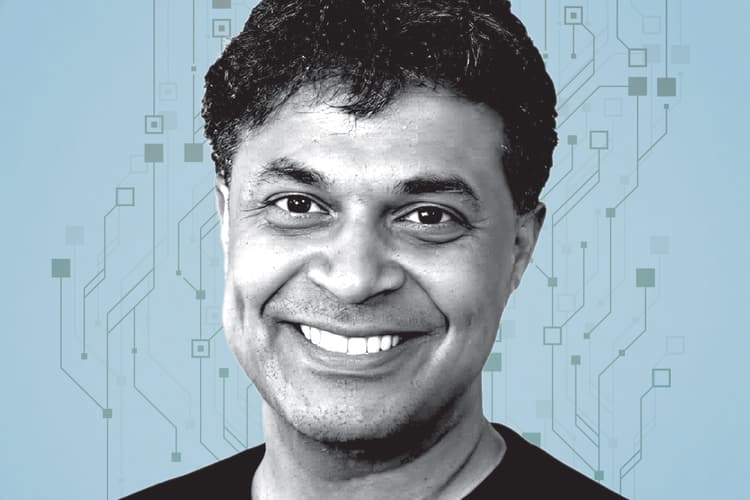
Sarvam AI co-founder Vivek Raghavan joins TIME100 AI 2026 as the $1.5B startup builds sovereign AI models and infrastructure for India.
Quick Overview
Who: Vivek Raghavan, co-founder of Sarvam AI
Recognition: Named to TIME100 AI 2026
Why: His work building sovereign, multilingual AI infrastructure for India
Company: Sarvam AI, founded with Pratyush Kumar in 2023
Latest valuation: Around $1.5 billion
Latest funding: $300 million Series B, including investments from HCLTech, Bessemer Venture Partners and Nvidia
Models: Sarvam 30B and Sarvam 105B, alongside speech, document and multimodal AI systems
Government role: Sarvam was selected under the IndiaAI Mission to help develop India's sovereign foundation-model ecosystem
Vivek Raghavan Joins TIME100 AI 2026
Vivek Raghavan, co-founder of Sarvam AI, has been named to the TIME100 AI 2026, recognizing his role in India's push to build its own artificial intelligence infrastructure rather than depend entirely on foreign AI platforms.
TIME's profile of Vivek Raghavan, published on August 27, focuses on a question increasingly important to India's technology ambitions: Can a country of nearly 1.5 billion people control its AI future without relying on foreign technology?
For Raghavan, the answer requires more than developing another chatbot.
His company is attempting to build a full-stack AI ecosystem spanning foundation models, speech, document intelligence, inference infrastructure and enterprise AI, with a particular focus on India's languages and local requirements.
That mission has also attracted significant capital.
Sarvam announced a $300 million Series B in June 2026, initially closing $234 million at a $1.5 billion post-money valuation. HCLTech and Bessemer Venture Partners participated alongside existing investors including Khosla Ventures and Peak XV Partners.
In August, Nvidia and other investors joined the remaining portion of the round, reinforcing Sarvam's position as one of India's most heavily funded AI startups.
From Aadhaar to India's AI Infrastructure
Raghavan's work on population-scale technology began well before the current generative AI boom.
He spent more than a decade working on Aadhaar, India's digital identity infrastructure, which TIME describes as the world's largest biometric identification system.
That experience is significant because Sarvam AI is pursuing a similar population-scale philosophy.
Rather than simply creating AI models that perform well on global English-language benchmarks, Raghavan argues that India needs technology designed around its own languages, culture, infrastructure and public-service requirements.
Before launching Sarvam, Raghavan and co-founder Pratyush Kumar worked with AI4Bharat, the IIT Madras research initiative focused on open-source technologies for Indian languages.
The pair founded Sarvam AI in August 2023.
Why Raghavan Is Pushing for Sovereign AI
At the center of Raghavan's strategy is the concept of AI sovereignty.
India is one of the world's largest markets for global AI platforms, but Raghavan has repeatedly warned that simply consuming foreign AI services could create long-term technological dependence.
In a recent interview, he argued that India needs a domestic alternative spanning the complete AI stack, including models, inference infrastructure and applications.
His concern is essentially about where data and intelligence ultimately reside.
As Raghavan told Bharatvaarta, Indians risk “exporting our data and importing intelligence” when relying predominantly on foreign AI systems.
Speaking separately to Moneycontrol in July, Raghavan argued that without a full-stack domestic alternative, India risks becoming what he described as a “digital colony.”
For Sarvam, sovereignty therefore goes beyond where a model was originally trained.
The company's platform emphasizes domestic infrastructure, Indian-language capabilities and deployment options that allow organizations to operate AI through Indian-hosted infrastructure, private clouds or on-premise environments.
Sarvam 30B and 105B Take on Indian AI Tasks
Sarvam made one of its biggest technical moves in March 2026 with the release of Sarvam 30B and Sarvam 105B.
TIME describes the two models as open-source, open-weight systems capable of handling reasoning, mathematics, coding and other advanced tasks.
The Indian government has also highlighted the models as part of the country's growing domestic AI ecosystem.
According to India's Press Information Bureau, Sarvam's 30-billion and 105-billion-parameter models are among the indigenous foundation models developed with support under the IndiaAI Mission.
The government says some sovereign models supported through the program have demonstrated strong performance on Indic-language benchmarks, with Sarvam showing particularly strong capabilities in document understanding and Indian-language processing.
Sarvam is already looking beyond these models.
Raghavan has said the company is working toward a trillion-parameter foundation model, arguing that India needs the technical capability to build frontier-scale models regardless of whether foreign open-source alternatives remain available in the future.
AI That Works Across India's Languages
Language is one of the biggest differences between India's AI market and many Western markets.
India has hundreds of languages and dialects, while 22 languages are officially recognized in the Constitution.
Sarvam is positioning localization as one of its primary competitive advantages.
TIME highlighted Sarvam Vision, introduced in February, which can process and extract text from documents across 22 Indian languages plus English. Sarvam says the system achieves higher word accuracy on its evaluated tasks than competing systems including Gemini and ChatGPT. That comparison is based on company-reported testing and should therefore be interpreted accordingly.
The broader platform also includes speech recognition, translation, conversational agents, document processing and other AI capabilities designed around Indian-language use cases.
This focus matters because an AI system that performs extremely well in English does not automatically deliver equivalent results across Hindi, Tamil, Telugu, Bengali, Gujarati or India's many other languages and dialects.
Sarvam's AI Is Already Operating at Scale
Sarvam is also moving beyond model development into production infrastructure.
Recent reporting indicates the company's inference platform is handling more than 2 million conversations and 10 million API calls per day.
Its document-processing systems have reportedly digitized more than 35 million pages, while its speech models process over 500,000 hours of audio each month.
The technology is also being applied to large-scale Indian services.
According to recent reporting, Sarvam technology supports Aadhaar voice services across 10 languages, while SBI Life Insurance is deploying its Samvaad technology across an ecosystem involving around 80 million customers and 350,000 distributors.
These deployments are important because they move the sovereign-AI debate away from model benchmarks and toward whether domestic AI infrastructure can handle real production workloads.
India Is Investing Heavily in Sovereign AI
Raghavan's TIME100 AI recognition also comes as India's government significantly expands its domestic AI infrastructure.
The government approved the IndiaAI Mission with an outlay of ₹10,371.92 crore over five years, covering areas including compute infrastructure, indigenous foundation models, datasets, startups and AI applications.
By August 2026, the government said:
20 indigenous foundation-model proposals had been selected for support
237 projects had received subsidized compute approval
approximately 9.318 million GPU hours had been sanctioned
a roughly 1.1 EFLOPS high-performance AI compute system had been ordered for the NIC Data Centre in Delhi
Earlier government figures also showed that more than 38,000 GPUs had been empaneled through 14 AI service providers, with plans underway to add another 20,000 GPUs.
Sarvam has emerged as one of the companies at the center of this strategy.
The company was selected under the IndiaAI Mission to develop sovereign foundation-model capabilities and received government-backed access to large-scale GPU compute.
Nvidia Joins Sarvam as an Investor
Another major development arrived shortly before TIME published its 2026 list.
In August, Nvidia joined Sarvam's Series B financing alongside Activate, Glade Brook Capital and Gaja Capital.
The approximately $74 million additional tranche followed Sarvam's $234 million first close and completed the company's planned $300 million financing round, according to corporate filings reported by Moneycontrol.
Sarvam said in June that the capital would fund research into its next frontier model, including agentic AI, coding and cybersecurity applications, while also providing access to additional compute and helping expand its enterprise deployment capabilities.
The financing puts Sarvam's valuation at approximately $1.5 billion.
Can Sarvam Compete With Global AI Giants?
The bigger question is whether localization and sovereignty can create a durable competitive advantage against companies with substantially larger budgets and global distribution.
OpenAI, Google, Anthropic and other international AI companies already have enormous user bases in India.
Sarvam's strategy is different.
Rather than attempting to beat global AI companies purely through consumer chatbot adoption, it is focusing on areas where Indian infrastructure, languages, data control and deployment requirements matter.
That includes government services, regulated industries, financial institutions and enterprises that may prefer to keep sensitive AI workloads inside India or within their own infrastructure.
Cost is another part of the strategy.
Raghavan has argued that companies will increasingly evaluate AI not simply by which model scores highest on benchmarks, but by how much useful intelligence they receive for every dollar spent.
That could become particularly important in India, where deploying AI across hundreds of millions of users creates very different economics from running limited enterprise pilots.
Why Vivek Raghavan's TIME100 AI Recognition Matters
Raghavan's inclusion in TIME100 AI 2026 represents something broader than the rise of another AI founder.
It reflects India's growing attempt to become a producer of foundational AI technology rather than primarily a consumer of models developed elsewhere.
Sarvam still faces substantial challenges.
Frontier AI development requires enormous amounts of compute, capital and specialized talent. Global competitors have significantly larger research budgets, established cloud infrastructure and hundreds of millions of users.
Sarvam will also have to prove that its localization advantage can translate into sustainable enterprise adoption and revenue once government-supported compute and early sovereign-AI momentum mature.
But the company has already moved quickly.
In roughly three years, Sarvam has launched domestic foundation models, built production AI infrastructure, secured hundreds of millions of dollars in funding, attracted Nvidia as an investor and become a central participant in India's sovereign AI strategy.
That makes Raghavan's TIME100 AI recognition particularly timely.
The larger question is no longer whether India will use artificial intelligence. It is how much of the intelligence, infrastructure and economic value behind that AI India will ultimately build and control itself.
Comments (0)
No comments yet. Be the first to share your thoughts!