AI Is Diagnosing Patients: What Happens When It Gets It Wrong?

Author
Ravi Prajapati
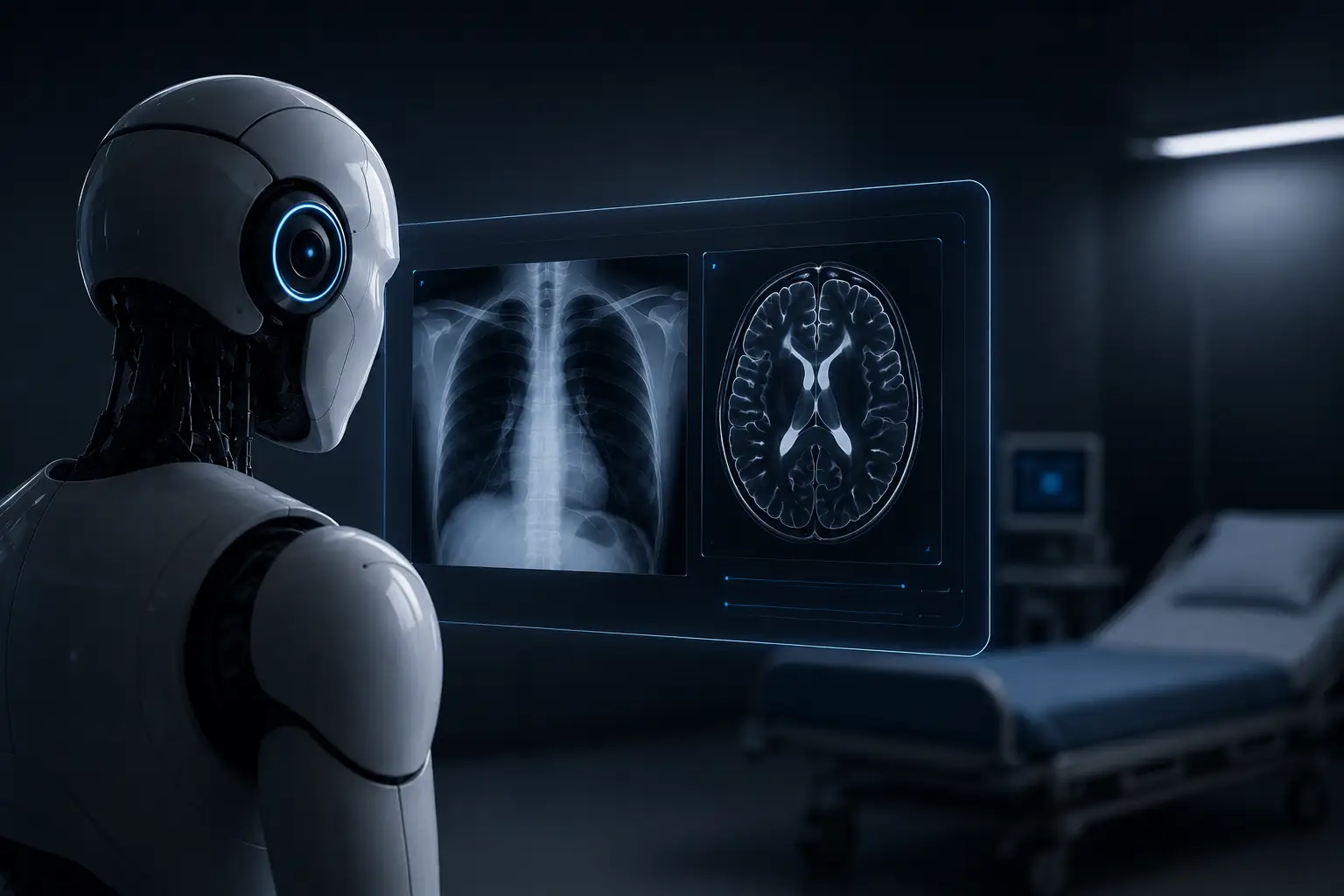
AI is now used in hospitals to diagnose cancer, detect heart conditions, and guide treatment. But what happens when it makes a mistake? This guide covers AI diagnostic errors, real cases, who is legally liable, and what patients need to know.
Artificial intelligence is rapidly becoming part of modern healthcare, helping doctors detect diseases, interpret medical images, prioritize patients, and recommend treatments with remarkable speed and accuracy. But no AI system is perfect. When an AI tool misdiagnoses a patient, delays treatment, or contributes to a harmful medical decision, an important question arises: Who is responsible? While AI can improve clinical outcomes, legal responsibility still rests with healthcare professionals, hospitals, developers, and medical device manufacturers depending on how the technology was used.
Every day, artificial intelligence scans millions of medical images, flags potential diseases, and helps doctors decide what treatment a patient needs. In many hospitals, an AI system sees your X-ray before your doctor does. It reads your ECG. It cross-references your symptoms with thousands of similar cases.
In many cases, this is genuinely good news. AI catches things human eyes miss. It works at 3 AM without fatigue. It processes volumes of data no individual clinician could manage alone.
But here is the question that does not get asked enough: what happens when it gets it wrong?
This is not a theoretical question. AI diagnostic errors are already happening. Lawsuits have already been filed. Patients have already been harmed. And the legal, ethical, and regulatory frameworks designed to protect those patients are struggling to keep up with how fast this technology is being deployed.
This article covers everything you need to know: how AI diagnosis works, where it fails, who is responsible when it does, and what this means for you as a patient.
How AI Is Used in Medical Diagnosis Right Now
Artificial intelligence has moved well beyond the experimental stage in healthcare. The numbers tell a clear story about how deeply it has been embedded into clinical practice.
According to Futurism's AI in healthcare statistics report for 2026, 89% of healthcare executives report using AI across clinical or operational functions as of 2025. In the United States, 74% of hospitals now use AI-powered diagnostic tools specifically in radiology departments, and 71% of acute-care hospitals have integrated predictive AI directly into their electronic health record (EHR) systems.
The regulatory picture reflects this growth. IntuitionLabs' FDA AI medical device tracker reports that 1,451 AI-enabled medical devices had been cleared by regulators by end-2025, up from just 6 in 2015. Radiology accounts for approximately 76% of all cleared devices, with cardiology and neurology applications growing steadily. In 2025 alone, the FDA cleared 295 new AI medical devices, meaning roughly one new AI diagnostic tool received regulatory authorization every 30 hours.
In practical terms, this means AI is actively involved in diagnosing:
Cancer from radiology scans, mammograms, and pathology slides
Heart conditions using ECG and cardiac imaging analysis
Sepsis risk from patterns in patient vitals and lab results
Diabetic retinopathy from retinal photographs
Neurological conditions including early signs of dementia
Skin cancers from dermatological images
When these systems work as advertised, the results are impressive. Futurism reports that AI algorithms can achieve up to 94% accuracy in tumor detection in controlled settings, and AI-supported hospitals have reported a 42% reduction in diagnostic errors compared to non-AI facilities. These are genuinely significant gains for patient safety.
But controlled settings and real-world deployment are very different environments.
The Problem: AI Makes Serious Medical Errors More Than You Think
The headline accuracy figures for AI diagnostic tools are almost always generated in controlled research conditions, using carefully curated data sets, with populations that closely match the data the model was trained on. The real world is messier, noisier, and more diverse.
The most comprehensive evidence of this gap came from a landmark study published in January 2026. Researchers from Stanford and Harvard evaluated 31 widely-used large language models including systems from Google, OpenAI, Anthropic, Meta, and specialized medical AI platforms. They tested these models against 100 real primary care consultation cases spanning 10 medical specialties, comparing performance against 10 board-certified internal medicine physicians.
The findings were striking: even the top-performing AI models made between 12 and 15 severe errors per 100 clinical cases. The worst-performing systems exceeded 40 severe errors for the same number of patient encounters. "As LLMs become an integral part of routine medical care, understanding and mitigating AI errors is essential," the researchers wrote.
The types of errors AI diagnostic systems make fall into several distinct categories:
False negatives occur when AI fails to detect a condition that is present. A scan shows cancer that the AI misses. A patient is sent home reassured when they should not be. These errors are particularly dangerous because they delay treatment during the window when it matters most.
False positives occur when AI flags a condition that does not exist. A healthy patient is told they may have cancer. The downstream effects: unnecessary biopsies, surgeries, anxiety, financial cost, and radiation exposure from follow-up imaging. AI Standard of Care estimates that even a 90% specificity rate on AI-powered ECG screening for atrial fibrillation applied across 10 million people would generate a massive number of false positive diagnoses, triggering unnecessary treatments and procedures at scale.
Overconfidence is a subtler but equally dangerous failure mode. AI systems often produce outputs without adequately communicating their own uncertainty. A physician presented with a confident AI recommendation may override their clinical instinct, when that instinct would have caught what the algorithm missed.
Dataset drift refers to performance degradation when a model encounters patient populations that differ from the data it was trained on. A model trained predominantly on patients from large academic medical centers may perform significantly worse in rural hospitals with different patient demographics.
The Bias Problem: AI Does Not Treat All Patients Equally
Among the most serious concerns in AI-assisted diagnosis is that these systems do not fail randomly. They fail predictably, and the patients they fail most consistently are already among the most underserved in healthcare.
A 2025 study published in Nature Medicine tested nine AI programs using over 1.7 million AI responses to 1,000 emergency room cases. Researchers kept the medical symptoms identical across cases but varied patient characteristics including race, gender, sexuality, income, and housing status. They found that AI recommendations changed based on these personal characteristics rather than the actual health condition. The same symptoms described by different patient types produced different diagnostic and treatment recommendations.
A 2024 UK government-commissioned review found that minority ethnic people, women, and people from deprived communities face disproportionate risk of poorer healthcare outcomes because of biases in AI medical tools. The review confirmed that pulse oximeters, already embedded in AI vital sign monitoring systems, overestimate blood oxygen levels in patients with darker skin. In the United States, this bias has been linked to delayed diagnosis and treatment, worse organ function, and higher mortality rates in Black patients.
The UK review also identified AI-based medical devices as potentially worsening the under-diagnosis of cardiac conditions in women, and flagged risk of discrimination based on patients' socioeconomic status.
Research published in Frontiers in Medicine noted that when AI systems trained on unbalanced datasets underperform for underrepresented populations, existing health disparities are not just maintained but actively made worse.
This is not merely an equity issue. It is a patient safety issue. And it is one the industry has been slow to address systematically.
Real Cases: When AI Diagnosis Has Gone Wrong
The consequences of AI diagnostic failure are no longer hypothetical. They are documented, litigated, and in some cases fatal.
AI Standard of Care's misdiagnosis case tracker details the emerging liability landscape across radiology AI failures, where 78% of FDA-cleared AI medical devices are concentrated, making it the highest-risk category for misdiagnosis.
In Texas, Attorney General Paxton secured the first-ever settlement with Pieces Technologies, a Dallas-based AI company, for making false and misleading claims about the accuracy and safety of its generative AI products deployed at major Texas hospitals. The AI system summarized patient conditions in real time, but investigation found the accuracy metrics the company had presented were likely inaccurate and deceptive.
Pediatric misdiagnosis cases are among the most documented AI failures in primary care settings. A real-world study of AI-based clinical decision support described cases including a pediatric peptic-ulcer misdiagnosis, the use of a contraindicated medication during the first trimester of pregnancy, and a missed positive H. pylori test where the AI system failed to suggest a safer clinical path.
Brandon J. Broderick's medical malpractice analysis reports that data from 2024 showed a 14% increase in malpractice claims involving AI tools compared to 2022, with the majority stemming from diagnostic AI used in radiology, cardiology, and oncology. Missed cancer diagnoses by machine-learning software have become a central focus in several high-profile lawsuits. In response, many malpractice insurers have revised their policies, with some introducing AI-specific exclusions and others requiring physicians to complete AI training to remain covered.
Who Is Legally Responsible When AI Gets a Diagnosis Wrong?
This is the question patients, lawyers, and healthcare systems are urgently trying to answer. The short answer, as of 2026, is that legal liability for AI diagnostic errors is genuinely unsettled. But the practical answer leans heavily toward the physician.
CM&F Group's legal analysis is direct: "The clinician whose name is on the chart is the clinician who bears responsibility for what's in it." There is currently no federal law in the United States that shifts malpractice liability from a clinician to an AI tool or its developer. Courts have historically held that physicians have a duty to independently apply the standard of care regardless of what an algorithm recommended.
Sermo's medical liability review confirms that in 2026, case law related to AI use in healthcare remains thin, but courts are expected to focus primarily on how the physician interpreted and acted on the software's output, applying the long-standing principle that a physician's duty of care to their patient is non-delegable.
The key questions courts are likely to examine include:
Did the clinician critically evaluate the AI recommendation rather than accepting it without independent verification?
Was the AI tool being used within the scope of its cleared indication?
Did the physician miss warning signs that the AI output was unreliable or inconsistent with the clinical presentation?
Did the hospital properly vet, train staff for, and monitor the AI tool it deployed?
Medical Economics' malpractice frontier analysis captures the dilemma facing physicians in precise terms: "Not using AI could be seen as negligent, while today, relying on it too heavily may be considered careless. It's a balancing act." As AI tools become standard practice, a physician who does not use available diagnostic AI may face questions about their standard of care. But a physician who accepts AI output without exercising independent clinical judgment may equally face liability for over-reliance.
Hospitals carry their own layer of liability. Davis and Davis legal analysis notes that facilities that fail to properly vet AI tools, train their staff, or monitor for known failure patterns may be directly liable. Manufacturer liability is also possible when an algorithm is defective or when a product was marketed in ways that overstated its reliability, though this introduces different legal theories than standard medical malpractice.
Academic legal analysis from Suffolk University Journal of High Technology Business Law notes that in May 2024, the American Law Institute approved its first-ever restatement of the law of medical malpractice, representing a shift away from strict reliance on customary practice toward a more patient-centered concept of reasonable care. This restatement is expected to shape how AI-related malpractice claims are evaluated by courts in the years ahead.
What ECRI Says About AI Diagnostic Risk in 2026
ECRI, the independent patient safety organization, placed AI diagnostic risks at the top of its 2026 patient safety concerns. The Association of Health Care Journalists reported on ECRI's findings, with ECRI's diagnostic safety program leader noting: "The truth about medicine is it's not black and white, it's very gray, so clinicians and systems have to deal with a lot of uncertainty about diagnoses."
ECRI's specific concerns center on the gap between AI performance in controlled research settings and real-world clinical environments, the absence of robust post-market surveillance for AI diagnostic tools, and the challenge of integrating AI into clinical workflows without creating automation bias, where clinicians defer to algorithmic outputs in ways that override sound clinical judgment.
The Regulatory Gap: Why Oversight Has Not Kept Pace
The scale of AI deployment in healthcare has significantly outpaced the regulatory frameworks designed to govern it.
IntuitionLabs' analysis of FDA AI medical device clearances identifies a critical problem: while AI adoption is accelerating rapidly with 295 new authorizations in 2025 alone, the pace of clinical trial evidence validating these tools in real-world conditions has not kept up. The current regulatory pathway relies heavily on the 510(k) premarket notification process, which was designed for traditional medical devices and does not fully address the unique risks of adaptive AI systems that can change their behavior over time without formal re-evaluation.
In January 2026, the FDA released its first draft guidance specifically on the use of AI in drug and biologic development, acknowledging that AI use in regulatory submissions has "increased exponentially" since 2016. But product-level clearance and population-level post-market monitoring are two different things, and the latter remains weak.
The EU's Artificial Intelligence Act, which explicitly classifies medical AI as high-risk and requires rigorous evaluation of accuracy, explainability, and bias auditing, represents the most comprehensive regulatory framework currently in place. It came into full effect in early 2026, requiring radiology AI tools operating in Europe to meet compliance standards around training data documentation, bias checks, and mandatory human oversight policies. U.S. regulation has not moved to the same level of specificity.
Frontiers in Medicine research frames the fundamental challenge clearly: "Responsibility for AI errors in healthcare remains ill-defined. Developers are tasked with designing transparent, reliable, and validated systems, yet they rarely interact with patients or clinical realities."
What Good AI-Assisted Diagnosis Looks Like
It is important to state clearly: the problem is not that AI has no place in medicine. Used well, AI diagnostic tools save lives. The problem is the gap between how these tools are deployed and how they should be deployed.
Evidence-based frameworks for responsible AI diagnostic deployment include:
Validation on local patient populations. An AI system validated in one country on one demographic profile should not be assumed to perform equally in a different context. The College of American Pathologists' position is explicit: AI tools must be validated on each lab's own patient population before clinical deployment.
Documented discordance monitoring. Hospitals should require documentation of both AI recommendations and final physician diagnoses, and monitor the rate at which clinicians override AI recommendations and why. This creates the evidence base needed to identify systematic AI failures before they accumulate into patient harm.
Explainability requirements. AI diagnostic tools should be required to communicate not just their conclusions but the reasoning and confidence levels behind them. A model that cannot explain why it flagged a finding is a tool that clinicians cannot effectively second-check. Explainability methodologies including SHAP and LIME are available and increasingly used in research; they are not universally applied in deployed systems.
Clear human-in-the-loop policies. For high-stakes diagnostic decisions, particularly initial cancer diagnoses, treatment pathway selection, and rare disease identification, AI should function as decision support, not decision maker. The human clinician must remain the accountable decision point.
Informed patient consent. Patients have a right to know when AI tools are involved in their diagnosis and what the known limitations of those tools are. This is both an ethical principle and an emerging legal expectation.
What This Means for You as a Patient
Understanding that AI may be involved in your medical care is the first step. Here is what you can do with that knowledge:
Ask questions about AI involvement. You are entitled to ask your healthcare provider whether AI tools are being used in your diagnosis and what those tools' known limitations are. This is not an adversarial question. It is an informed patient question.
Request independent clinical review for significant findings. If an AI tool provides a significant diagnostic output, particularly in radiology, oncology, or cardiology, it is entirely reasonable to ask whether a specialist has independently reviewed the underlying images or data rather than accepting the AI output as the final word.
Seek a second opinion for serious diagnoses. This has always been good medical practice. In the age of AI diagnostics, it becomes more important, not less. Two independent human clinicians reviewing data separately from an AI system provides a meaningful additional layer of safety.
Understand that bias exists. If you belong to a group that has historically been underrepresented in medical training data, including women, people of color, and people from lower socioeconomic backgrounds, you face elevated risk of AI diagnostic error. Advocate for yourself if a diagnosis does not match your symptoms or your instinct about your own health.
Know your legal options. If you believe you have been harmed because an AI diagnostic tool produced an incorrect result that a clinician failed to catch or properly evaluate, this may constitute grounds for a medical malpractice claim. Legal frameworks are still evolving, but the fundamental principle that physicians bear responsibility for their clinical decisions, including decisions made with AI support, remains intact.
The Bottom Line
AI diagnostic tools represent one of the most genuinely promising applications of artificial intelligence in any field. The potential to catch diseases earlier, reduce clinician burnout, and extend high-quality diagnostic capability to underserved communities is real and worth pursuing.
But the current landscape is characterized by deployment that has moved faster than evidence, faster than regulation, and faster than legal frameworks. Systems with known failure modes on specific patient populations are being used in routine clinical care. Physicians are navigating uncertain liability territory without clear guidance. Patients are often unaware of the AI involvement in their diagnosis and their rights when that involvement produces harmful errors.
The answer is not to halt AI adoption in healthcare. It is to insist that adoption is matched by accountability: rigorous real-world validation, transparent performance reporting, mandatory bias auditing, clearer legal liability frameworks, and genuine informed consent for patients.
AI should make medicine better for every patient. Right now, it makes it better for some patients and introduces new risks for others. That gap is the ethical challenge the industry needs to close.
Frequently Asked Questions About AI Medical Diagnosis
Can AI misdiagnose a patient?
Yes. Research from Stanford and Harvard published in January 2026 found that even top-performing AI diagnostic models make between 12 and 15 severe clinical errors per 100 cases, and that the worst-performing systems exceed 40 severe errors per 100 cases.
Who is responsible if an AI diagnostic tool gets a diagnosis wrong?
As of 2026, legal liability for AI diagnostic errors falls primarily on the physician whose name is on the chart. Courts apply the principle that a clinician's duty of care is non-delegable regardless of which tools they used. Hospitals and AI manufacturers may also face liability depending on the specific circumstances.
Is AI used in my hospital for diagnosis?
Almost certainly, at least in some capacity. 74% of U.S. hospitals use AI-powered diagnostic tools in radiology, and 71% have integrated predictive AI into their electronic health record systems. You have the right to ask your healthcare provider directly.
Are AI diagnostic tools FDA approved?
Many are FDA cleared, though clearance and approval are different standards. As of end-2025, 1,451 AI-enabled medical devices had received FDA marketing authorization. However, FDA clearance does not guarantee performance across all patient populations, and post-market monitoring of real-world performance remains limited.
Is AI better than doctors at diagnosing disease?
In specific, narrow tasks under controlled conditions, AI diagnostic tools can match or exceed average physician performance. For example, AI tumor detection achieves up to 94% accuracy in controlled settings. In real-world clinical environments with diverse patient populations, complex presentations, and incomplete data, the answer is far more complicated. AI and physicians working together, with genuine human clinical judgment overseeing AI output, consistently outperforms either alone.
What should I do if I think AI caused a misdiagnosis in my case?
Request a complete copy of your medical records, including any records of AI tool outputs or clinical decision support recommendations. Consult with a medical malpractice attorney. Consider seeking an independent review of your case by a specialist who was not involved in the original diagnosis.
Are AI diagnostic tools biased?
Evidence strongly suggests yes, in systematic ways. A 2025 Nature Medicine study found that AI diagnostic recommendations changed based on patient characteristics including race, gender, income, and housing status, even when symptoms were identical. Women, people of color, and patients from lower socioeconomic backgrounds face elevated risk of AI diagnostic error due to these biases.
Note: This article is for informational purposes only and does not constitute medical or legal advice. If you believe you have been harmed by a medical error, consult a qualified medical malpractice attorney.
Read Also:
Is the AI Bubble About to Burst? Here's the Data
Who Owns AI-Generated Art? The Copyright Battle Explained
10 Jobs AI Will Create in the Next 5 Years
When AI Makes a Mistake That Kills Someone, Who Goes to Prison?
Comments (0)
No comments yet. Be the first to share your thoughts!