Google AI Glasses vs Meta Ray-Ban: Who Is Winning the Smart Eyewear Race in 2026?

Author
Ravi Prajapati
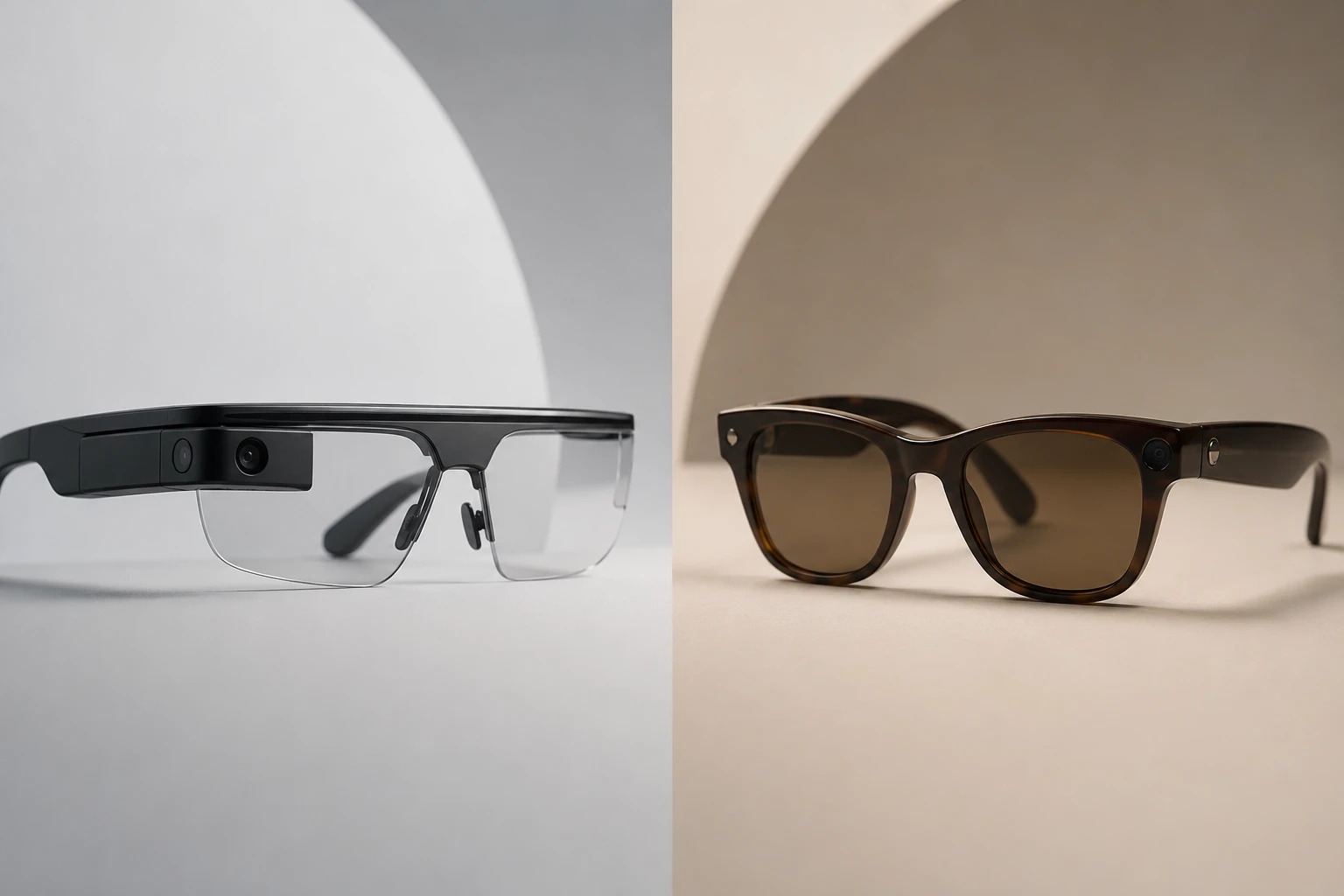
Which AI glasses are better in 2026: Google or Meta Ray-Ban? Full comparison of Gemini vs Meta AI, design, price, ecosystem and who is winning right now.
Smart glasses are no longer a futuristic concept. In 2026, two technology giants are locked in a serious competition to put AI in your ears, eyes, and daily life. Google unveiled its Android XR intelligent eyewear at Google I/O 2026 in partnership with Samsung, Warby Parker, and Gentle Monster. Meta has already sold over 7 million Ray-Ban AI glasses and is preparing its next generation. This article breaks down both products, compares their features, and answers the question everyone is searching: who is actually winning the smart eyewear race?
Meta Ray-Ban is currently winning on sales, market presence, and product maturity. Google is winning on AI depth, ecosystem integration, and the ambition of its roadmap. The real competition begins when Google's glasses ship in fall 2026.
If you already use Android, Gmail, Google Maps, or YouTube heavily, Google's glasses will likely fit your life better. If you value a product you can buy today with proven features, Meta Ray-Ban is still the stronger option.
What Are Google's Intelligent Eyewear Glasses?
Google announced its intelligent eyewear at Google I/O 2026 on May 19, 2026. The glasses are built in collaboration with Samsung for hardware, Qualcomm for chips, and two eyewear brands for design: Gentle Monster and Warby Parker.
The product runs on Android XR, Google's operating system for extended reality devices, and is deeply integrated with Gemini AI.
Key features confirmed so far:
Built-in camera, microphone, and speakers
Gemini AI assistant accessible via voice ("Hey Google") or frame tap
Turn-by-turn navigation without pulling out a phone
Summarized notifications delivered through audio
Calendar management and contextual recommendations
Real-time language translation with voice matching
Photo capture integrated with Galaxy ecosystem
Compatible with both Android and iOS devices
Audio glasses ship in fall 2026; display glasses follow later
The design strategy is intentional. Google led with fashion partnerships instead of chip specs. Gentle Monster brings a bold, disruptive aesthetic while Warby Parker delivers a timeless, everyday silhouette. This dual-design approach targets both tech-forward users and mainstream buyers who simply want glasses they can wear all day without looking like they work in a server room.
As Google VP Shahram Izadi said at the announcement, the goal is making AI "more helpful and accessible in everyday life" through a familiar form factor.
What Are Meta Ray-Ban Smart Glasses?
Meta Ray-Ban smart glasses have been on the market since 2023, making Meta a first-mover in the consumer AI glasses segment. The lineup in 2026 includes three main products:
Ray-Ban Meta Gen 2 (launched September 2025): Updated AI features, new styles including clear frames, Meta AI integration. Priced accessibly for everyday users.
Ray-Ban Meta Display (launched September 30, 2025): A heads-up display on one lens, a 12-megapixel camera with 3x optical zoom, a paired neural wristband (Meta Neural Band) that reads muscle signals for interface navigation. Priced at $799.
Ray-Ban Meta Scriber and Blazer (expected 2026): Two new models with Wi-Fi 6 upgrades, available in regular and large sizes. Scriber is designed as a single-size option. Both are non-display models focused on audio AI.
Oakley Meta Vanguard: A sport-focused model with a centered camera for active lifestyles.
Core Meta Ray-Ban features include:
Meta AI assistant powered by Llama models
Open-ear speakers for audio without earbuds
Camera for photo and video capture
Real-time object and location recognition
Voice interaction for calls, messages, and queries
Live translation and contextual awareness
Available in prescription lens versions
Google AI Glasses vs Meta Ray-Ban: Feature Comparison
Feature | Google Intelligent Eyewear | Meta Ray-Ban |
|---|---|---|
AI assistant | Gemini AI | Meta AI |
Operating system | Android XR | Meta's proprietary OS |
Display option | Coming later (display glasses planned) | Yes (Ray-Ban Meta Display at $799) |
Phone compatibility | Android and iOS | Android and iOS |
Design partners | Gentle Monster, Warby Parker | Ray-Ban (EssilorLuxottica), Oakley |
Hardware partner | Samsung, Qualcomm | Qualcomm |
Prescription support | Not confirmed yet | Yes (Scriber model) |
Navigation | Yes (Gemini turn-by-turn) | Limited |
Live translation | Yes (voice-matched audio) | Yes |
Notification summaries | Yes | Yes |
Launch date | Fall 2026 | Available now |
Price | Not announced | From mid-range to $799 |
Sales figures | 0 (not yet launched) | 7 million units sold in 2025 |
AI Assistant Showdown: Gemini vs Meta AI
This is the most important battleground in the smart eyewear war. The AI assistant is what users will interact with dozens of times per day.
Gemini AI is deeply wired into Google's services. When you ask for directions, it pulls from Google Maps. When you want a calendar reminder, it accesses Google Calendar. When you want to search something you just saw, it uses Google Search. For users inside the Google ecosystem, this is a massive advantage. Gemini Spark, announced at I/O 2026, runs 24/7 in the cloud and can take action on your behalf across apps, meaning the glasses can do things for you without you even asking.
Meta AI is built on Llama models and is strong at conversational queries, real-world object identification, and social tasks. It integrates well with WhatsApp, Instagram, and Facebook. For people whose digital life runs through Meta's apps, the experience is smooth. Meta AI also benefits from years of real-world data from hundreds of millions of active users.
The honest verdict: Gemini has broader service integration and deeper contextual intelligence, but Meta AI has a head start in real-world testing, voice naturalness, and everyday reliability. Gemini's edge will only be clear once users actually test the glasses in daily life.
Design and Wearability
Meta has consistently won on design. Ray-Ban is a globally trusted eyewear brand, and the collaboration works because the glasses look like glasses. The first generation suffered from thick temples, but subsequent versions have become progressively more discreet.
Google is making the smartest possible design moves with its launch strategy. Choosing Warby Parker for mainstream wearers and Gentle Monster for fashion-forward buyers is not an accident. Both brands already have loyal customer bases who pay premium prices for frames. As Gentle Monster's founder Hankook Kim said at the announcement, "intelligent eyewear should feel as emotionally expressive as it is technologically advanced."
Warby Parker co-CEO Dave Gilboa acknowledged that "eyewear is deeply personal," which is why integrating technology into frames demands attention to every detail.
Full frame collections from both brands are expected at launch, which means users will not just be choosing a technology product. They will be choosing a fashion accessory that also happens to have AI inside it.
Google is also planning display glasses as a second product phase. This matters because Meta's Ray-Ban Display at $799 currently stands alone in the consumer AR glasses market. Google entering that space with a Gemini-powered heads-up display would directly challenge Meta's most premium product.
Ecosystem and Platform Advantage
Google's ecosystem advantage is enormous on paper. Android has over 3 billion active devices globally. Google Search processes trillions of queries. YouTube has over 2.5 billion monthly users. Gmail is used by 1.8 billion people. Gemini AI Mode in Search alone reached nearly 1 billion monthly users by mid-2026.
When Google's glasses tap into all of this, a user walking down a street can ask what restaurant is nearby, get their morning briefing read aloud, have messages summarized, and navigate to a meeting without touching their phone. The integration depth is unmatched by any competitor.
Meta's ecosystem is powerful but narrower in daily utility. It excels at social connection, media sharing, and communication through its own platforms. For casual social and communication use cases, Meta AI is excellent. For information-dense professional daily use, Google's depth wins.
One critical detail: Google's glasses work with both Android and iOS. This means iPhone users are not locked out, which dramatically expands the addressable market and removes the biggest friction point for adoption.
Market Position and Sales Reality
Meta's numbers are hard to ignore. The company sold over 7 million Ray-Ban AI glasses in 2025 alone, effectively tripling all prior years of sales in a single year. The smart glasses market is projected to grow from $2.5 billion in 2025 to $14.4 billion by 2033.
Meta is expanding internationally to Canada, France, Italy, and the UK in early 2026, treating these as a mainstream global product rather than an experiment.
Google has zero units sold because the product has not yet launched. Any comparison of "winning" on market share right now favors Meta by default.
However, Google enters with distribution advantages Meta could never match. Android device partnerships, Google retail presence, partnerships with established eyewear retail chains through Warby Parker, and global brand recognition in AI through Gemini all give Google a powerful launch foundation.
The fall 2026 launch window will be the first true test.
Privacy Considerations
Both products carry a built-in camera, which means both have real privacy implications. When you wear these glasses in public, other people are potentially being recorded without knowing it.
Meta addressed this with an LED light indicator that turns on when recording, a feature that became standard across its lineup after early backlash. Google has not yet confirmed its privacy indicators.
Google has an advantage in AI content transparency through SynthID, its watermarking technology that now has cross-industry adoption including OpenAI, Kakao, and ElevenLabs. SynthID is expanding to Google Search and Chrome, which signals that Google is building transparency infrastructure into its AI ecosystem broadly.
From a data privacy standpoint, both Google and Meta are companies that build advertising businesses on user data. Users should approach both products with clear understanding of what data is collected, how it is stored, and whether it is used for model training.
Who Should Buy Which Product Right Now?
Buy Meta Ray-Ban today if:
You want a smart glasses product you can use right now in 2026
Your social and digital life runs through Instagram, WhatsApp, or Facebook
You want prescription lens options
You prefer a proven hardware design with multiple generations of improvement
You want a display option (Ray-Ban Meta Display at $799)
Wait for Google Intelligent Eyewear if:
You are deep in the Google ecosystem (Gmail, Maps, Drive, Calendar, YouTube)
You want Gemini AI with the deepest possible service integrations
You prefer Warby Parker's classic aesthetics or Gentle Monster's fashion-forward frames
You want compatibility with your Galaxy phone's ecosystem
You are comfortable waiting until fall 2026 for launch
Frequently Asked Questions
When will Google AI glasses be available?
Google confirmed a fall 2026 launch for the audio glasses version. Display glasses will follow at a later date. No exact date or price has been announced.
How much do Google's smart glasses cost?
Google has not revealed pricing as of May 2026. Full pricing is expected closer to the fall launch.
What is the difference between Google audio glasses and display glasses?
Audio glasses deliver AI assistance through a speaker in your ear. Display glasses project information directly into your field of view as a heads-up display. Google is launching audio glasses first.
Do Google's AI glasses work with iPhone?
Yes. Google confirmed the intelligent eyewear will work with both Android and iOS smartphones.
How many Meta Ray-Ban glasses have been sold?
EssilorLuxottica, Meta's eyewear partner, confirmed that over 7 million Meta AI glasses were sold in 2025 alone.
Can Meta Ray-Ban glasses show information in the lens?
Yes. The Ray-Ban Meta Display, launched in September 2025 at $799, includes a heads-up display in one lens paired with a neural wristband for navigation.
The Verdict: Who Is Winning the Smart Eyewear Race?
Meta is winning the present. Google is building for the future.
Meta Ray-Ban gets credit for proving this market exists. Selling 7 million units in one year, launching prescription versions, partnering with Oakley for sports, and now releasing a display model at $799 is not a prototype story. It is a real consumer product business.
Google enters with AI that is arguably deeper, a fashion strategy that is more deliberate, and a platform ecosystem that is more woven into daily information needs. The partnerships with Samsung, Warby Parker, Gentle Monster, and later Gucci and Kering Eyewear signal a company that wants smart glasses to be genuinely aspirational.
The honest answer is that fall 2026 is the moment this race actually begins. If Google delivers a well-designed, reliably functioning pair of audio glasses with Gemini working as advertised, the competition will be real. If the product ships with early-adopter rough edges or the AI feels tacked on, Meta will extend its lead.
Watch this space closely. The next six months will define who wins the ears and eyes of the next decade.
Read Also:
AI Agents vs AI Chatbots: What’s the Real Difference?
N-gram vs RNN vs LLM: A Complete Guide to Language Model Development
Comments (0)
No comments yet. Be the first to share your thoughts!