OpenAI's First Hardware Launch: A $230 Light-Up Keyboard Called Codex Micro

Author
Ravi Prajapati
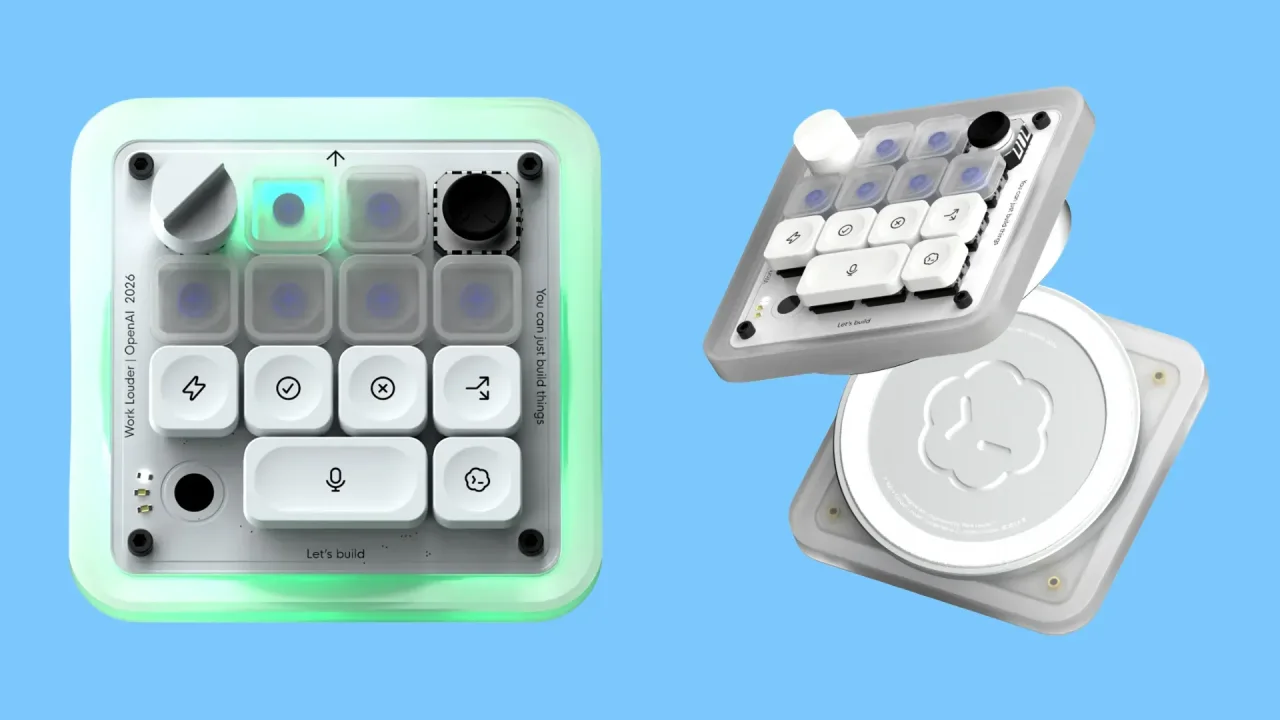
OpenAI has released its first branded hardware, a $230 light-up keyboard called Codex Micro. Here's what it does, why it matters, and what's coming next.
OpenAI has launched its first piece of branded hardware, and it is not the AI gadget everyone expected. The Codex Micro is a small, $230 programmable keyboard made with Work Louder to help developers manage AI coding agents. It arrives just as bigger, more ambitious OpenAI hardware plans are reportedly taking shape behind the scenes.
For months, tech watchers assumed OpenAI's first hardware product would be some kind of futuristic AI companion device. Instead, the company's actual debut is much smaller, and much more practical.
OpenAI has released the Codex Micro, a compact, customizable keyboard built for developers who use its AI coding tool, Codex. It is the company's first officially branded piece of hardware, according to TechCrunch, which reported that the device is a limited-run collaboration with keyboard designer Work Louder.
What Exactly Is the Codex Micro?
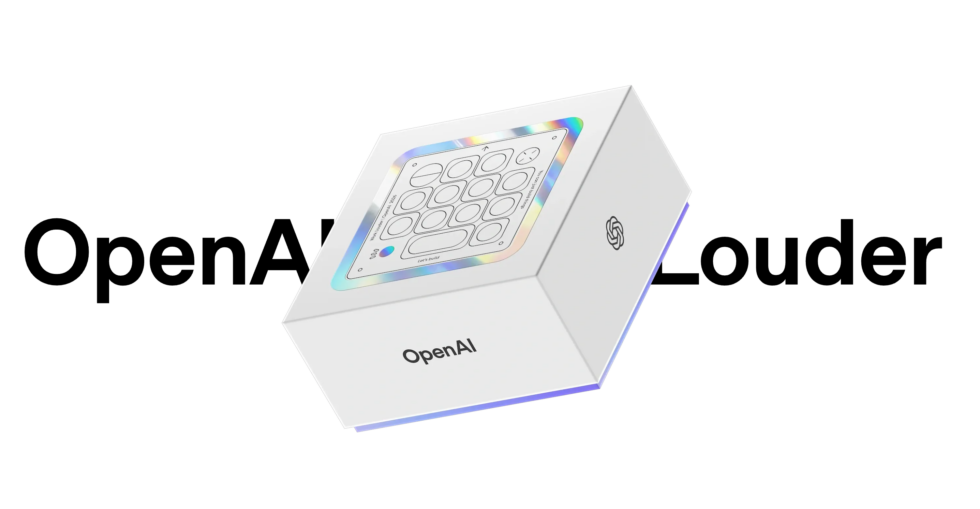
OpenAI box for AI assistance, Credit: OpenAI / Work Louder
Despite being called a "keyboard," the Codex Micro is really more of a macro pad, a small control panel with buttons that can be programmed to trigger specific actions. As Gizmodo reported, the device is officially named the kbd-1.0-codex-micro, and OpenAI is marketing it as a "command center for agentic work."
The pad comes packed with controls. According to Interesting Engineering, it includes 13 mechanical switches, a joystick, a rotary dial, and a touch sensor. Users can even pick between "clicky" or "silent" mechanical switches depending on their typing preference.
The standout feature is a set of six illuminated keys. These light-up keys show the live status of Codex agents, letting users see at a glance whether a coding task is running, finished, waiting for feedback, or has hit an error. This is where the "light-up keyboard" nickname comes from.
How Does It Work With ChatGPT?
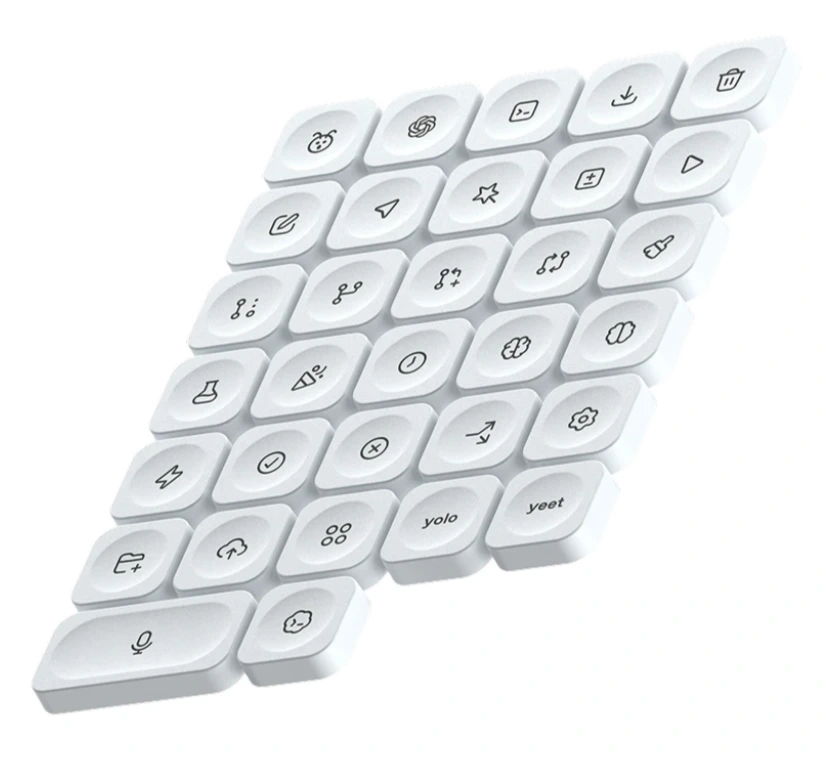
OpenAI's First Hardware keyboard
The Codex Micro is not a standalone gadget. It needs to be paired with software to actually do anything useful.
OpenAI says the joystick, dial, and every key on the device can be customized through the ChatGPT desktop application. In practical terms, a developer could map one button to launch a new coding task, use the dial to control how much computing power an agent gets, and glance at the lights to check whether their code is done.
OpenAI Developers described the idea simply in its launch post on X, saying users can map the buttons and joystick to their workflow and keep pinned chats in view.
Price, Availability, and Why It's So Limited
The Codex Micro sells for $230 through OpenAI's merchandise storefront, Supply Co. According to Interesting Engineering, the device will be sold while supplies last, and OpenAI has not said how many units are being made.
This scarcity appears to be intentional. OpenAI told TechCrunch in an email that the Micro is a limited-run collaboration, suggesting it is more of a novelty item than a mass-market product. In other words, this is less a serious hardware business launch and more a fun, branded accessory for hardcore developers and Codex fans.
It's also worth noting that the design isn't entirely from scratch. Reports suggest the square-shaped controller closely resembles Work Louder's existing Creator Micro 2 keyboard, meaning OpenAI essentially put its own branding and software integration on top of an existing product.
Why Is OpenAI Focusing on Coding Hardware?
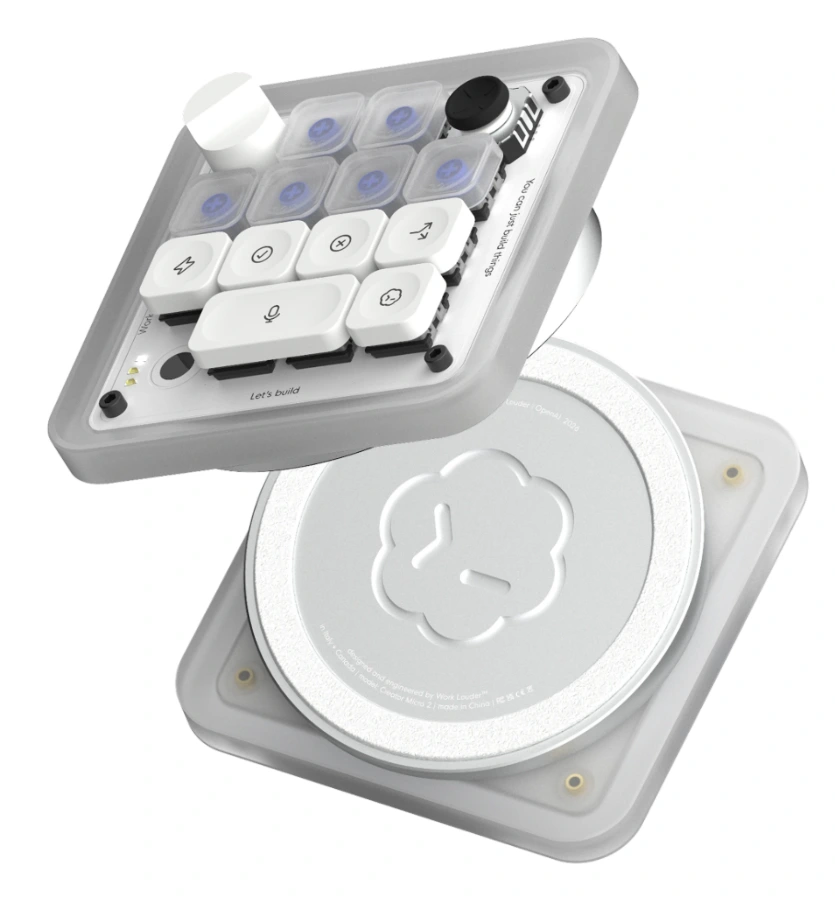
split-apart keyboard design lets you sandwich your device between the two keyboard halves Credit: OpenAI / Work Louder
The Codex Micro fits into a bigger pattern at OpenAI: doubling down on AI-assisted software development. The company has invested heavily in this area recently, and Codex was recently built directly into the ChatGPT desktop app, making these coding tools easier for developers to reach.
Seen this way, the keyboard isn't really about hardware at all. It's a small, physical extension of a software strategy, giving Codex users a tactile way to manage the AI agents that write and run code for them.
The Bigger Hardware Story: A Screenless AI Companion
While the Codex Micro is getting attention, industry watchers say it isn't the real headline. A more consequential piece of hardware news broke separately, when Bloomberg reported on a yet-to-be-released OpenAI device that sounds like it's designed for the long term.
According to that reporting, the device is expected to be a screenless smart speaker with mechanical parts that can move on their own, designed to act as a "humanlike AI companion." It's reportedly meant to play music, control smart home devices, answer questions, and handle everyday tasks through ChatGPT.
The device is also expected to include cameras and sensors so it can understand its surroundings and the context around the user, which could let it assist with things like messaging and media playback without needing a screen or a traditional smartphone interface.
This companion device is expected to be announced by the end of 2026, with a launch planned for 2027. OpenAI is also reportedly exploring a separate mobile AI device altogether.
The Jony Ive Connection
Both of these bigger hardware projects trace back to one major move: OpenAI's acquisition of io Products, the hardware startup co-founded by former Apple design chief Jony Ive. OpenAI bought io for $6.5 billion, and the smart speaker and mobile device are reportedly being developed with that team.
According to Wikipedia's summary of public reporting on the company, OpenAI was originally expected to release its first io-branded device sometime in 2026, but later reports indicated the company dropped the "io" branding entirely due to a trademark dispute, and pushed the hardware's release back to 2027. Earlier reporting had also indicated OpenAI was targeting the second half of 2026 for its first hardware device, a plan mentioned by the company's head of policy, Chris Lehane, according to a report cited by PANews via MEXC.
Some of this hardware work isn't new either. Court filings from an earlier legal dispute revealed that OpenAI and io had been working on AI device concepts well before this, and that the company appeared to be exploring form factors beyond just an in-ear device.
Apple's Lawsuit Adds Legal Drama
OpenAI's hardware ambitions haven't gone unnoticed by rivals. Apple sued OpenAI last week, accusing the company's senior leadership of deliberately trying to extract Apple's confidential information and using it to help build its own hardware device. OpenAI has denied any wrongdoing.
This legal battle is happening in the background of the Codex Micro's launch, and it adds extra scrutiny to whatever OpenAI's future "real" hardware product turns out to be.
Why AI Hardware Is Becoming a Bigger Deal
OpenAI isn't the only AI company chasing physical devices. Interest in dedicated AI hardware, gadgets built specifically to work with chatbots and AI agents, has grown quickly as companies look for ways to make AI assistants feel less like an app and more like a constant companion.
For Indian readers and tech enthusiasts in Punjab following the AI space, this trend matters for a simple reason: it shows where big AI companies think the industry is heading next. Instead of just improving software, companies like OpenAI are betting that specialized devices, from coding accessories to screenless AI companions, will become part of how people use AI daily.
Key Takeaways
OpenAI's first branded hardware product is the Codex Micro, a $230 programmable keyboard made with Work Louder.
It functions as a control pad for OpenAI's Codex coding agents, with 13 mechanical switches, a joystick, a dial, and six status-showing light-up keys.
The keyboard can be fully customized through the ChatGPT desktop app.
OpenAI has confirmed this is a limited-run novelty item, not a mass-market hardware push.
A separate, much bigger project is reportedly in the works: a screenless, movable smart speaker designed as an AI companion, expected to launch in 2027.
That bigger device is linked to OpenAI's acquisition of Jony Ive's hardware startup, io.
Apple has sued OpenAI, alleging misuse of confidential information related to hardware development, a claim OpenAI denies.
Conclusion
The Codex Micro is a fun, niche debut, not the AI gadget revolution many expected from OpenAI. It signals the company's interest in physical products, but the real story to watch is the screenless AI companion device reportedly being built with Jony Ive's former team, expected to be announced later this year and launched in 2027. Readers should also keep an eye on the ongoing Apple lawsuit, since its outcome could shape how OpenAI approaches hardware design going forward. For now, developers curious about OpenAI's hardware ambitions can try the Codex Micro, while everyone else waits for the company's next, bigger move.
Comments (0)
No comments yet. Be the first to share your thoughts!