What Is Physical AI? Examples, Use Cases & How It Works

Author
Ravi Prajapati
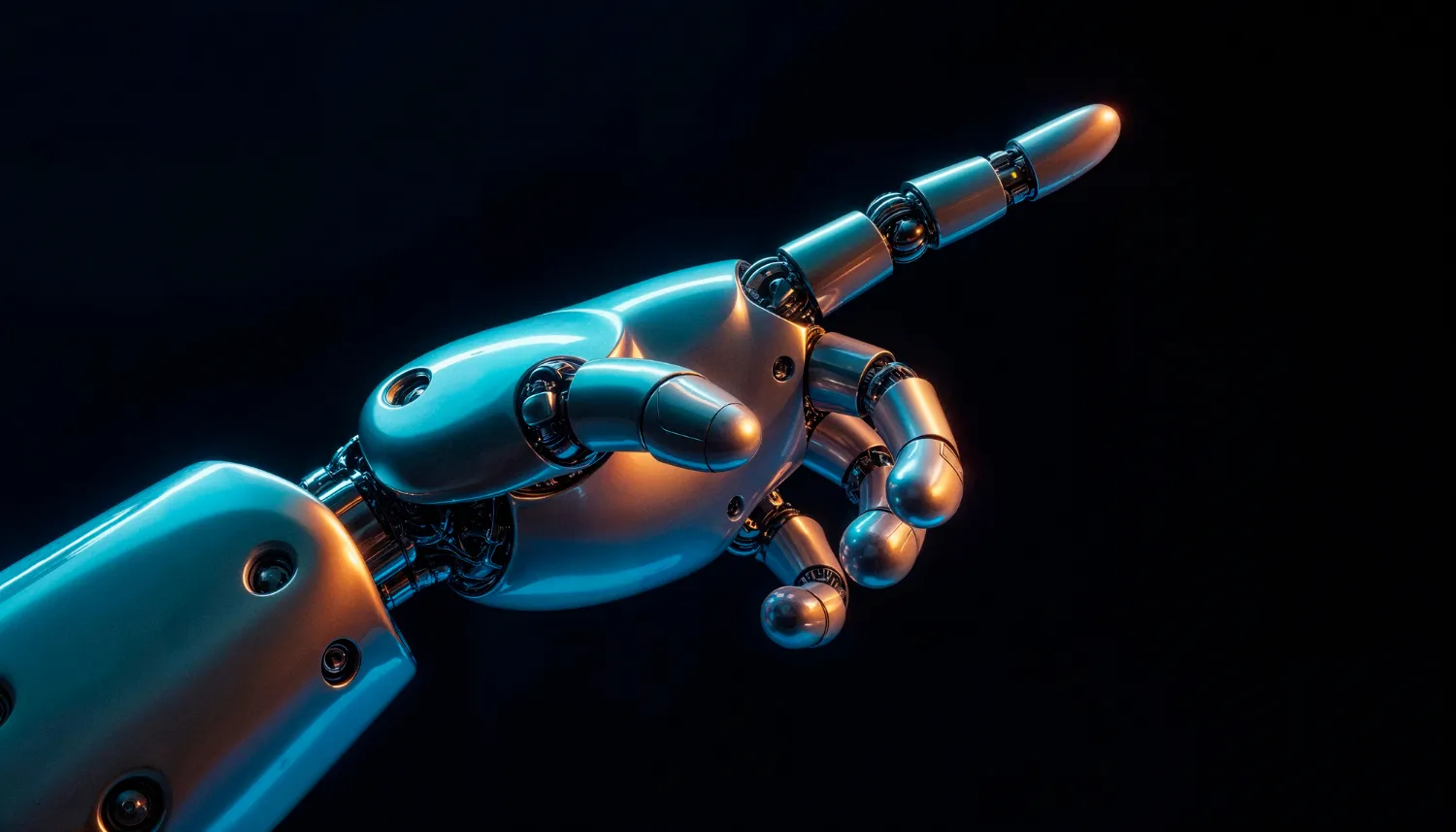
Learn what Physical AI is, how it works, real-world examples, use cases, and why Physical AI could transform robotics, automation, and smart machines.
Artificial Intelligence is no longer limited to chatbots, image generators, or screens. AI is now starting to interact with the real world through robots, self-driving cars, smart machines, drones, and autonomous systems. This next evolution is known as Physical AI.
Physical AI combines Artificial Intelligence with sensors, robotics, computer vision, and real-world decision-making. Instead of only generating text or images, Physical AI systems can understand their surroundings, make decisions, and physically interact with environments in real time.
From warehouse robots and humanoid assistants to autonomous vehicles and industrial automation, Physical AI is becoming one of the most important shifts in modern technology. As AI moves beyond the digital world and into physical spaces, industries are rapidly exploring how intelligent machines could transform the way humans work, move, build, and live.
Physical AI Market Size, Growth & Industry Statistics
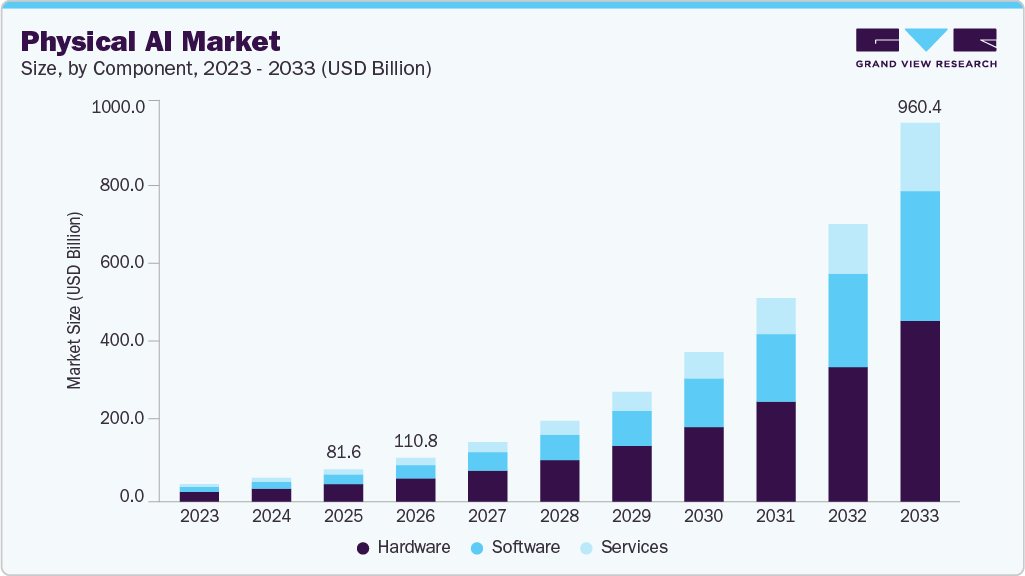
As per grandviewresearch,The global Physical AI market was valued at around USD 81.64 billion in 2025 and is expected to grow to nearly USD 960.38 billion by 2033, expanding at a CAGR of 36.1% between 2026 and 2033. This rapid growth is being driven by advancements in sensing technologies, edge computing, and machine learning, which are helping bring real-time intelligence and decision-making capabilities into physical machines and autonomous systems.
Key Market Trends & Insights
North America dominated the global physical AI market with the largest revenue share of 30.2% in 2025.
The physical AI industry in the U.S. accounted for the largest market revenue share in North America in 2025.
By component, the hardware segment led the market with the largest revenue share of 53.8% in 2025.
By technology, the computer vision segment led the market with the largest revenue share of 32.5% in 2025.
By application, the healthcare segment is expected to grow at the fastest CAGR of 39.4% from 2026 to 2033.
What Does Physical AI Mean?
Physical AI refers to Artificial Intelligence systems that can interact with and respond to the real physical world through machines, robots, sensors, cameras, and autonomous devices.
Unlike traditional AI systems that mainly work with digital tasks like writing, coding, or analyzing data, Physical AI combines intelligence with physical actions. It allows machines to observe their surroundings, make decisions, and perform real-world tasks in real time.
In simple terms, Physical AI gives machines the ability to:
understand environments
process real-world data
move and interact physically
learn from actions and feedback
Examples of Physical AI include:
self-driving cars
warehouse robots
humanoid robots
AI-powered drones
robotic surgery systems
smart manufacturing machines
Physical AI is becoming a major part of industries like robotics, healthcare, logistics, manufacturing, and autonomous transportation because it connects Artificial Intelligence with real-world physical behavior.
How Physical AI Works
Physical AI combines artificial intelligence, robotics, sensors, and real-world interaction to help machines understand, learn from, and respond to physical environments. Unlike traditional AI systems that mainly work with digital information, Physical AI operates in the real world through movement, perception, and decision-making.
A Physical AI system continuously collects data from its surroundings, processes that information using AI models, and takes actions in real time. This allows robots, autonomous machines, self-driving vehicles, and smart systems to interact with the physical world more intelligently.
Sensors
Sensors are one of the most important components of Physical AI. They help AI systems collect real-world data such as movement, temperature, distance, sound, pressure, and environmental conditions.
For example, self-driving cars use cameras, LiDAR, radar, and GPS sensors to understand roads, obstacles, traffic signals, and nearby vehicles. Industrial robots use motion and pressure sensors to safely interact with equipment and humans.
Without sensors, Physical AI systems would not be able to perceive or react to the world around them.
Computer Vision
Computer vision allows Physical AI systems to “see” and interpret visual information from cameras and image inputs.
Using deep learning and image recognition models, Physical AI can:
identify objects
detect people
recognize patterns
understand environments
track movement
This technology is widely used in:
autonomous vehicles
warehouse robotics
facial recognition systems
healthcare imaging
smart surveillance systems
Computer vision helps Physical AI make smarter decisions based on what it visually observes in real-world environments.
AI Models
AI models are the intelligence layer behind Physical AI systems. These models process sensor data, recognize patterns, predict outcomes, and decide what actions a machine should take.
Modern Physical AI often uses:
machine learning
deep learning
large language models
reinforcement learning models
For example, a warehouse robot may use AI models to identify products, optimize routes, avoid collisions, and improve efficiency over time.
As AI models become more advanced, Physical AI systems are becoming better at understanding complex environments and adapting to changing situations.
Robotics
Robotics gives Physical AI the ability to physically interact with the world through movement and mechanical systems.
Robots powered by Physical AI can:
move autonomously
pick up objects
navigate spaces
assist humans
perform repetitive or dangerous tasks
Examples include:
humanoid robots
robotic arms in manufacturing
delivery robots
surgical robots
autonomous drones
Physical AI and robotics work together to bridge the gap between digital intelligence and real-world action.
Real-Time Decision Making
One of the biggest advantages of Physical AI is its ability to make decisions in real time.
Physical AI systems continuously:
collect environmental data
analyze the situation
predict outcomes
choose actions instantly
This is critical in environments where delays can create safety risks or operational failures.
For example:
autonomous cars must react immediately to road conditions
factory robots must avoid collisions
drones must adjust flight paths dynamically
Real-time decision making allows Physical AI systems to operate safely and efficiently in unpredictable environments.
Reinforcement Learning
Reinforcement learning helps Physical AI systems learn through experience and continuous interaction with their environment.
Instead of only following fixed rules, the AI improves by:
testing actions
receiving feedback
learning from successes and mistakes
For example, a robot learning to walk may fail thousands of times in simulations before successfully balancing and moving efficiently.
Reinforcement learning is widely used in:
robotics
autonomous vehicles
industrial automation
AI agents
smart navigation systems
This approach allows Physical AI systems to become more adaptive, intelligent, and capable over time.
Examples of Physical AI
Physical AI is already becoming part of the real world, even if many people don’t realize it yet. From self-driving vehicles to smart robots working inside warehouses and hospitals, Physical AI combines Artificial Intelligence with machines that can interact with physical environments in real time.
Here are some of the most common examples of Physical AI being used today:
Self-Driving Cars
Autonomous vehicles use Physical AI to understand roads, detect objects, make driving decisions, and navigate safely without constant human control. These systems rely on sensors, cameras, computer vision, and real-time Artificial Intelligence models to interact with the physical world.
Warehouse Robots
Companies like Amazon use AI-powered warehouse robots to move products, organize inventory, and improve logistics operations. Physical AI helps these robots navigate spaces, avoid obstacles, and optimize tasks automatically.
Humanoid Robots
Humanoid robots are designed to mimic human movement and behavior using Artificial Intelligence. These robots can walk, interact with objects, understand commands, and adapt to changing environments, making them one of the most advanced examples of Physical AI.
Industrial Automation
Factories are increasingly using Physical AI for manufacturing, quality control, predictive maintenance, and automated production systems. AI-powered machines can analyze real-world conditions and improve operational efficiency with minimal human intervention.
AI-Powered Drones
Modern drones use Physical AI for navigation, obstacle detection, mapping, surveillance, and delivery systems. These drones can make autonomous decisions while operating in dynamic environments.
Healthcare Robotics
Hospitals and healthcare providers use Physical AI in robotic surgery systems, patient monitoring, rehabilitation robots, and medical assistance devices. These systems help improve precision, automation, and patient care.
As Artificial Intelligence continues evolving, Physical AI is expected to play a major role in robotics, transportation, manufacturing, healthcare, and everyday human-machine interaction.
Real-World Applications of Physical AI
Physical AI is already moving beyond research labs and into the real world. From factories and hospitals to farms and retail stores, businesses are using Physical AI systems to automate tasks, improve efficiency, and make faster real-time decisions.
Unlike traditional Artificial Intelligence software that mainly works with digital data, Physical AI interacts directly with physical environments using sensors, robotics, computer vision, and real-world feedback.
Here are some of the biggest industries adopting Physical AI today:
Manufacturing
Manufacturing is one of the fastest-growing use cases for Physical AI. Smart robots powered by Artificial Intelligence can assemble products, inspect defects, predict equipment failures, and optimize production lines with minimal human intervention.
Physical AI helps manufacturers improve:
operational efficiency
workplace safety
quality control
predictive maintenance
Modern factories increasingly rely on AI-powered robotic systems that can adapt to changing environments in real time.
Logistics
Logistics companies use Physical AI for warehouse automation, package sorting, route optimization, and autonomous delivery systems.
AI-powered warehouse robots can:
move inventory
organize storage
track packages
assist human workers
Self-driving delivery vehicles and drones are also becoming important applications of Physical AI in supply chain management and last-mile delivery.
Healthcare
In healthcare, Physical AI is transforming surgery assistance, patient monitoring, rehabilitation, and hospital automation.
Examples include:
robotic surgical assistants
AI-powered prosthetics
autonomous hospital robots
smart rehabilitation devices
Physical AI systems can analyze real-time patient data and support medical professionals with faster and more accurate decision-making.
Agriculture
Agriculture is increasingly adopting Physical AI to improve farming efficiency and reduce resource waste.
AI-powered farming equipment can:
monitor crops
detect plant diseases
automate harvesting
optimize irrigation systems
Autonomous tractors, agricultural drones, and robotic farming systems are helping modern farms become more data-driven and efficient.
Defense
Defense organizations are exploring Physical AI for autonomous systems, surveillance, robotics, and real-time battlefield analysis.
Examples include:
autonomous drones
robotic surveillance systems
AI-powered navigation
unmanned ground vehicles
Physical AI helps improve operational awareness, reduce human risk, and support faster decision-making in complex environments.
Retail
Retail businesses are using Physical AI to create smarter shopping experiences and improve operational efficiency.
Applications include:
inventory tracking robots
automated checkout systems
warehouse automation
AI-powered customer assistance
Some retailers are also experimenting with humanoid robots and autonomous systems to assist customers and streamline store operations.
As Artificial Intelligence continues evolving, Physical AI is expected to become a major part of how machines interact with the physical world across industries.
Why Physical AI Is Important
Physical AI is important because it brings Artificial Intelligence out of screens and into the real world.
Instead of only generating text, images, or code, Physical AI allows machines and robots to understand their environment, make decisions, and interact with the physical world in real time.
This shift could transform industries in the same way the internet and smartphones once did.
Smarter Automation
Traditional automation follows fixed rules and repetitive instructions. Physical AI goes a step further by allowing systems to adapt, learn, and respond dynamically to changing environments.
For example, warehouse robots powered by Physical AI can navigate obstacles, identify objects, and optimize delivery routes without requiring constant human control.
This makes automation more flexible, efficient, and scalable across industries like manufacturing, logistics, retail, and healthcare.
Real-World Intelligence
One of the biggest goals of Physical AI is creating machines that can understand and react to real-world situations.
By combining technologies like computer vision, sensors, robotics, and machine learning, Physical AI systems can interpret surroundings, recognize objects, process movement, and make decisions in real time.
Self-driving cars, robotic assistants, smart factories, and AI-powered drones are all examples of real-world intelligence powered by Physical AI.
The Rise of AI Agents
Physical AI is also closely connected to the evolution of AI agents.
Modern AI agents are becoming capable of planning tasks, interacting with environments, and taking actions with minimal human input. Physical AI gives these agents a physical presence through robots, machines, and autonomous systems.
This could lead to more advanced robotic assistants capable of handling tasks in homes, hospitals, warehouses, and workplaces.
The Evolution of Robotics
Robotics has traditionally depended on pre-programmed instructions. Physical AI is changing this by making robots more adaptive and autonomous.
Instead of performing only repetitive actions, AI-powered robots can learn from experience, improve over time, and respond to unpredictable situations.
This evolution could reshape industries ranging from healthcare and agriculture to transportation and industrial automation.
As Artificial Intelligence continues moving beyond software and into physical environments, Physical AI is expected to become one of the most important technologies shaping the future of automation, robotics, and intelligent systems.
The Future of Physical AI
Physical AI is expected to become one of the biggest shifts in Artificial Intelligence over the next decade. While today’s AI mostly lives inside screens, the next generation of AI will increasingly interact with the real world through robots, autonomous machines, smart devices, and intelligent systems.
Humanoid Robots Will Become More Practical
Humanoid robots are rapidly evolving from research projects into real-world workers. Companies are already developing robots capable of walking, lifting objects, understanding instructions, and assisting humans in factories, warehouses, hospitals, and retail environments.
As Artificial Intelligence models improve, humanoid robots could eventually handle repetitive, dangerous, or physically demanding tasks more efficiently.
Embodied AI Will Change How Machines Learn
Traditional AI systems learn mostly from datasets and digital information. Embodied AI takes a different approach by allowing AI systems to learn through physical interaction with environments.
This means robots and machines can improve through movement, observation, trial and error, and real-world experiences, similar to how humans learn basic physical understanding.
World Models Could Make AI More Intelligent
World models are becoming an important part of the future of Physical AI. These models help AI systems understand how the physical world behaves and predict what might happen next.
For example, a robot using world models may understand:
how objects move
how humans interact with environments
how to avoid obstacles
how actions affect outcomes
This could make AI systems safer, smarter, and more adaptable in real-world situations.
Autonomous Agents Will Move Into the Physical World
AI agents are no longer limited to software tasks like answering questions or writing content. In the future, autonomous agents could control physical systems such as delivery robots, industrial machines, smart homes, drones, and self-driving vehicles.
These systems may eventually complete real-world tasks with minimal human supervision.
Physical AI Could Reshape Entire Industries
Industries likely to see major Physical AI adoption include:
manufacturing
logistics
healthcare
agriculture
transportation
construction
From robotic assistants to autonomous warehouses, Physical AI could significantly improve productivity, automation, and operational efficiency.
The Bigger Picture
The future of Physical AI is about giving Artificial Intelligence the ability to understand and operate within the physical world, not just digital environments.
As robotics, computer vision, reinforcement learning, and AI models continue advancing, Physical AI may become one of the most important technologies shaping the future of automation and intelligent machines.
Frequently Asked Questions About Physical AI
What is Physical AI in simple terms?
Physical AI is a type of Artificial Intelligence that interacts with the real world through machines, robots, sensors, cameras, and physical systems. Unlike traditional AI that mainly works with text or digital tasks, Physical AI can understand environments, make decisions, and perform actions in real-world spaces.
Is Physical AI the same as robotics?
Not exactly. Robotics focuses on building machines and hardware, while Physical AI gives those machines intelligence and decision-making abilities. A robot becomes more useful when powered by Physical AI because it can learn, adapt, understand surroundings, and respond to real-world situations.
What are examples of Physical AI?
Common examples of Physical AI include:
self-driving cars
warehouse robots
humanoid robots
AI-powered drones
robotic vacuum cleaners
smart manufacturing systems
healthcare robotics
These systems use Artificial Intelligence to interact with physical environments and perform tasks automatically.
How does Physical AI work?
Physical AI works by combining Artificial Intelligence models with real-world hardware like sensors, cameras, robotics systems, and computer vision technology. The AI collects environmental data, processes information in real time, makes decisions, and performs physical actions based on what it learns from the environment.
What industries use Physical AI?
Physical AI is already being used across multiple industries, including:
manufacturing
logistics
healthcare
agriculture
automotive
retail
defense
smart homes
Businesses use Physical AI to improve automation, efficiency, safety, and real-time decision-making.
What is the difference between Physical AI and Generative AI?
Generative AI creates digital content such as text, images, audio, or code. Physical AI focuses on interacting with the real world through machines and robotics. In simple terms, Generative AI creates information, while Physical AI performs actions in physical environments.
Is Tesla using Physical AI?
Yes. Tesla uses Physical AI in technologies like autonomous driving systems and its humanoid robot project, Optimus. Tesla combines computer vision, machine learning, sensors, and real-world training data to help machines understand and navigate physical environments.
Can Physical AI learn from real-world environments?
Yes. Physical AI systems can learn from real-world data, sensor feedback, simulations, and interactions with their surroundings. Many systems improve over time using machine learning and reinforcement learning techniques to make smarter decisions in changing environments.
Read Also:
AI Statistics 2026: Key Facts, Data, and Figures
10 Jobs AI Will Create in the Next 5 Years
AI Agents Are Here: What They Are and Why They Change Everything
Comments (0)
No comments yet. Be the first to share your thoughts!