AI Statistics 2026: Key Facts, Data, and Figures

Author
Ravi Prajapati
Explore 120+ verified AI statistics for 2026 covering market size, adoption rates, jobs, ChatGPT users, and industry data. Sourced from Stanford HAI, McKinsey, and Gartner.
Artificial intelligence is transforming nearly every industry, from healthcare and finance to education, software development, and manufacturing. As businesses increase AI investments and consumers adopt generative AI tools at record levels, understanding the latest AI statistics has become essential for decision-makers, researchers, marketers, and technology professionals.
Artificial intelligence has moved from a niche research topic to a global economic force. In 2026, the numbers behind that shift are remarkable.
This article collects the most important AI statistics for 2026, sourced directly from Stanford HAI's 2026 AI Index Report, McKinsey's State of AI, Gartner, Goldman Sachs, the World Economic Forum, and primary data from OpenAI, Anthropic, and Google. Every figure is linked to its original source so you can verify and cite with confidence.
Whether you are a business leader benchmarking your AI investments, a student researching the state of the field, or simply someone trying to understand how AI is reshaping the world, this resource is built for you.
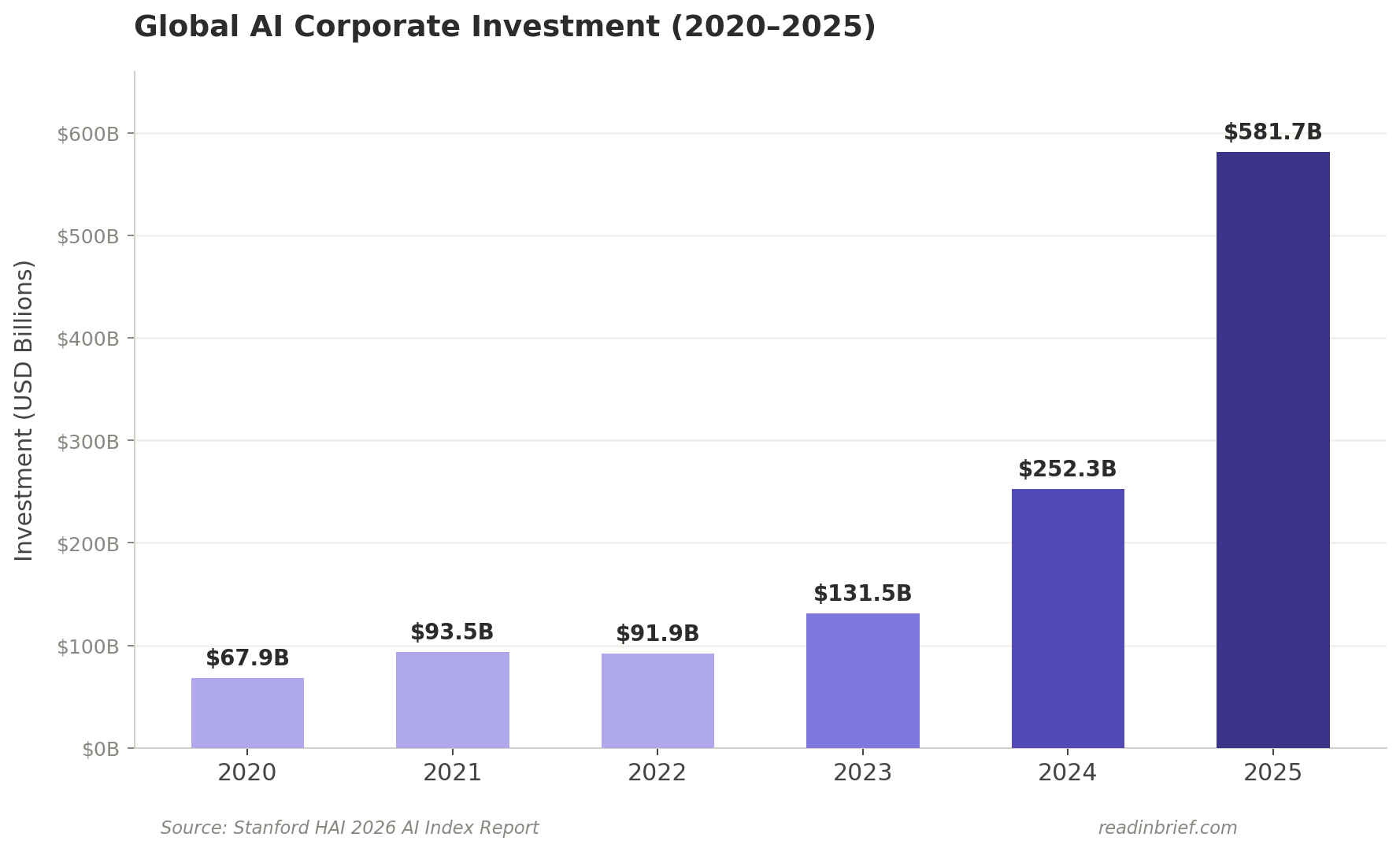
Global AI corporate investment (2020–2025)
Key AI Statistics at a Glance (2026)
Before diving into each category, here are the headline numbers that define AI in 2026.
Market and Investment
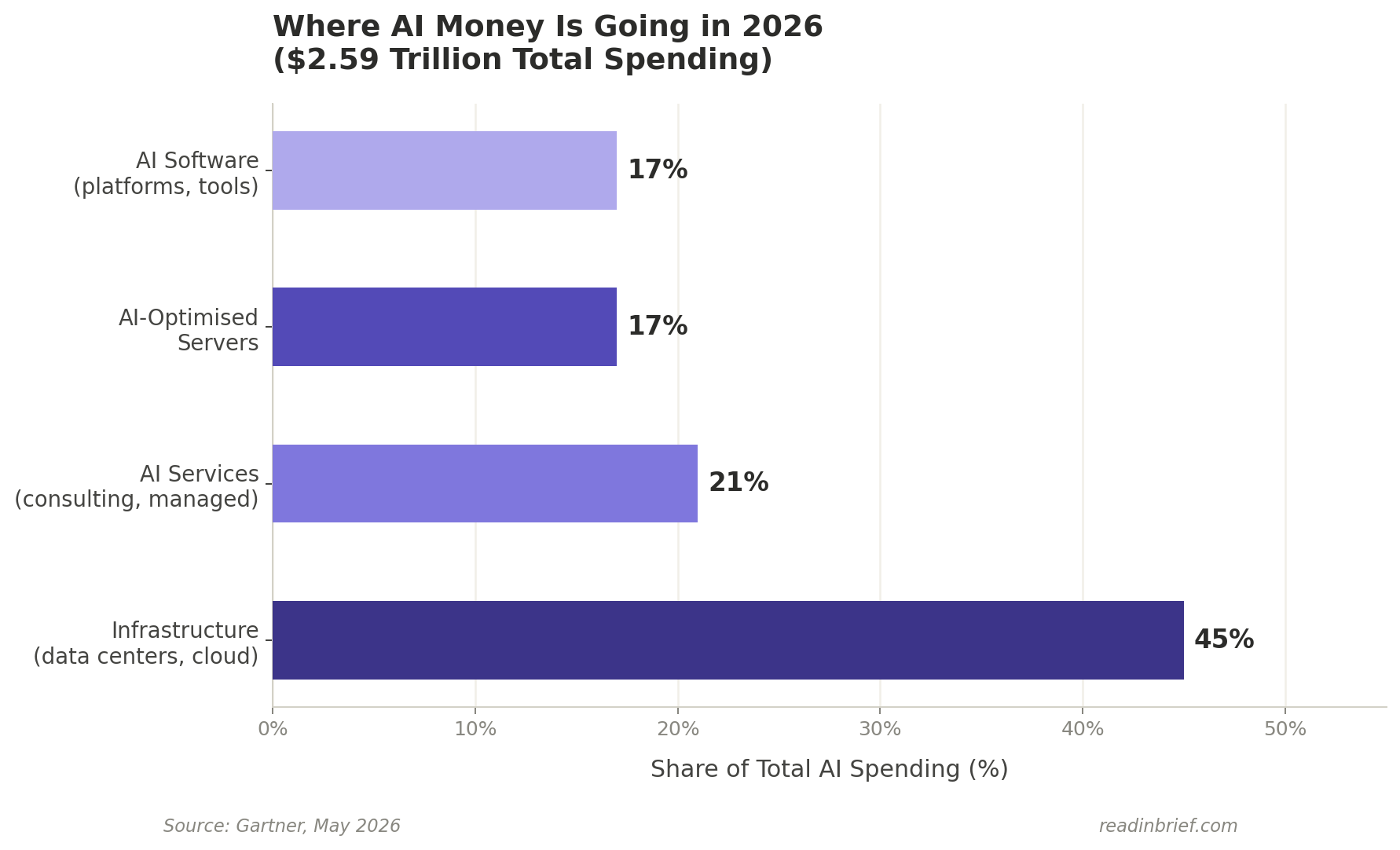
Global AI spending is projected to reach $2.59 trillion in 2026 (Gartner, May 2026)
Global corporate AI investment hit $581.7 billion in 2025, up 130% year over year (Stanford HAI 2026 AI Index)
U.S. private AI investment reached $285.9 billion in 2025, over 23 times China's $12.4 billion
Adoption
88% of organizations now use AI in at least one business function (McKinsey State of AI 2025)
66% of adults across 21 countries used an AI tool in the past 12 months, up 18 percentage points from 2024
Generative AI reached 53% global population adoption within three years, faster than the PC or the internet
Users and Platforms
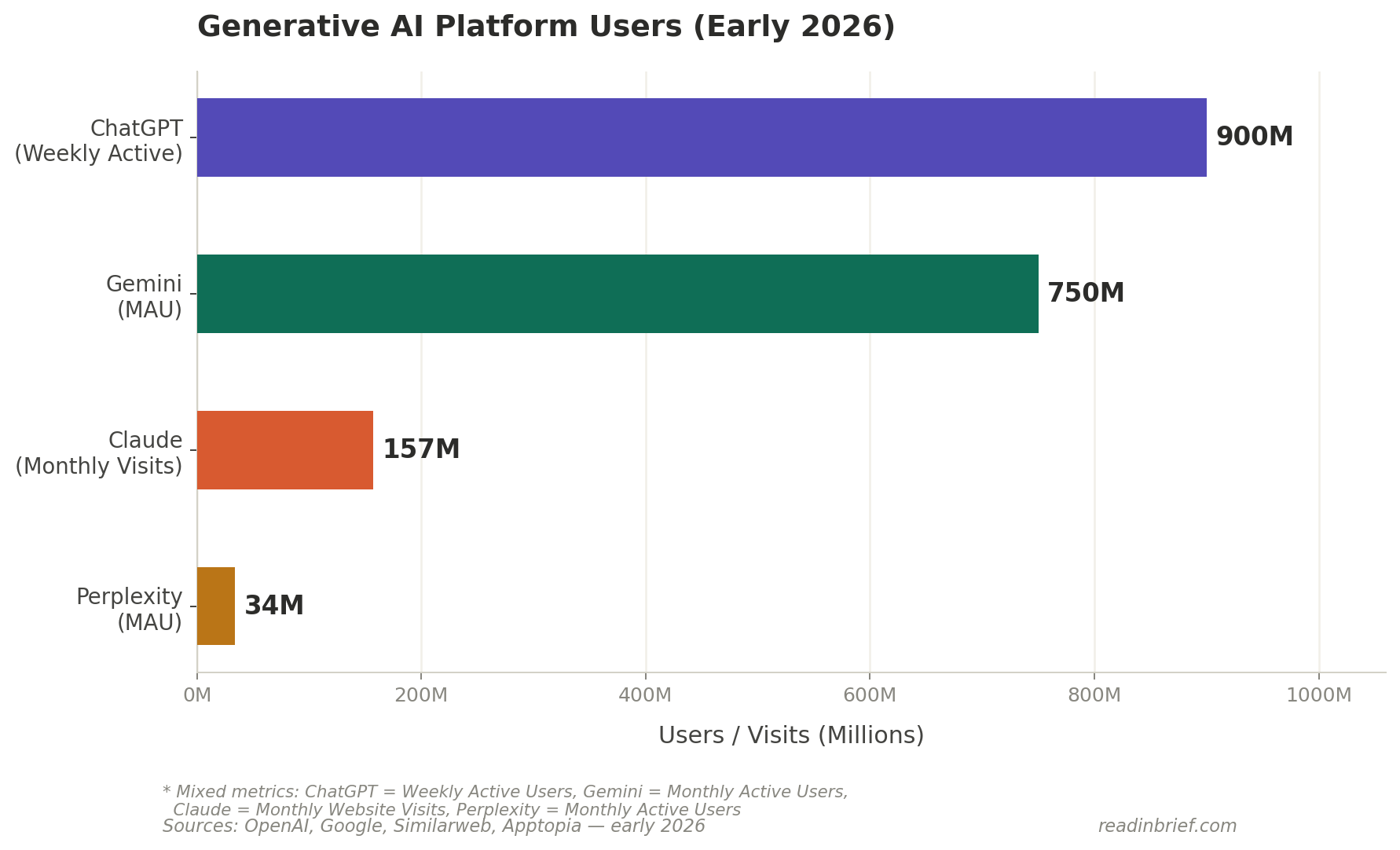
ChatGPT crossed 900 million weekly active users in February 2026 (OpenAI)
Gemini reached 750 million monthly users in early 2026 (Google)
4 in 5 university students now use generative AI (Stanford HAI)
Jobs and Workforce
AI-related skills now appear in 2.5% of all U.S. job postings, a 297% increase over the past decade (Stanford HAI)
The WEF projects AI will create 170 million new jobs and displace 92 million by 2030 (WEF Future of Jobs Report)
89% of HR leaders expect AI to impact jobs in 2026 (CNBC)
Global AI Market Size and Investment Statistics
How Big Is the AI Market in 2026?
The global AI market size estimate varies depending on what researchers include. Some count only AI software and services. Others include the massive infrastructure spending on chips, data centers, and AI-optimized servers.
Gartner, which produces the most widely cited infrastructure framework, revised its 2026 AI spending forecast upward from $2.52 trillion (January 2026) to $2.59 trillion (May 2026) after Q1 2026 actuals came in stronger than modeled. This revision reflects extraordinary Q1 2026 venture activity and accelerating hyperscaler investment.
Additional market size estimates for 2026:
IDC forecasts worldwide AI spending will reach $632 billion by 2028 at a roughly 30% CAGR
The global AI market is projected to reach $2.48 trillion by 2034, growing at a 26.60% CAGR from 2026 to 2034
AI infrastructure, including servers, data centers, and GPU procurement, accounts for over 45% of all AI expenditures
AI-optimized server spending is rising 49% in 2026, representing 17% of total AI spend
Hyperscaler AI capital expenditure hit $400 billion in 2025 and is projected to exceed $500 billion in 2026 (Goldman Sachs)
Corporate Investment Highlights
Global corporate AI investment reached $581.7 billion in 2025, up 130% from the prior year (Stanford HAI 2026 AI Index)
Private AI investment reached $344.7 billion in 2025, up 127.5% from 2024, with generative AI capturing nearly half of that funding
U.S. and Canada Q1 2026 venture funding totaled $252.6 billion, the largest quarterly total ever, with 87% going to AI (PitchBook-NVCA, April 2026)
47 seed and early-stage companies became unicorns in Q1 2026, a record pace, virtually all AI-focused (Crunchbase)
European Q1 2026 VC reached $17.6 billion, up 30% year over year; AI accounted for more than 50% of European venture capital for the first time (Dealroom)
AI Company Revenue
Anthropic reached $30 billion in annualized revenue in April 2026 (SQ Magazine)
OpenAI sits at approximately $25 billion ARR as of April 2026
ChatGPT mobile in-app purchase revenue hit $227 million in February 2026 alone (OpenAI)
Claude Code reached a $1 billion annualized revenue run rate within 6 months (a16z, March 2026)
Perplexity: $22.6 billion valuation, $450 million-plus ARR, and committed $750 million to Microsoft Azure in January 2026
Note on methodology: All investment figures vary between research firms because they measure different components of the AI ecosystem. Stanford HAI measures corporate investment. Gartner measures operational AI spending including infrastructure. Both confirm the same directional story: AI investment is at historic highs with no deceleration visible.\
Where AI money is going in 2026 (% of $2.59T total)
AI Business Adoption Statistics 2026
How Many Companies Are Using AI?
Enterprise AI adoption has crossed from experimental to operational. McKinsey's annual survey, which covered 1,993 participants across 105 nations, found 88% of organizations used AI in at least one business function in 2025, up from 78% the prior year.
Additional adoption figures:
More than 1 in 3 organizations have moved from testing AI to scaling AI (Exploding Topics)
77% of companies are either using or exploring AI
83% of companies claim AI is a top priority in their business plans
86% of companies globally expect AI to fully transform their businesses by 2030
71% of organizations report using generative AI for at least one business function
Enterprise AI adoption jumped from 55% to 78% in a single year (AmplifAI)
ROI and Business Impact
Enterprise AI generates productivity gains of up to 55% and returns $3.70 for every dollar invested
61% of leaders state AI has made their company more efficient (CNBC)
78% say AI has made their workforce more innovative
Workers using generative AI save an average of 5.4% of their work hours weekly
Gen AI users report productivity gains and salary increases at nearly double the rate of those who use it less frequently
More than 80% of organizations still report no tangible EBIT impact from generative AI, meaning most value is concentrated in a small group of advanced adopters (AmplifAI)
Agentic AI in Enterprise
82% of enterprises plan to invest in agentic AI
40% of enterprise apps are expected to embed task-specific AI agents by 2026 (Gartner)
Gartner forecasts 33% of enterprise software applications will be built with agentic AI by 2028
56% of customer support interactions are projected to involve agentic AI by mid-2026
Generative AI and Chatbot Usage Statistics
The Scale of Consumer AI Adoption
Consumer adoption of generative AI has been historically fast.
ChatGPT
ChatGPT crossed 900 million weekly active users in February 2026, more than double the 400 million it had a year earlier (OpenAI)
ChatGPT is currently the fourth most visited website globally, with over 5 billion monthly visits (Semrush)
ChatGPT now accounts for 20% of search-related traffic worldwide
ChatGPT holds approximately 79% of global GenAI web traffic (Similarweb AI Brand Visibility Index, 2026)
ChatGPT is 2.7x larger than Gemini on web traffic and 2.5x larger on mobile MAU
ChatGPT has 50 million consumer paying subscribers and more than 9 million paying business users (OpenAI)
ChatGPT is 8x larger than Claude in U.S. consumer paid subscribers (a16z/Yipit Data, March 2026)
Other Leading AI Platforms
Gemini reached 750 million monthly users in early 2026, growing 157% between April and September 2025 to 1.1 billion monthly visits (Google/Similarweb)
Claude averages 34.7 minutes per day per user, the highest engagement among major AI apps (Apptopia, January 2026)
U.S. paid-subscriber growth year over year: Claude grew 200%, Gemini grew 258% (a16z/Yipit Data)
Perplexity has 34 million MAU as of March 2026
Population-Level Adoption
66% of adults across 21 countries used an AI tool in the past 12 months, up 18 percentage points from 2024 and 28 percentage points from 2023
Generative AI reached 53% global population adoption within three years, faster than the PC or the internet (Stanford HAI)
Around 3 in 4 American respondents say they search with AI weekly (Mango Thrive, March 2026)
Nearly 35% of Gen Z in the U.S. use AI chatbots to search for information (Semrush)
AI Mode has surpassed one billion monthly active users globally (Google, May 2026)
AI vs. Traditional Search
Monthly sessions of AI are now 56% the size of search worldwide (Graphite, March 2026)
51% of B2B software buyers now start their research with an AI chatbot more often than with Google (G2, April 2026)
Total usage of search combining search engines and LLMs has increased by 26% worldwide since AI tools became mainstream
ChatGPT users click out to external websites about twice as often as Google users (1.4 links per visit vs. 0.6 from Google)
AI in the Workplace and Jobs Statistics
What Is AI Doing to Employment?
The impact of AI on employment is one of the most searched and most debated topics in 2026. Here is what the primary data actually shows.
Current Workplace AI Usage
90% of tech workers are using AI at work (CNN Business)
Approximately 91% of employees reported their organizations use at least one form of AI technology in 2026
40% of desk employees have interacted with an AI agent-enabled chatbot, and 23% have asked an AI agent to perform actions on their behalf (Slack)
47% of employees anticipate that generative AI will perform more than 30% of their daily tasks in the near future (McKinsey)
A London School of Economics study found employees who use AI for work tasks save an average of 7.5 hours per week
Job Market Data
AI-related skills now appear in 2.5% of all U.S. job postings, a 297% increase over the past decade (Stanford HAI 2026 AI Index)
U.S. job postings requiring AI skills grew 144% year over year as of April 2026 (Bipartisan Policy Center/Lightcast)
43% of CEOs plan to deprioritize junior-role hiring in the next one to two years, up from 17% (Oliver Wyman/NYSE, April 2026)
Goldman Sachs reported AI is erasing roughly 16,000 net jobs per month in the United States as of April 2026 (AI substitution removes about 25,000; AI augmentation adds back about 9,000) (Goldman Sachs)
March 2026: AI was the number-one cited reason for U.S. layoffs, accounting for 15,341 of 60,620 cuts (Challenger Gray and Christmas, April 2026)
64% of Gen Z workers say they are worried about losing their job to AI, compared to 45% of millennials and 29% of boomers
The Other Side: New Roles and Growth
The WEF projects AI will create 170 million new jobs and displace 92 million by 2030, a net gain of 78 million (WEF Future of Jobs Report)
The most AI-exposed companies have tripled their lead in workforce productivity growth compared to the least exposed companies since 2022 (PwC Global AI Jobs Barometer)
The top fifth of most-exposed companies achieve an average of 163% productivity growth
Jobs "professionalised" by AI are growing twice as fast as jobs "democratised" by AI, with 42% faster wage growth since 2021 (PwC)
There is a 47% wage premium for workers in the most AI-exposed roles (Anthropic Economic Index)
BCG analysis shows 43% of U.S. jobs involve tasks that are at least 40% automatable, the threshold after which organizational redesign becomes a strong business case (BCG, April 2026)
60% of jobs in advanced economies will be affected by AI; around 40% globally (IMF/WEF)
Skills and Reskilling
The World Economic Forum expects 39% of workers' core skills to change by 2030
80% of the global workforce will need new skills by 2027 to stay competitive
30% of large enterprises already mandate formal AI training to reduce operational and compliance risk
The AI skills gap is estimated to cost $5.5 trillion in lost productivity globally (Gartner)
AI by Industry: Healthcare, Finance, Education, and More
Healthcare
Healthcare is the fastest-growing AI adoption sector in 2026.
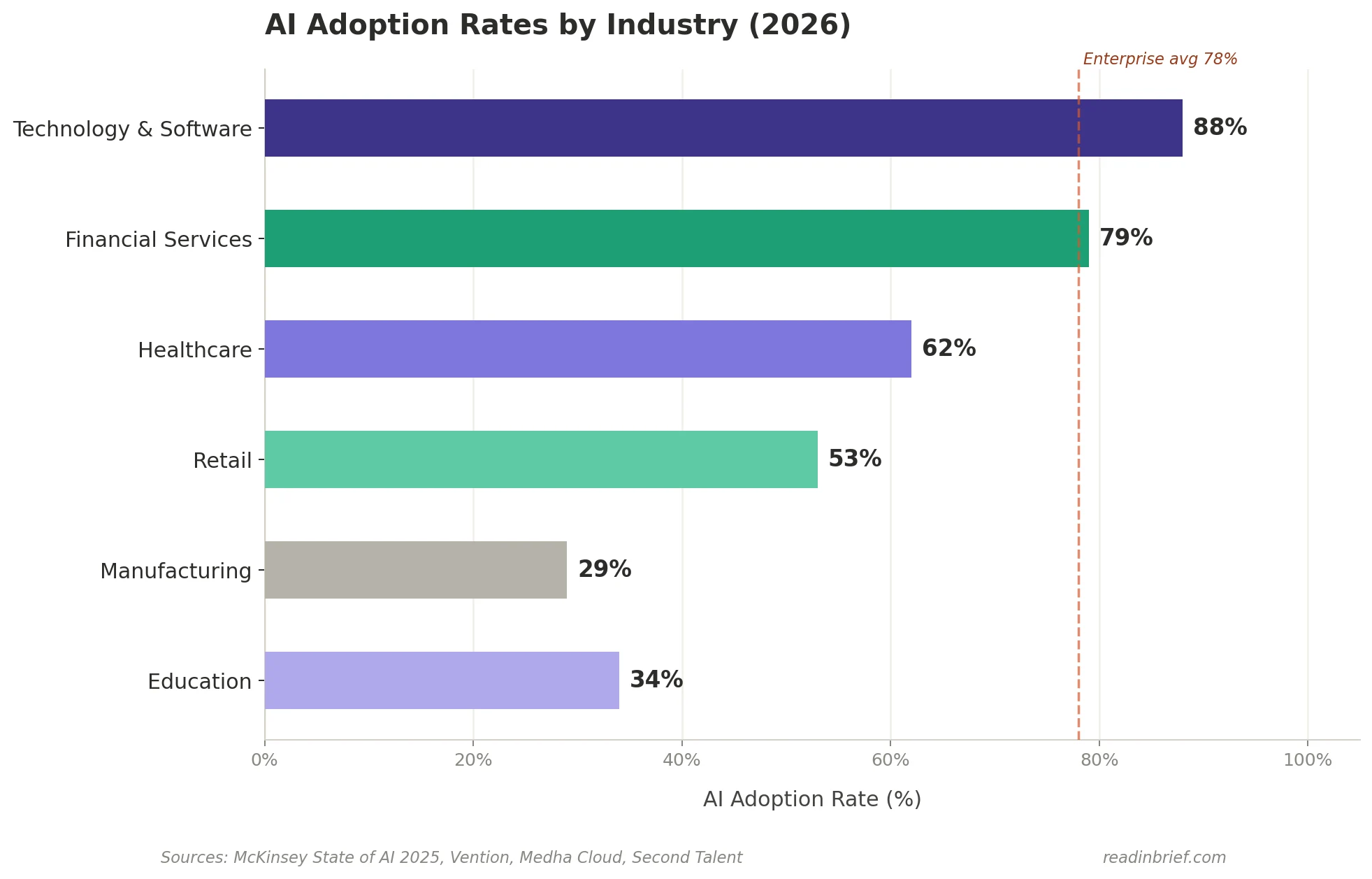
Healthcare AI adoption reached 62% in 2026, driven by clinical decision support, medical imaging analysis, and administrative automation
The global AI in healthcare market is expected to reach $110.61 billion by 2030, growing from $21.66 billion at a 38.6% CAGR (DemandSage)
66% of physicians used health AI in 2024, a 78% increase from just 38% in 2023
Over 340 FDA-approved AI tools are currently being used, especially for diagnosing strokes, brain tumors, and breast cancer
The average ROI for AI in healthcare is $3.20 for every $1 invested, with typical returns seen within 14 months
75% of U.S. healthcare systems use or plan to use an AI platform in 2026 (Fierce Healthcare)
More than half of health systems that could quantify ROI reported at least a 2x return
Clinical note-taking AI reached 68% adoption with 62% year-over-year growth between 2025 and 2026
AI-generated operative reports achieved 87.3% accuracy, compared to 72.8% for surgeon-written reports
Healthcare captures nearly half of all vertical AI spend, approximately $1.5 billion in 2025, more than tripling from $450 million the previous year
80% of healthcare professionals report that AI has increased revenue in their organizations (NVIDIA Healthcare AI Survey 2026)
Financial Services
The BFSI segment leads AI adoption with 19.60% market share globally
52% of financial institutions use generative AI, up from 40% in 2023
Financial services firms spend an average of $3,200 per employee on AI, 2.6x the cross-industry average
Global annual AI spending in financial services exceeded $20 billion in 2025
68% of hedge funds now employ AI for market analysis and trading strategies
Robo-advisors now manage over $1.2 trillion in assets globally
Algorithms manage over 75% of market trades
Education
4 in 5 university students now use generative AI (Stanford HAI)
95% of education leaders and 78% of teachers say they can use AI effectively and responsibly
71% of K-12 educators say they have received no professional learning on how to use AI in the classroom
Education sector AI adoption remains the lowest of all major industries at 34%, constrained by budget limitations and regulatory concerns
Manufacturing
29% of manufacturers report using AI or machine learning at the facility or network level, while 23% remain in the pilot stage
Manufacturing AI spending grew 48% year over year, primarily in predictive maintenance and quality control
24% of manufacturers have already scaled generative AI deployments
Retail
53% of retailers use AI for demand forecasting, personalization, or inventory optimization
The conversational AI market is projected to grow from $17.05 billion in 2025 to $49.8 billion by 2031 at a 19.6% CAGR
Agentic AI Statistics 2026
Agentic AI refers to AI systems that can plan, decide, and execute multi-step tasks autonomously without constant human input. It is the dominant emerging trend in enterprise AI and one of the most searched topics in 2026.
82% of enterprises plan to invest in agentic AI
40% of enterprise apps are expected to embed task-specific AI agents by 2026 (Gartner)
33% of enterprise software applications will be built with agentic AI by 2028 (Gartner)
Gartner predicts 90% of B2B purchasing will run through AI agents by 2028
56% of customer support interactions are projected to involve agentic AI by mid-2026
30% of enterprises are already creating entirely new roles to manage their AI workforce (AmplifAI)
On SWE-bench Verified, a key coding benchmark, AI performance rose from 60% to near 100% in a single year (Stanford HAI)
The best-scoring AI models as of April 2026, including Anthropic's Claude Opus 4.6 and Google's Gemini 3.1 Pro, now top 50% accuracy on Humanity's Last Exam, the hardest multi-domain benchmark (IEEE Spectrum)
AI and the Future: Economic Impact Statistics {#future-work}
GDP and Productivity
PwC projects AI could boost global GDP by $15.7 trillion by 2030
McKinsey estimates AI could deliver additional global economic activity of $13 trillion by 2030, equivalent to 16% higher cumulative GDP
Goldman Sachs estimates generative AI has the potential to improve productivity growth by 1.5% and raise global GDP by 7% over the next 10 years
The estimated value of generative AI tools to U.S. consumers reached $172 billion annually by early 2026 (Stanford HAI)
Regional AI Leadership
U.S. private AI investment reached $285.9 billion in 2025, over 23 times China's $12.4 billion
However, PwC projects China will see a 26% GDP boost from AI by 2030, versus North America's 14.5%
The U.S. led with 1,953 newly funded AI companies in 2025, more than 10 times the next closest country
The number of AI researchers and developers moving to the U.S. has dropped 89% since 2017, with an 80% decline in the last year alone (Stanford HAI)
The European Commission committed $20 billion to InvestAI for up to five AI gigafactories across the EU
Emerging AI Categories
Humanoid robot companies are on pace for $10 billion in 2026 funding (CB Insights, April 2026)
Autonomous vehicle startups raised a record $21.4 billion in 2026 year-to-date, up 262% versus all of 2025 (Crunchbase)
The AI chips market is projected to reach $1.1 trillion by 2035 at a 27.88% CAGR (Precedence Research)
AI adoption in cybersecurity is expected to scale to $167.77 billion by 2035 at an 18.93% CAGR
AI Ethics, Trust, and Public Perception Statistics
Public trust in AI remains mixed. The gap between expert and public optimism is one of the defining features of AI discourse in 2026.
Public Sentiment
73% of experts expect AI to have a positive impact on how people do their jobs, compared with just 23% of the public, a 50-point gap (Stanford HAI 2026 AI Index)
51% of men and 40% of women say they are more excited than concerned about AI
57% of Gen Z and 62% of millennials are more excited than concerned; only 30% of boomers agree
80% are concerned about AI being used for cyber attacks
78% are concerned about AI being used for identity theft
40.46% of U.S. respondents trust both traditional and AI search results equally (Mango Thrive, March 2026)
Governance and Regulation
The United States reported the lowest level of trust in its own government to regulate AI among surveyed countries, at 31% (Stanford HAI)
The EU is trusted more than the U.S. or China to regulate AI effectively
52% of department-level AI initiatives in tech companies operate without formal approval or oversight (EY, March 2026)
45% of tech companies had a suspected or confirmed data leak from unauthorized generative AI use in the past 12 months (EY)
Global data privacy enforcement is ramping up, with GDPR fines totaling $1.3 billion in 2024 alone
83% of enterprise leaders see sovereign AI as strategically important; 77% factor country-of-origin into AI vendor selection (Deloitte, January 2026)
Anthropic announced an initial $200 million Economic Futures Research Fund in June 2026 to back empirical research on how AI reshapes labor markets (Anthropic)
AI and Education Trust
9 in 10 students want to learn more about AI in school
54% can tell the difference between human and AI-generated content
About 2 out of 3 people (67%) said they would use ChatGPT instead of Google for a general query
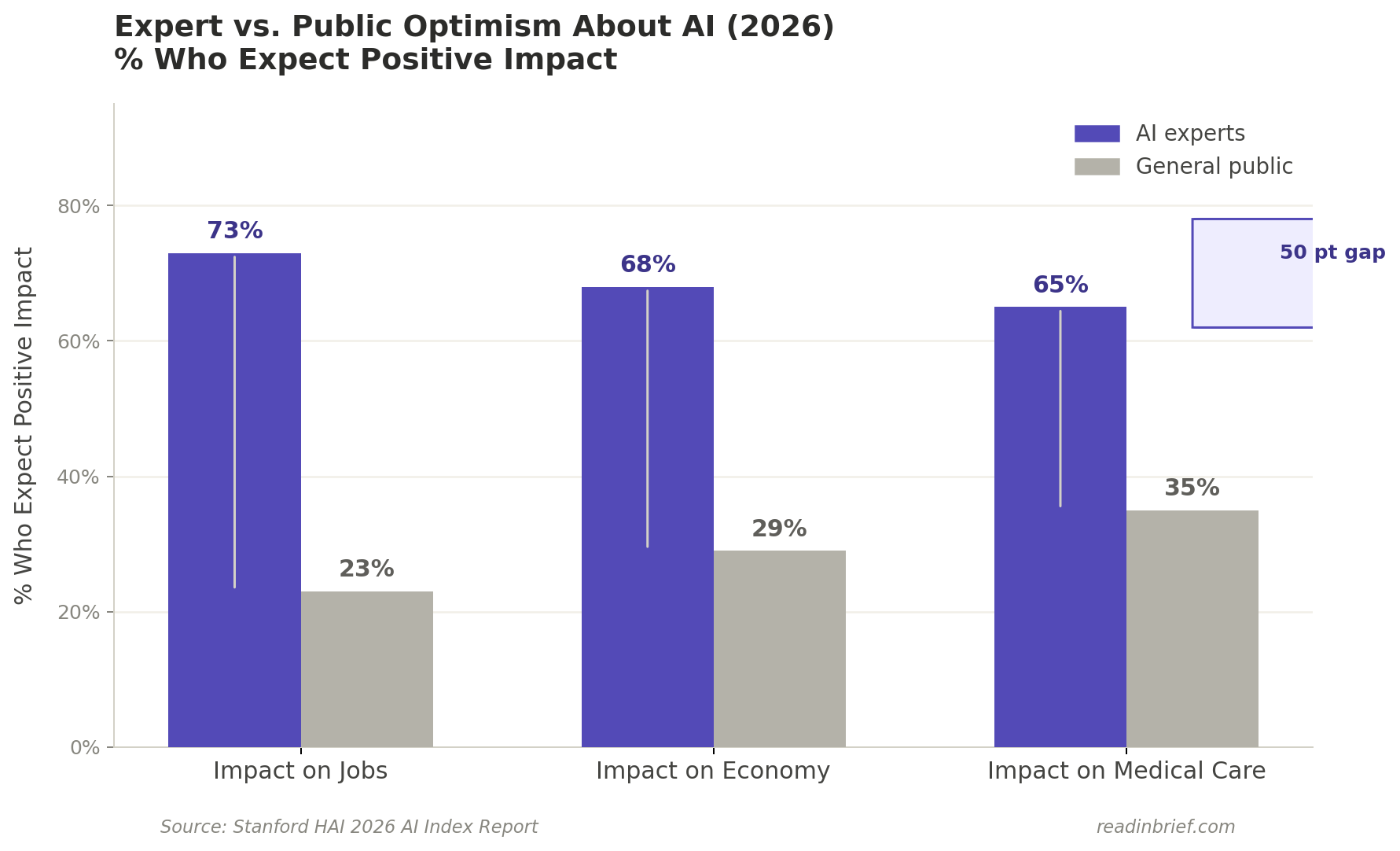
The expert-public gap on AI optimism: a defining statistic of 2026. Source: Stanford HAI
Key Takeaways and Frequently Asked Questions
What the Data Tells Us
The 2026 AI statistics tell a clear and consistent story across every category.
Investment is at historic highs
Gartner's $2.59 trillion global AI spending figure, Stanford's $581.7 billion corporate investment figure, and Goldman Sachs' $500 billion-plus hyperscaler capex projection all point to a market that is accelerating, not plateauing.
Adoption has crossed the mainstream threshold
With 88% of organizations using AI in at least one business function and 53% of the global population having adopted generative AI within three years, AI is no longer an early-adopter technology. It is becoming infrastructure.
The value is still concentrated
More than 80% of organizations report no measurable EBIT impact from generative AI. Only a small percentage of companies are translating AI spend into measurable profit. The gap between adoption and real value creation is the dominant business challenge of the next two years.
Jobs are being reshaped, not simply eliminated
The most rigorous datasets, from Stanford HAI, Anthropic, and the IMF, show no aggregate unemployment signal yet. Entry-level roles are narrowing. The wage premium for AI-fluent workers is real and growing at 47%.
Agentic AI is the next major wave
The shift from chatbot-style AI to AI agents that plan and execute multi-step tasks autonomously is already underway. Gartner's forecasts suggest this becomes the dominant form of enterprise AI by 2028.
Frequently Asked Questions
What is the global AI market size in 2026?
Depending on what is being measured, estimates range from $301 billion in operational AI software and services (IDC) to $2.59 trillion in total AI-related spending including infrastructure (Gartner). Both figures are correct; they measure different parts of the ecosystem.
How many people use ChatGPT in 2026?
OpenAI reported crossing 900 million weekly active users in February 2026, more than doubling from 400 million a year prior. ChatGPT is the fourth most visited website globally with over 5 billion monthly visits.
Is AI taking jobs in 2026?
Goldman Sachs estimates AI is erasing about 16,000 net jobs per month in the U.S. as of April 2026. However, three independent datasets (Stanford HAI, Anthropic, and an IMF study of Denmark) show no detectable aggregate unemployment rise. The WEF projects a net positive of 78 million new jobs globally by 2030. The disruption is real but concentrated in entry-level roles, while AI-fluent workers earn a 47% wage premium.
Which industry has the highest AI adoption in 2026?
Technology and software leads at 88% (McKinsey), followed by financial services at 79%. Healthcare leads in growth rate with a 36.8% CAGR and has reached 62% adoption overall.
What percentage of companies use AI in 2026?
88% of organizations use AI in at least one business function (McKinsey). 77% of companies are either using or exploring AI (Exploding Topics). When measuring use across core business operations specifically, enterprise-level adoption sits at 78%.
How fast is AI growing?
Global corporate AI investment grew 130% in a single year. Generative AI adoption reached 53% of the global population in three years, faster than the PC or the internet. ChatGPT's weekly active users more than doubled in 12 months. By any measure, the growth rate is unprecedented for a technology at this scale.
Related Articles on ReadInBrief:
AI Is Diagnosing Patients: What Happens When It Gets It Wrong?
When AI Makes a Mistake That Kills Someone, Who Goes to Prison?
Comments (0)
No comments yet. Be the first to share your thoughts!