Moustapha Cissé Named to TIME100 AI 2026 for Using AI to Rethink Healthcare in Africa
Author
Ravi Prajapati
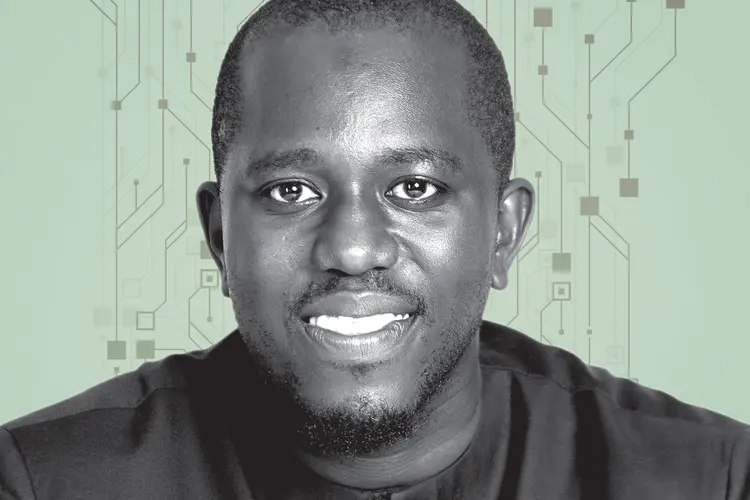
Moustapha Cissé joins TIME100 AI 2026 as Kera Health uses AI to process health insurance claims in seconds and expand healthcare access across Africa.
Quick Overview
Who: Moustapha Cissé, founder and CEO of Kera Health Platforms
Recognition: Named to TIME100 AI 2026
Company: Kera Health Platforms, launched in 2023
Core product: Sura, an AI-powered health insurance platform
AI impact: Claims can be analyzed and approved in around 30 seconds
Human oversight: AI does not automatically reject claims; questionable claims go to human reviewers
Funding: IFC invested up to $10 million in Kera Health in 2025
Expansion: Sura operates in Senegal and launched in Côte d’Ivoire in 2026, with another African market planned
Current reach: Tens of thousands of people are covered, according to TIME
Moustapha Cissé Joins TIME100 AI 2026 as Kera Health Expands AI-Powered Healthcare
Senegalese AI researcher and entrepreneur Moustapha Cissé has been named to the TIME100 AI 2026, recognizing his work using artificial intelligence to address healthcare access and insurance challenges across Africa.
Cissé is the founder and CEO of Kera Health Platforms, a Dakar-based health technology company developing AI infrastructure that connects healthcare data, providers, insurers and patients.
TIME's profile of Moustapha Cissé, published on August 27, focuses particularly on Sura, Kera's AI-powered health insurance business.
The technology is designed to address a problem that can directly affect whether people receive medical treatment: the time healthcare providers must wait to be reimbursed.
According to TIME, healthcare providers in Senegal can typically wait around 120 days to receive insurance payments.
Sura's AI system can analyze medical records and approve eligible claims in approximately 30 seconds.
That is not simply an efficiency improvement. Faster reimbursement can affect whether clinics have enough cash flow to continue treating patients who cannot afford to pay for healthcare upfront.
Why Cissé Started Building Kera Health
Interestingly, Cissé did not originally set out to build an insurance company.
When he raised Kera Health's first $3 million pre-seed round, his original idea was to develop a universal platform capable of bringing together fragmented healthcare information.
That could include electronic health records, laboratory results, pharmacy data and patient-reported information.
The goal was to give healthcare professionals better information for diagnosis and treatment.
The International Finance Corporation described Kera's technology similarly in its early collaboration with the company, saying the platform aggregates otherwise siloed healthcare data and uses AI to generate actionable insights for medical professionals.
But Cissé encountered another problem while trying to build the system.
Existing insurance companies were reluctant to cooperate.
Rather than abandoning the idea, Kera created its own insurance product.
In September 2024, the company launched Sura.
How Sura Uses AI to Process Claims in Seconds
Sura uses artificial intelligence to analyze healthcare records and determine whether claims meet the necessary requirements for approval.
TIME reports that eligible claims can be approved in around 30 seconds, compared with the roughly 120-day payment cycle healthcare providers can otherwise face in Senegal.
But one design decision is particularly important.
The AI system does not automatically reject insurance claims.
When the system cannot approve a claim, it sends the case to a human for review.
That creates an important distinction between automating routine administrative decisions and allowing an AI system to independently make decisions that could prevent someone from receiving healthcare coverage.
It is an example of human-in-the-loop AI being applied to a high-impact use case.
AI handles cases where automation can accelerate the process, while humans remain responsible when a potentially negative decision needs to be made.
Tens of Thousands Are Already Covered
Kera's insurance operation has moved beyond a small pilot.
According to TIME, tens of thousands of people are now covered by Sura.
The company began in Senegal before expanding Sura into Côte d'Ivoire earlier in 2026.
Cissé told TIME that another African country is expected to follow in the fall of 2026.
That expansion aligns with Kera's broader regional ambitions.
When IFC evaluated its investment in the company, it said Kera intended to expand into member countries of the West African Economic and Monetary Union (WAEMU/UEMOA).
The company ultimately has ambitions beyond Africa as well.
Cissé told TIME that he wants to bring the technology to markets including the United States, arguing that the underlying problem of inefficient healthcare administration exists around the world.
IFC Backed Kera Health With Up to $10 Million
Kera Health has also attracted significant institutional investment.
In 2025, the International Finance Corporation, part of the World Bank Group, approved an equity investment of up to $10 million in Kera Health Platforms.
IFC records show the investment was:
approved on June 26, 2025
signed on July 22, 2025
invested on July 31, 2025
The investment was intended to support Kera's product development and regional growth.
IFC said it expected the investment to expand access to quality healthcare and insurance coverage in Senegal, particularly among underserved groups including informal workers and women.
It also identified another potential impact: reducing out-of-pocket healthcare spending through faster payments and AI-enabled healthcare services.
That makes the investment notable because it treats Kera not simply as another AI startup, but as technology with potential implications for healthcare infrastructure.
No App? Sura Is Built Around WhatsApp
One of the most interesting parts of Sura's strategy is what it does not require.
There is no traditional consumer app at the center of the experience.
Instead, TIME reports that transactions and interactions take place through WhatsApp.
The decision reflects an important lesson about deploying AI in emerging markets.
Building advanced technology does not necessarily mean asking users to adopt an entirely new interface.
Sometimes the better approach is to put AI inside a communication platform people already use.
That reduces another potential barrier between the technology and the people it is intended to serve.
Before Kera, Cissé Helped Build Google's AI Presence in Africa
Cissé's influence on African AI began years before Kera Health.
He previously worked as a research scientist at Facebook AI Research before joining Google.
He later became the founding lead of Google's AI research center in Accra, Ghana, Google's first AI research center in Africa.
His work has covered machine learning research as well as applications of AI to problems affecting African societies.
Cissé eventually left Google in 2022 and shifted his attention toward healthcare.
That move represented a transition from conducting AI research inside one of the world's largest technology companies to building AI infrastructure around a specific societal problem in Africa.
He Also Built Africa's First Graduate AI Program
Cissé's influence extends beyond entrepreneurship.
He founded the African Master's in Machine Intelligence (AMMI) at the African Institute for Mathematical Sciences.
AIMS describes AMMI as Africa's first dedicated graduate program in artificial intelligence and machine learning.
The program was created to train African researchers and engineers without requiring them to leave the continent to access advanced AI education.
AIMS says its wider network has produced more than 2,400 alumni from 44 African countries, with women representing around 33% of alumni.
Cissé's own TIME100 AI announcement also highlights the longer-term effect of that work.
Several engineers now building Kera Health previously studied or interned under Cissé through AMMI and related programs.
That creates a notable cycle: build local AI education, train engineers, and then create companies capable of employing that talent to solve regional problems.
From Global AI Research to African Healthcare
Cissé's career illustrates a broader shift taking place across Africa's technology ecosystem.
For years, much of the conversation about AI development in Africa focused on whether the continent had enough research institutions, computing infrastructure, funding and technical talent to participate meaningfully in the global AI economy.
Cissé has worked on several parts of that problem.
First came research at Facebook and Google.
Then came AI education through AMMI.
Now, through Kera, the focus is turning toward building commercial AI systems around problems specific to African markets.
Healthcare is particularly suited to that approach because many of its challenges are not simply medical.
They involve fragmented data, insurance administration, provider payments, access and infrastructure.
Kera is attempting to connect those pieces through a shared AI-powered platform.
AI Is Not Making the Final Negative Decision
Kera's approach also raises an important issue as AI becomes more involved in insurance, healthcare and other high-impact decisions.
Automation can dramatically accelerate claims processing.
But allowing an algorithm to independently deny medical coverage creates considerably greater ethical and governance concerns.
Sura's design draws a line between the two.
AI can approve qualifying claims quickly, but it does not independently reject them. Cases that require rejection or further investigation are escalated to humans.
That distinction could become increasingly important as AI agents move into banking, insurance, healthcare and government services.
The key question is not simply whether a decision can be automated, but which decisions organizations should allow AI to make independently.
Cissé's Bigger Goal Goes Beyond Insurance
Despite Sura's rapid growth, Cissé does not see health insurance as the ultimate product.
His larger ambition is the intelligence infrastructure underneath it.
Kera's original goal was to connect fragmented healthcare information so that AI could help healthcare providers better understand patients and potentially move healthcare toward earlier, more preventive interventions.
That ambition remains.
Cissé told TIME that the long-term goal is not primarily the insurance product itself but the technology powering it.
In other words, insurance may be the first large-scale application of a much broader healthcare AI platform.
If Kera can connect medical histories, claims, laboratory data, prescriptions and other health information, those datasets could potentially support systems that help clinicians understand risk earlier and deliver more proactive care.
Doing so responsibly will also require strong safeguards around medical-data privacy, model accuracy, security and patient consent.
Why Moustapha Cissé's TIME100 AI Recognition Matters
Much of today's AI industry is concentrated in the United States and China, with attention dominated by frontier models, massive data centers and companies spending billions of dollars on computing infrastructure.
Cissé represents another direction for AI development.
Instead of starting with the question “How powerful can we make the model?”, Kera starts with a specific structural problem: why does it take months for healthcare providers to get paid?
AI becomes part of the solution rather than the product itself.
The numbers already make the experiment worth watching.
Claims that could involve waits of up to 120 days can be processed in around 30 seconds. Tens of thousands of people are covered. Sura has expanded from Senegal into Côte d'Ivoire. IFC has committed up to $10 million to support Kera's growth.
The next challenge will be demonstrating that these results can scale across countries with different healthcare systems, regulations, insurance structures and patient populations.
But Cissé's inclusion in the TIME100 AI 2026 highlights a part of the global AI story that can easily be overlooked:
Some of AI's most meaningful applications may not come from building the world's largest models, but from applying intelligence to systems where inefficiency already has a direct human cost.
Read Also:
Arvind Raman Named to TIME100 AI 2026 as U.S. Expands Frontier AI Testing
Vivek Raghavan Named to TIME100 AI 2026 as Sarvam AI Builds India’s Sovereign AI Stack
Utkarsh Saxena Named to TIME100 AI 2026 for Bringing AI to Indian Courts
Suchi Saria Named to TIME100 AI 2026 for AI System Tackling Sepsis
Comments (0)
No comments yet. Be the first to share your thoughts!